Aziro: Empowering Businesses with Technological Solutions
Every few years, businesses are promised the same thing. A new technology arrives boasting speed, efficiency and transformation. Yet somewhere between the software updates and dashboard integrations, work somehow becomes more complicated.
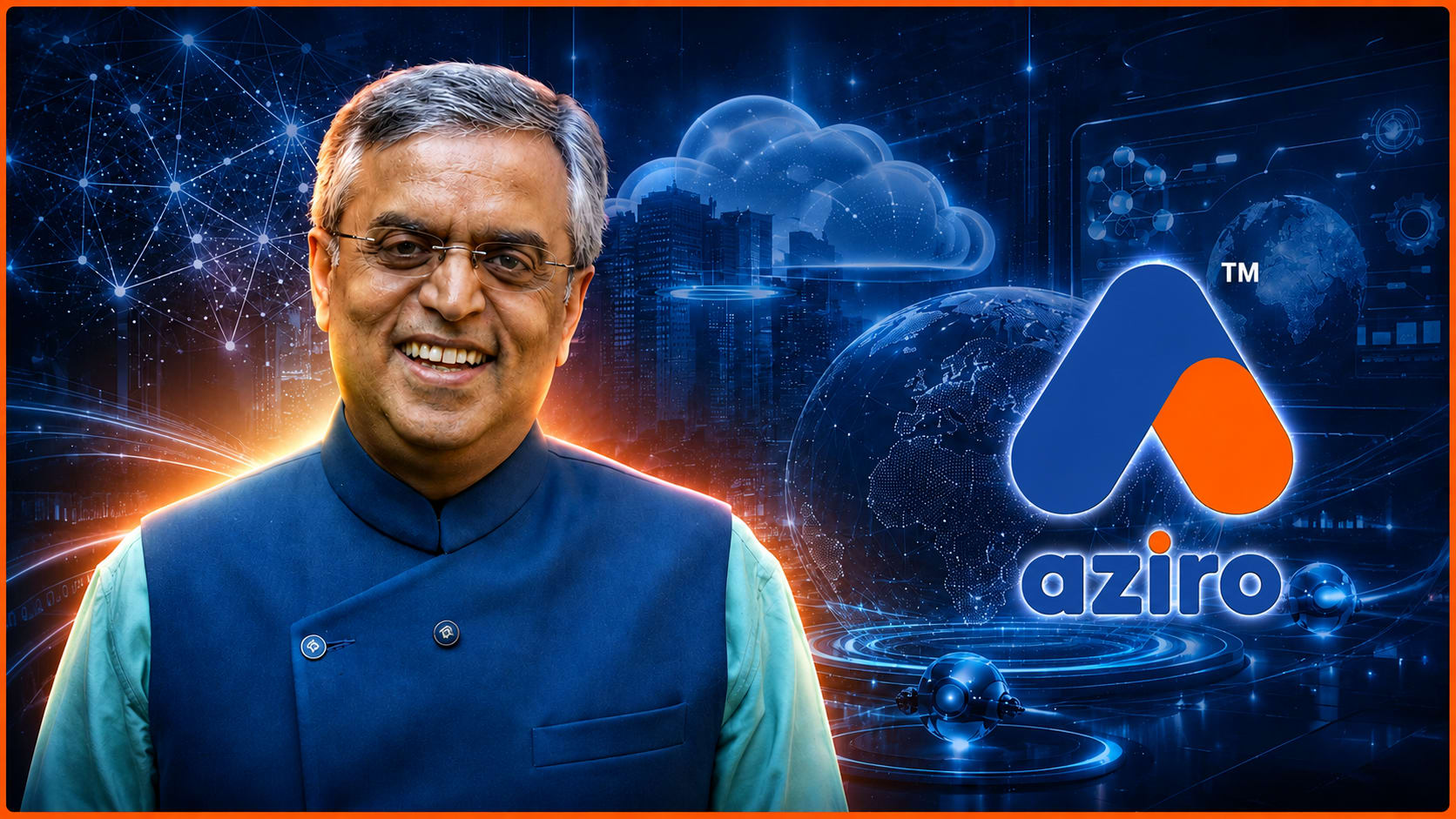
Companies stop suffering from a shortage of technology and more from complexity. That was the problem Sanjay Sehgal, founder, CEO and Chairman of Aziro Technologies, is trying to solve. Having pursued Electronics and Communication Engineering at Delhi College of Engineering (now DTU), before being affiliated with Aziro, he had already spent decades building technology businesses, scaling enterprise software firms and helping organisations navigate digital transformation.
For years, digital transformation has been treated like a shopping list. Adopt artificial intelligence, move data to the cloud, build microservices and automate workflows. Every new technology promised to solve yesterday's problems, but an overflow of options provided a poverty of clarity.
The result is visible across industries. Teams switch endlessly between platforms as processes become fragmented. Technology starts growing faster than people's ability to use it. Digital transformation, invented to make things simpler, ironically, started adding to the confusion.
Understanding Businesses and Building Relationships:
Aziro approaches the problem differently. Instead of beginning with technology, the company begins with conversations. Before writing code or proposing a solution, the team tries to understand how a business actually works, where decisions slow down, where customers experience friction and where operations become unnecessarily complicated. Only then do technologies like artificial intelligence, machine learning and microservices become part of the solution, rather than the solution itself.
It's an approach that reflects a subtle but important shift happening across enterprise technology. For years, companies competed on technical capability. Increasingly, they compete on understanding. Customers rarely remember which architecture powers a product. They remember whether it solved their problem. That philosophy extends beyond software.
As Aziro expanded across industries and geographies, Sanjay discovered that growth introduced another challenge. Scaling an organisation without losing the intimacy that made customers trust you in the first place isn't a technical problem; it's a cultural one. Processes can be standardised, but relationships cannot be created with a fixed template or SOP.
Inside the company, this idea has evolved into what Sanjay describes as an "experiential customer intimacy model", an approach centred on understanding a client's business before recommending technology. It sounds simple, but in a market crowded with ready-made solutions, slowing down to listen can become a competitive advantage.
Lessons Along the Way:
Enterprise customers don't buy software the way consumers buy apps. They invest in relationships expected to last years. Every deployment has to balance innovation with reliability. Every new feature must work inside businesses that cannot afford disruption. For Sanjay, that meant resisting the temptation to chase novelty for its own sake. While innovation mattered, execution mattered even more.
Looking back, he believes the biggest lesson wasn't about artificial intelligence or software architecture but problems. Too many founders become emotionally attached to their first idea, but markets rarely reward attachment. They reward relevance. As technologies evolve, customer expectations shift, and products change.
That's why his advice to entrepreneurs is deceptively simple: don't fall in love with your idea. Fall in love with solving the problem. Perhaps that's where the future of enterprise technology is quietly heading. The next generation of successful technology companies may not be the ones building the most sophisticated platforms.
They may be the ones that make technology almost disappear. Because the best software isn't the one users constantly notice. It's the one that lets them get on with their work.