Borosil: How a Company That Lost Money for 12 Straight Years Became a Staple in Millions of Indian Homes
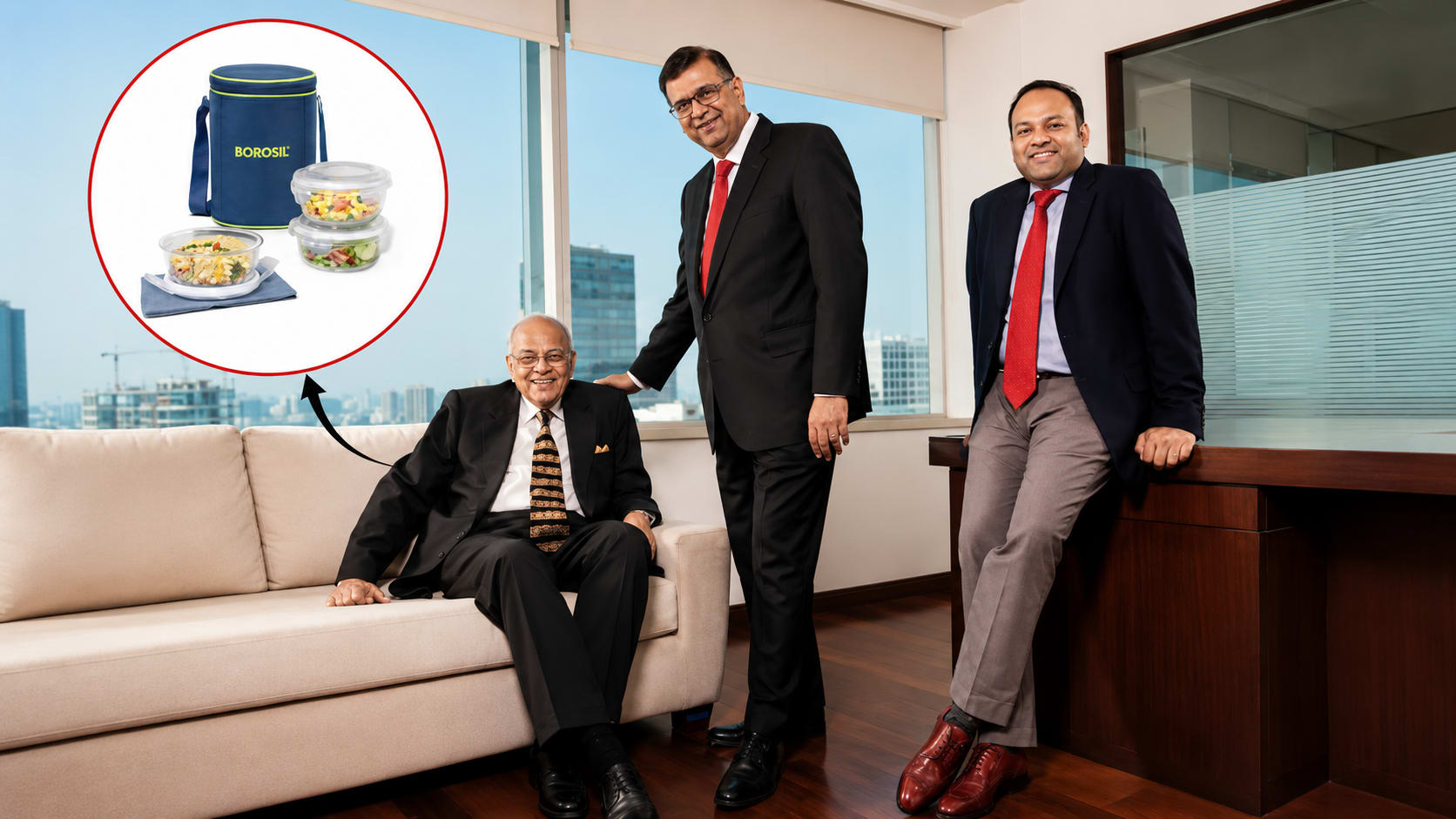
There’s a glass sitting in almost every Indian home right now.
You’ve drunk chai from it. Your mother kept it only for special guests. Your grandmother wrapped it carefully in a red box, treating it like treasure.
You know the brand Borosil Limited.
But you almost certainly don’t know the story behind it.
It’s a story of patience, resilience, and quiet dominance one that proves great Indian companies are often built over decades, not overnight.
The Humble Beginning (1962)
In 1962, Dr. H. Lele started a company in Mumbai in collaboration with America’s Corning Glass Works. The mission was straightforward but ambitious: make India self-reliant in laboratory glassware.
Beakers. Flasks. Test tubes. Pipettes.
At the time, almost everything Indian laboratories needed was imported. Borosil set out to change that.
For the next twelve consecutive years from 1962 to 1974, the company lost money. Every single year.
Twelve years of continuous losses.
In today’s startup world, most founders would have quit after two bad quarters. But Borosil’s early team persisted. They believed in the long-term vision of building quality glass manufacturing capabilities in India.
The Turning Point: The Kheruka Family Takes Over (1988)
In 1988, the Kheruka family bought out Corning’s shareholding and took complete control of the company.
This is where the story gets really interesting.
Instead of staying only in the B2B laboratory glassware segment, they made a bold pivot — they brought the same high-quality, heat-resistant borosilicate glass into Indian kitchens.
Microwave-safe bowls. Mixing jars. Storage containers. Dinnerware. Serveware.
The same glass that could withstand extreme temperatures in labs was now helping Indian mothers cook, store, and serve food with confidence. It was durable, safe, and aesthetically pleasing.
This move from industrial glass to consumer kitchenware proved to be a masterstroke.
Dominance in Two Completely Different Categories
By 2017, Borosil had achieved something remarkable:
60% market share in laboratory glassware in India.
60% market share in microwavable kitchenware in India.
Very few companies in the world dominate two entirely different categories so decisively: one highly technical and institutional, the other deeply emotional and consumer-facing.
Borosil became the default choice for both scientists in IITs and ISRO and homemakers across middle-class India.
The Numbers That Will Surprise You
Fast forward to today:
FY26 Revenue: ₹1,134 crore
Profit: ₹74 crore
Market Capitalization: Over ₹2,600 crore
Distribution reach: 15,000+ retail outlets across India
And this is just the consumer side of the business. The company continues to be a trusted supplier of laboratory glassware to India’s premier institutions and pharmaceutical companies.
Borosil has remained a symbol of trust, quality, and durability for generations.
What Makes Borosil Special?
Several lessons emerge from this journey:
Extreme Patience Pays Off: Twelve years of losses would have killed most ventures. Borosil’s early backers had the conviction to stay the course.
Smart Diversification: Moving from lab glass to kitchenware was not random. It leveraged the core strength (heat-resistant borosilicate glass) into a massive consumer opportunity.
Building Trust Over Decades: Borosil didn’t win through flashy marketing. It won through consistent quality that generations of Indian families experienced firsthand.
Made for India: The products were designed keeping in mind Indian cooking habits — high heat, frequent use, and the need for durability.
Quiet Dominance: Some of the strongest brands don’t need to scream. They become invisible parts of daily life like the glass in your kitchen.
The Legacy and the Future
Borosil’s story shows the power of Indian entrepreneurship built on patience and deep consumer understanding.
Today, as Borosil continues to innovate with new product lines, eco-friendly options, and expanded distribution, it stands as a shining example of what thoughtful, long-term business building looks like.
Your grandmother’s red box, your mother’s special guest glasses, and your own kitchen cabinet they all carry a piece of this remarkable journey.
The next time you pour chai into a Borosil glass, remember you’re holding more than just glass. You’re holding decades of persistence, vision, and quiet excellence.
Some brands don’t need to shout. They simply endure and become part of our lives.
Borosil didn’t just make glass. It made trust, generation after generation.