Decoding mCaffeine’s Strategy:How India’s First Caffeinated Skincare Brand Stood Out
In India’s crowded personal-care market, standing out has never been easy. By 2016, when mCaffeine launched, the space was already dominated by large players such as Hindustan Unilever, L’Oréal India and Marico. Most brands competed on familiar promises: fairness, glow, or herbal purity. mCaffeine took a different path. It chose a single hero ingredient, caffeine, and built an entire brand around energy, freshness and modern self-care.
Founded by Tarun Sharma and Vikas Lachhwani, mCaffeine positioned itself as India’s first caffeinated personal-care brand. The idea was simple yet distinctive: caffeine stimulates, energises and revitalises qualities that resonated strongly with young consumers seeking products that matched their lifestyle and identity. By focusing on millennials as its core audience and adopting gender-neutral messaging, the brand carved out a clear niche that felt both functional and contemporary.
Ingredient-Led Storytelling That Felt Different
Where many competitors leaned on aspirational or traditional claims, mCaffeine offered something more tangible. Caffeine’s association with energy and stimulation was immediately understandable. This allowed the brand to craft clear, benefit-oriented messages that stood apart from herbal or fairness-focused narratives. Caffeine felt modern and energising rather than familiar and safe—an appealing fit for millennials and Gen Z consumers who wanted self-care aligned with how they lived.
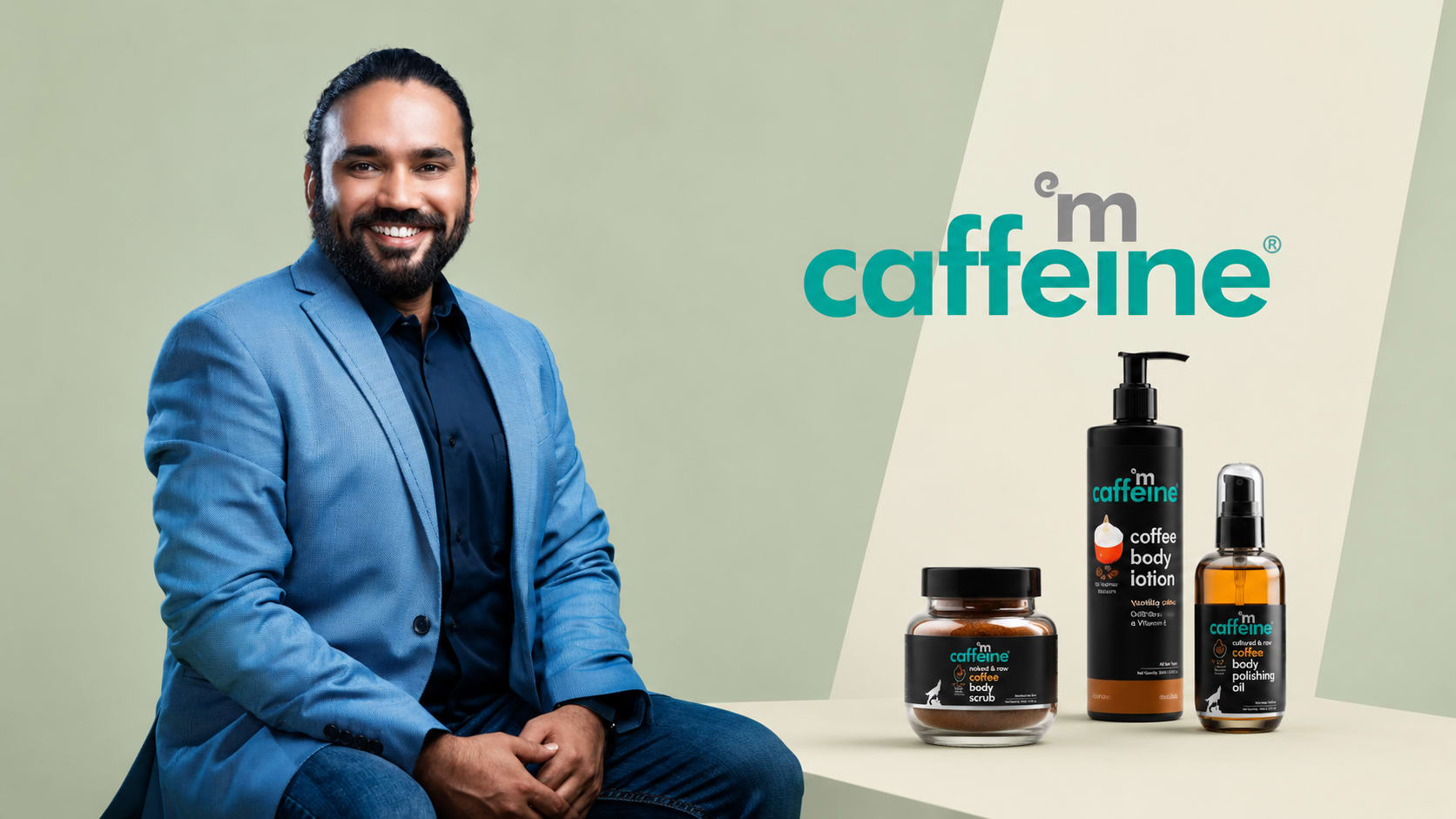
Visual identity reinforced the same idea. Packaging used coffee-inspired tones, clean minimalism and energetic messaging. In a market filled with soft pastels and conventional beauty aesthetics, mCaffeine’s look created instant visibility both on shelves and on screens. More importantly, the design signalled a brand personality that was bold, unpretentious and youthful. It helped the brand enter lifestyle conversations rather than remaining confined to traditional beauty categories.
Product Quality and Innovation as Credibility Builders
Branding alone would not have been enough. mCaffeine invested in product quality and formulation. Its range is known for 100% vegan formulas free from SLS, parabens, and silicones, and for using caffeine of high purity (claimed at 99.8%). In 2024, the company filed two patents related to caffeine extraction and developed its proprietary Caffexil blend. These moves reflected a broader commitment to research-backed innovation and scalable growth, strengthening credibility among increasingly ingredient-aware consumers.
Digital-First Marketing That Built Cultural Relevance
Born in the internet era, mCaffeine leaned heavily into digital channels from the start. Its marketing strategy prioritised:
Collaborations with relatable influencers rather than big celebrity endorsements, helping the brand feel authentic and culturally relevant.
User-generated content that showed real people using and enjoying the products.
Platform-specific campaigns tailored for Instagram, YouTube and, later, short-form video formats.
These efforts generated strong early engagement and awareness, even before the brand expanded significantly into offline retail. Gender-neutral messaging further widened its appeal, making skincare feel accessible and relevant across audiences.
Expanding Distribution Without Losing Focus
Although mCaffeine began as a pure direct-to-consumer brand, it gradually moved into marketplaces such as Amazon and Flipkart and later into offline channels including supermarkets and lifestyle stores. This hybrid distribution approach reduced reliance on any single channel, captured discovery traffic from multiple sources, and added credibility through physical presence. The transition was managed carefully so that the brand’s digital-first personality and energy-focused positioning remained intact.
By 2020, mCaffeine had evolved from a niche D2C experiment into one of India’s more recognisable digital-first beauty brands and had achieved early profitability—an uncommon milestone at that stage for many young personal-care startups.
What Worked and What Lies Ahead
Several elements combined to drive mCaffeine’s early success: a clear hero ingredient with functional benefits, distinctive visual identity, consistent product quality, authentic digital marketing, and a measured expansion into broader distribution. The brand avoided competing head-on with established players on their traditional turf and instead created its own category around energy and modern self-care.
Challenges remain. India’s beauty and personal-care market continues to intensify, with both legacy brands and new D2C players competing for attention. Maintaining product innovation, protecting brand distinctiveness, and scaling profitably while preserving the original energy and authenticity will be critical.
mCaffeine’s story shows that in a saturated market, sharp focus can still create space. By betting on a single ingredient, a clear audience and a lifestyle-oriented identity, the brand turned caffeine into more than a formulation choice—it became the foundation of a recognisable and differentiated position. For other emerging brands, the lesson is straightforward: clarity of positioning, consistency of execution, and genuine product substance remain powerful advantages even against much larger competitors.