Ex-Dunzo Founder Raises ₹102 Crore to Solve the Problem His Previous Startup Created
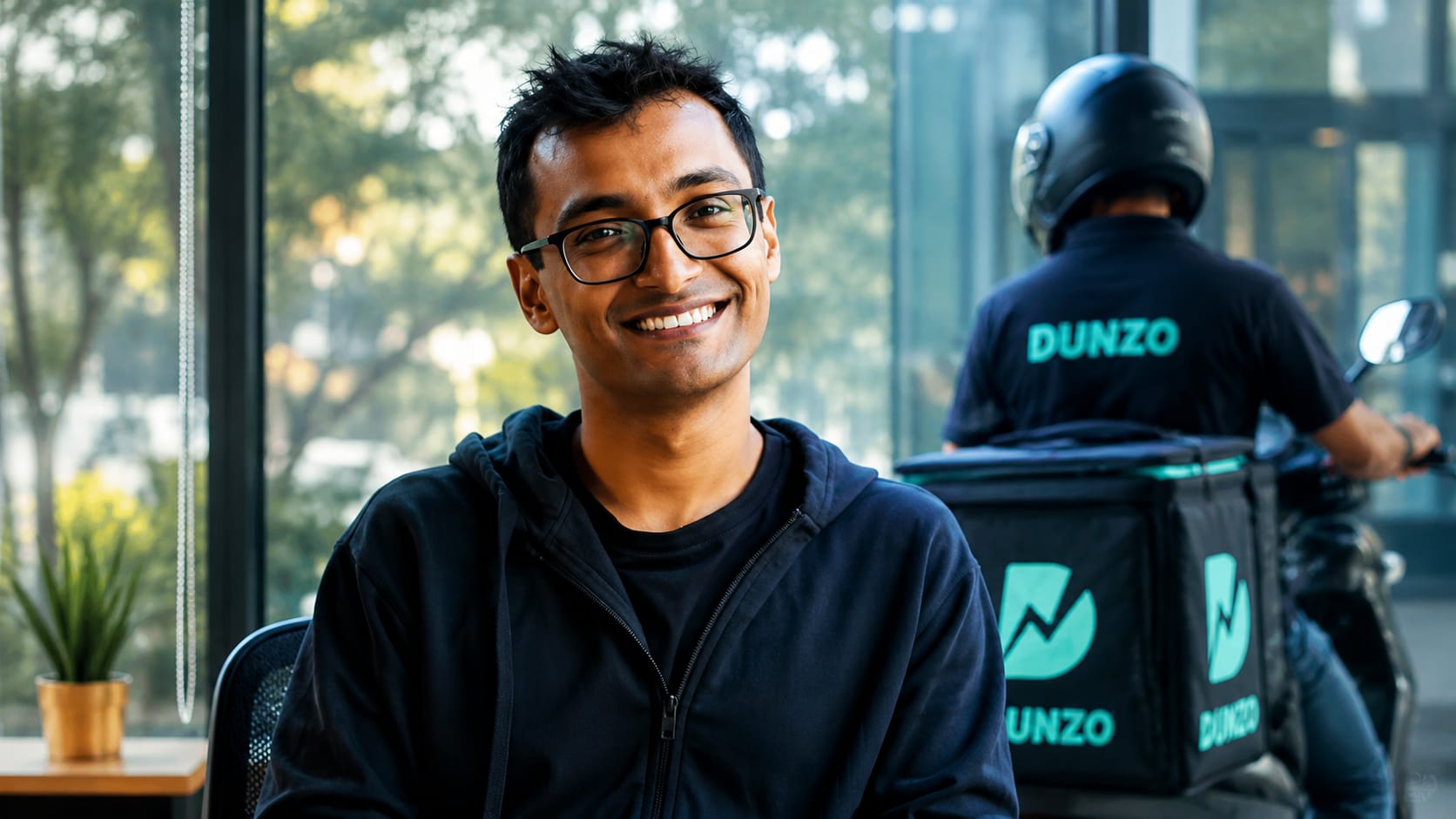
In the fast-evolving world of Indian consumer tech, few founders embody resilience like Kabeer Biswas. Best known as a co-founder of Dunzo, the hyperlocal delivery pioneer that turned “10-minute deliveries” into a national obsession, Biswas is back with a new venture. His AI-powered startup M has raised ₹102 crore (about $11 million) in seed funding to tackle the unintended consequence of the quick commerce boom he helped fuel.
The round, led by Peak XV Partners with participation from Blume Ventures and Kunal Shah’s CRED, values the company at around ₹300 crore post-money. Co-founded with Kartik Mishra (former Dunzo VP), M is currently piloting with households in Bengaluru and aims to become the intelligent operating system for modern Indian homes.
The Quick Commerce Paradox
For years, Dunzo’s pitch was pure speed: groceries, medicines, snacks, or essentials landing at your door before you’d even fully decided you needed them. Quick commerce (q-commerce) scaled this idea aggressively across India. Ordering shifted from a weekly chore to an impulse action often 3-4 times a day.
This convenience revolutionized urban life. But it also created a new problem: decision fatigue and mental load. When everything arrives in minutes, the real effort moves upstream. What do we actually need? What’s running low? What should we cook tonight? Who’s coordinating with the cook or domestic help?
Biswas, who also led Flipkart, after Dunzo, recognized this gap. “Quick commerce solved the physical effort,” he has noted in interviews. The next battleground is the invisible mental labour of running a household. M is built precisely for that.
What is M? An AI Household Manager on WhatsApp
M functions as an AI concierge that runs primarily through WhatsApp, the communication channel every Indian household already uses. Key features in the pilot include:
Tracking inventory of kitchen essentials in real-time.
Coordinating with the cook on daily menus.
Automatically generating smart grocery lists based on consumption patterns, preferences, and waste reduction.
Placing orders via integrated quick commerce partners at optimal times.
Handling broader home coordination, with plans to expand beyond the kitchen to other chores.
It’s positioned as a premium service priced under ₹10,000 per month, targeting affluent families earning above ₹50 lakh annually. Early traction: piloting with around 150-200 households in Bengaluru, where busy professionals and dual-income homes feel the pain of household management most acutely.
Why Investors Are Betting Big
The funding reflects strong confidence in Biswas’s track record and the market opportunity. India’s urban affluent segment is expanding rapidly. With rising dual-income households, nuclear families, and time scarcity, outsourced home management is a logical evolution.
Peak XV, Blume, and CRED bring deep expertise in consumer tech and fintech. The round size for a seed stage is notable, signalling belief in M’s potential to scale into a high-retention, high-LTV consumer subscription business.
Biswas’s journey adds credibility. After Dunzo’s challenges (including valuation fluctuations and eventual acquisition talks), he stepped back, reflected, and identified the next problem worth solving. His experience in logistics, last-mile delivery, and consumer behavior gives M a significant edge in execution.
Challenges Ahead
M faces hurdles common to AI consumer plays: data privacy, integration with multiple services, building accurate predictive models across diverse households, and maintaining high service quality. Competition could emerge from existing home automation players, virtual assistants, or even big tech expanding into lifestyle AI.
Pricing at a premium limits the initial market but allows focus on quality and deep customization crucial for retention in a category built on trust.
The Bigger Picture
M represents a mature evolution in India’s consumer tech narrative. First wave: e-commerce made buying possible. Second: quick commerce made it instant. The third wave, as Biswas is betting, is making management effortless through intelligence.
As AI adoption accelerates in India, startups that solve real, daily friction for high-value users stand to win big. If M succeeds in Bengaluru and expands to other metros, it could redefine how privileged Indian households operate, freeing up mental space for what truly matters.
Kabeer Biswas’s comeback story is a reminder that the best founders don’t just ride trends; they spot the problems their own innovations create and circle back to fix them.
For urban India juggling careers, family, and chaos, M might just become the silent co-pilot every home needs.