Freshleaf Teas: Giving India’s Beloved Beverage a Modern, Innovative Twist
India’s love affair with tea is legendary. Over the centuries, it has evolved into a household staple, popularised by legacy brands such as Red Label, Tata Tea, and Taj Mahal. Masala Chai even ranks among the world’s most popular non-alcoholic beverages, according to TasteAtlas.
Yet a new wave of direct-to-consumer brands is reinventing the humble cup. From premium single-estate teas to artisanal infusions, these players are carving space in India’s tea market, valued at $11.1 billion in 2023 by IMARC Group.
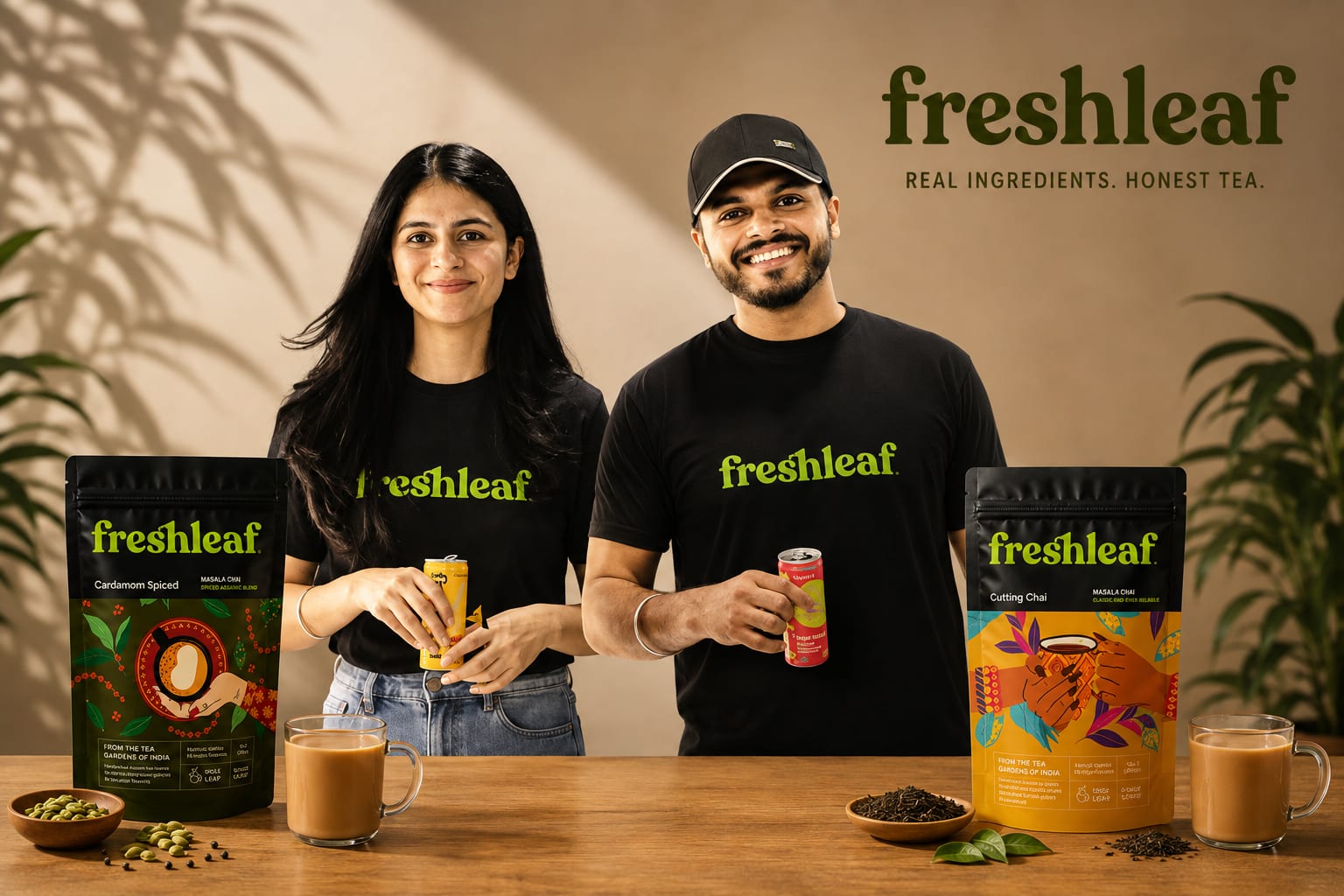
Brother-sister duo Muneet Arora and Balkirat Singh spotted an opportunity within this massive category. Fuelled by their shared passion for tea, they launched Freshleaf Teas in April 2022 with ₹20 lakh of their own savings and additional investment.
“Despite the presence of numerous traditional tea brands, we felt the tea industry lacked innovation. Observing how Starbucks revolutionised coffee, we saw an opportunity to reinvent tea for modern consumers,” Arora tells YourStory.
Singh, a Chartered Accountant and former finance and sales professional, oversees growth and strategic financial management. Arora, who previously worked in design, leads marketing and product development.
What’s on Offer
The Ludhiana-based brand offers 21 SKUs across 18 varieties of premium tea blends. The range includes traditional teas, herbal infusions, chai blends, and sparkling tea—a mix of tea and carbonated water.
Popular offerings include Himalayan Green Tea, Kashmiri Kahwa, Earl Grey, Calming Chamomile, Turmeric Ginger, Cutting Chai, Cardamom Spiced, Lemon Honey Delight, Moroccan Mint, Tulsi Treat, and Turmeric Spiced, among others.
“With these flavours, we aim to give a modern twist to this basic commodity, offering wellness without compromising on enjoyment,” says Arora.
Ingredients are sourced from renowned tea-growing regions including Darjeeling, Dooars in Assam, the Nilgiri hills, and Kangra in Himachal Pradesh.
The sparkling tea range, available in flavours such as lemon ginger and strawberry kiwi, contains 30–40% less sugar than typical carbonated drinks. Freshleaf avoids artificial flavours and partners with a Delhi-based flavour supplier under an NDA for research and development.
Prices start at ₹80 for a 250 ml bottle of sparkling tea, range from ₹189 to ₹249 for tea bags, and go up to ₹999 for premium tea blends. Products have a two-year shelf life, though packaging lists 21 months to account for production and distribution time.
Revenue, Reach and Operations
Freshleaf primarily serves north India and has already catered to over 2.5 million customers, with monthly growth of 15–20%. Its core audience consists of professionals aged 25–40, though mothers and elderly customers also form part of the base. Sparkling teas appeal especially to younger consumers.
Products are available on Amazon, Flipkart, online grocery platforms like Modern Bazaar, and in 550 stores across 40 cities. The brand plans to expand to Bigbasket, Blinkit, Zomato Hyperpure, and Nature’s Basket.
While exact turnover figures were not disclosed, 20% of revenue currently comes from online channels and 80% from offline sales.
The company works directly with 20 farmers to source ingredients and eliminate middlemen. “Sometimes, multiple farmers supply a single ingredient to maintain freshness,” Arora notes. Freshleaf pays farmers a 5–10% premium above market rates when extra effort is required due to low production or seasonal challenges, and uses fixed-cost agreements to provide stable income.
Around 50% of products are prepared and packaged at the company’s Ludhiana manufacturing unit, which can process up to 100 tons of tea leaves per month. Sparkling tea production is outsourced to a specialised facility in Delhi, while printing and half of the packaging are also outsourced due to complexity.
Overcoming Challenges and Standing Out
Entering a market crowded with established names such as Organic India, Vadham, and Twinings was not easy. Freshleaf built trust through regular sampling and in-store tastings. Noticing a gap for quality whole-leaf teas at competitive prices in offline stores, the brand focused on filling that demand.
Its sparkling teas further differentiate it from both mass-market and high-end competitors, offering a premium yet accessible option that resonates with younger, urban consumers. The company invests in ongoing R&D with food technologists and evaluates 10–20 samples daily; finalising a single ingredient or blend can take up to a month.
Looking Ahead
With the Indian tea market projected to grow at a CAGR of 3.18% between 2024 and 2032, Freshleaf is preparing for its next phase. It plans to introduce chai premixes by August and expand into newer product categories over the coming year. A collaboration with Nature’s Basket will help the brand reach Mumbai and Bengaluru, while international expansion is targeted to begin with the UAE.
Sustainability is also a priority. Freshleaf measures its plastic footprint and partners with rePurpose Global to offset it, aiming for plastic neutrality. Additionally, the brand donates 1% of its profits to Ludhiana-based NGO Bhavya Devi, which works in education, women’s empowerment, and healthcare.
Last month, Freshleaf raised ₹1 crore in a seed funding round led by Inflection Point Ventures. The capital will support product innovation, distribution expansion, and the brand’s ambition to modernise one of India’s most cherished beverages.