From ₹4,000 and a Grandmother's Kitchen to ₹1,000 Crore in 75 Countries: The Cycle Pure Agarbatti's Success Story
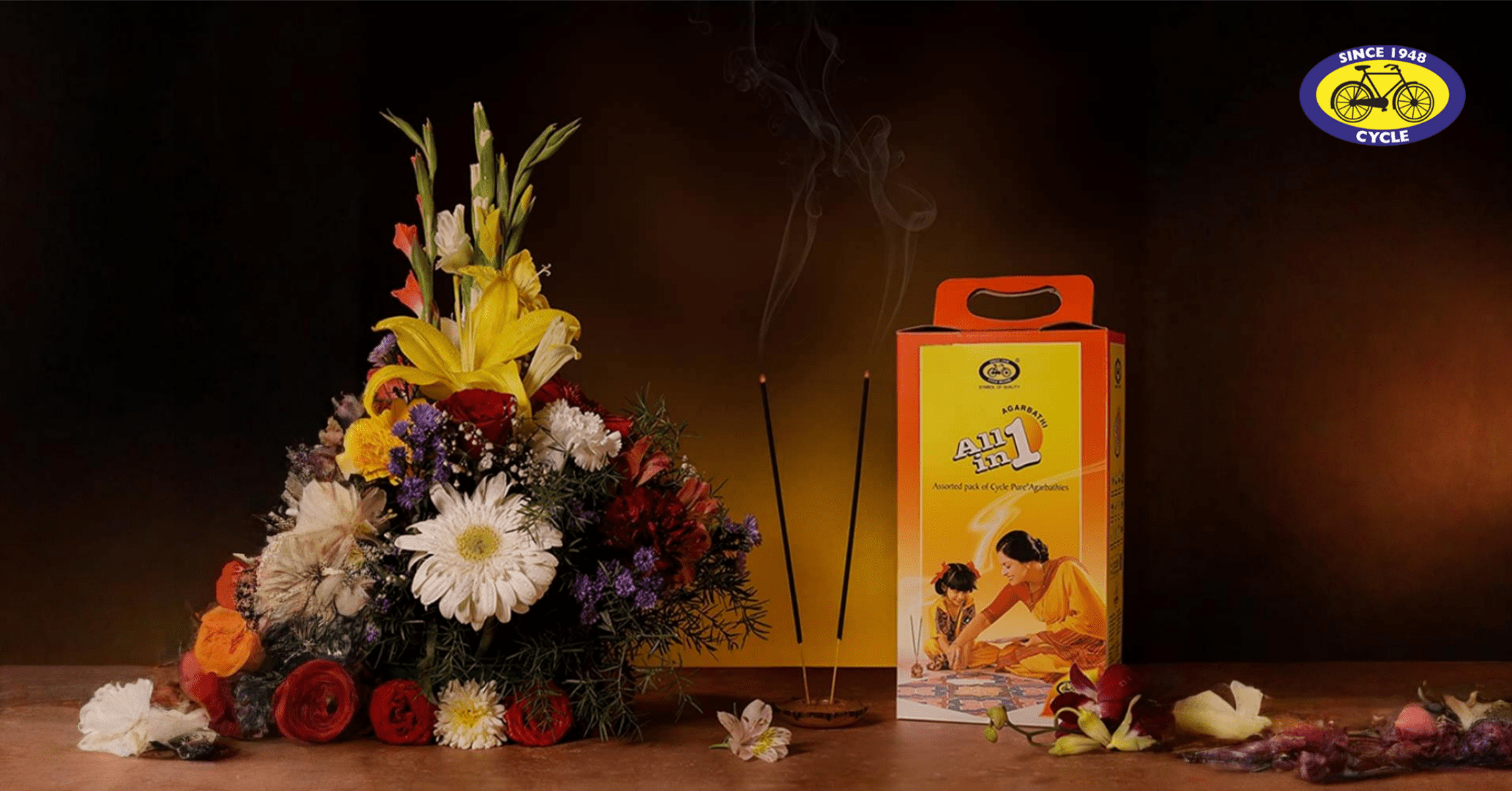
When Incense Sticks Were Invisible Products
Incense sticks have been part of Indian life for thousands of years. Agarbatti is burned in temples, homes, and prayer rooms every single day across the country. Demand was constant, reliable, and deeply woven into religious and cultural routine.
Yet in 1948, the agarbatti industry was almost entirely unorganised. Thousands of small makers produced sticks with no consistent fragrance, no quality standards, and no name a consumer could trust or return to. You bought from whoever was nearby. What you got was unpredictable.
Nobody had thought to build a brand in this space. Nobody had asked whether the incense in a prayer ritual could be something a consumer actively chose and trusted. That question belonged to one man who sat on a stone bench in Mysore and made a decision that would shape the next 75 years of an entire industry.
The Risk That Created India’s Biggest Agarbatti Brand
N. Ranga Rao was born in 1912 in a small village called Vathirairuppu near Madurai. His father, a teacher, died when Ranga Rao was just six years old, leaving him to shoulder family responsibilities from an early age. He moved to Aravankadu and worked as a bookkeeper at the Cordite Ammunition Factory from 1939 to 1944, before attempting to trade and to farm dairy, both of which failed. In 1948, he applied for and, by necessity, received a central government job. It was stable, secure, and exactly what a man with a family to feed should have taken. He did not take it. He sat on a stone bench on Vinoaba Road, tore up the appointment letter, walked back home, and decided to pursue his dream of becoming an entrepreneur. He had four children, ₹4,000 in capital, and no industry experience in agarbatti manufacturing.
What he had instead was a conviction that quality, backed by service, would always pay. And that conviction became the foundation of everything that followed.
The Idea Behind Cycle
Ranga Rao started making agarbathies at home with the help of his grandmother. He visited the market every day to buy raw materials, made the product the next day, sold it, used the money to buy materials again, and fed his family with whatever remained. It was a hand-to-mouth operation in the most literal sense.
But Ranga Rao was thinking beyond survival from the very beginning. In an industry where everyone was selling an unbranded product, he saw that the only way to build something lasting was to create a brand. He launched Mysore Products and General Trading Company in 1948, and the Cycle brand was born shortly after. Among the first products were Cycle Ratna and Cycle Sugandha Mallika.
The bicycle logo was simple and memorable, easy to recognise for consumers of every literacy level across India. The name Cycle communicated movement, consistency, and reliability. In an era before modern branding, it was an instinct far ahead of its time.
He also identified something most competitors had missed entirely. He realised that the core competence in the agarbathi industry was fragrance. While others focused on the stick itself, Ranga Rao invested in understanding fragrance combinations, sourcing quality raw materials, and creating a consistent scent experience that consumers could come back to by name.
The Challenges Behind the Brand
Building a brand in post-independence India was not simply a matter of good intentions. The economy was tight, infrastructure was limited, and consumer habits were deeply entrenched. Most buyers purchased agarbatti from their local vendor on trust and proximity, not brand preference. Convincing them to ask for Cycle by name required patience, consistency, and a product that genuinely earned the preference.
In the early years, Ranga Rao lived in the factory with his wife to make sure things were being done properly. He had no management layer, no marketing team, and no safety net. Every decision was personal, and every outcome was immediate.
There was also a personal code that defined how he ran his business. He drew a clear distinction between personal and business expenses. He would even pay for the tea served to him in his own office. That level of integrity in an era when accounting practices were loose, and oversight was minimal, kept the company clean and credible when many of its early competitors eventually folded.
When a rival company began undercutting Cycle's sales aggressively, the family responded with innovation rather than a price war. They introduced a three-in-one incense stick that combined multiple fragrance benefits, a product move that restored consumer preference and demonstrated that the brand's competitive advantage was always quality and innovation, not pricing.
The Journey of Building India’s Most Trusted Agarbatti Brand
Growth accelerated when Ranga Rao's sons, RN Murthy Ranga, Guru Ranga, and Vasu Ranga, entered the business. Each brought complementary strengths. The family expanded manufacturing from the home base in Mysore to a full factory in Bangalore, invested in advertising at a time when most agarbatti companies relied entirely on word of mouth, and introduced a franchise distribution model that allowed Cycle to reach consumers in markets far beyond Karnataka.
The brand's portfolio grew steadily. Over 500 fragrances were developed and blended entirely in-house, a fragrance library that became one of the company's most defensible assets. Cycle Agarbathies became a staple not just in South Indian homes but across the country, present at every prayer, every ritual, every quiet moment of daily devotion.
Ranga Rao's original instinct about branding proved correct at every stage. While the unorganised sector around him remained chaotic and price-driven, Cycle built consumer loyalty that no competitor could easily displace because it was built on something genuine: a consistent fragrance experience that people came to associate with their most personal and sacred moments at home.
How Cycle Expanded Beyond Incense Sticks
The NR Group, which grew from Ranga Rao's initial company, eventually diversified into essential oils, fragrances, electronics, and home care products across six companies. Today, the group is led by Arjun Ranga, the third generation, who has taken the Cycle brand into new product categories, sustainability initiatives, and international markets.
The company now collects flowers offered at temples in Mysuru to recycle them into agarbathies, flowers that would otherwise clog drainages and become breeding grounds for disease. The brand also runs the Ranga Rao Memorial School for Differently-Abled in Mysuru, supporting over 150 visually impaired girls.
Where Cycle Stands Today
Cycle Pure Agarbathies is today the world's largest manufacturer of incense sticks. The brand is present in 75 countries across Asia, Europe, Africa, and the Middle East, generating ₹1,000 crore in annual revenue. The company holds a portfolio of over 500 proprietary fragrances, all created and blended in-house, and operates stores across Tamil Nadu, Karnataka, Kerala, Delhi, Mumbai, and Andhra Pradesh, with further expansion planned across India.
The bicycle logo that Ranga Rao chose in 1948 still rides on every pack. And the fragrance that he obsessed over in a home that was also his factory still reaches 75 countries every year.
The Brand That Became Part of Everyday Rituals
Cycle's story is not about incense. It is about what one man's decision on a stone bench in Mysore meant for every generation that came after him.
He had no safety net. He had failed before. He had a family depending on him. He tore up a government letter and walked home with a dream instead of a salary. He started with ₹4,000, his grandmother, and the belief that quality backed by service would always pay.
Seventy-six years later, the world agrees.