Success Story
From a Single Pressure Cooker to a ₹15,000 Crore Kitchen Brand: The Prestige Success Story
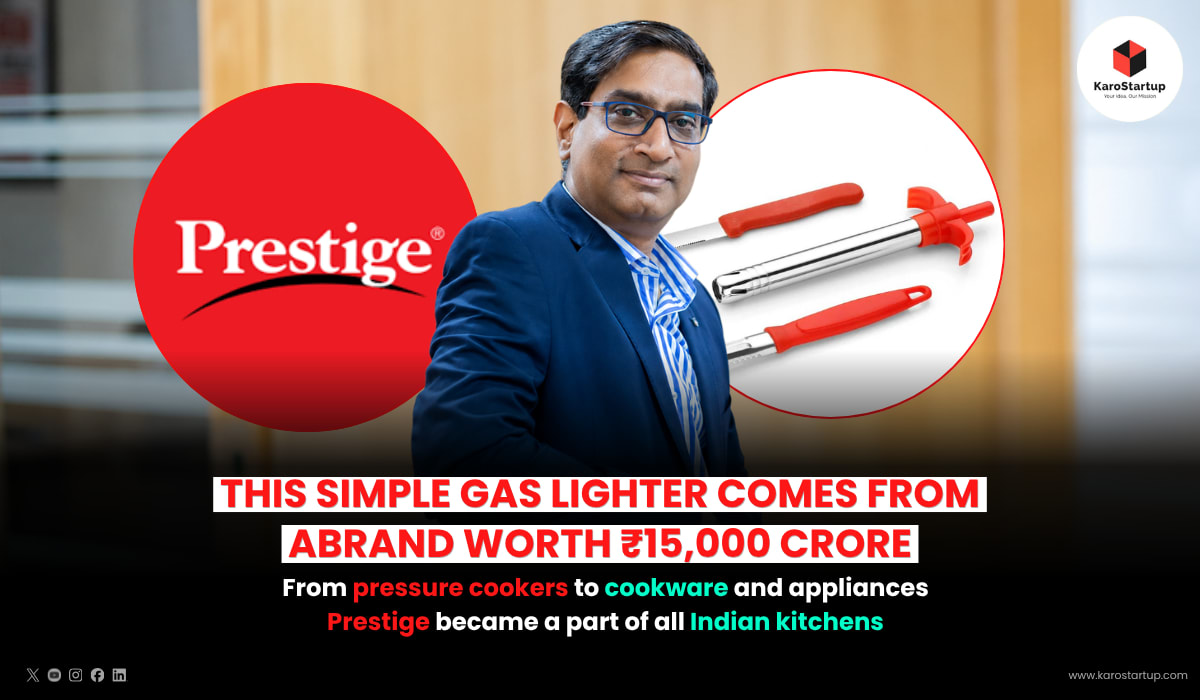
The Brand That Changed Indian Cooking Forever
In the years after Indian independence, the Indian kitchen ran almost entirely on tradition. Meals were cooked over wood fires and kerosene stoves. Vessels were made of heavy brass and clay. Dal took an hour to simmer. Rice required constant watching. For the Indian homemaker, cooking was not just a daily task. It was a long, exhausting labour that occupied most of the morning and evening, every single day. Nobody had offered her a better way.
The pressure cooker existed in Europe. Denis Papin had invented it in 1679 to soften bone. By the 20th century, Western households were using it routinely. But India had seen none of this. The technology was unknown, the concept was unfamiliar, and no one had thought seriously about bringing it to the Indian kitchen. Until T.T. Krishnamachari and the TTK Group decided to change that.
Three Generations Built One Kitchen Empire
The TTK story begins in 1928, when T.T. Krishnamachari founded the TTK Group as an indenting agency in Madras, pioneering organised distribution in India at a time when the concept barely existed. Krishnamachari was a sharp, visionary businessman who later became India’s Commerce and Finance Minister after independence, leaving the business operations to his family.
It was his son, T.T. Narasimhan, who first saw the potential in bringing the pressure cooker to India. In 1959, TTK Group entered into a technical collaboration with the UK-based Prestige Group, the pioneer of pressure cookers in Britain. The partnership gave TTK access to Prestige’s design and manufacturing expertise. India’s first locally produced pressure cookers rolled out of the factory shortly after, tailored for Indian cooking needs and priced for Indian households.
The third generation brought the brand its most defining chapter. T.T. Jagannathan, grandson of the founder and an IIT Madras gold medallist with a PhD from Cornell University, joined the company in 1975. He arrived at a company in serious trouble. Years of overexpansion in the 1990s and a difficult operating environment had pushed TTK Prestige to the edge of bankruptcy. When Jagannathan first showed up at the factory gates, the workers refused him entry. He had to call the police to get in.
His response to that hostility defined everything that followed.
The Turnaround That Saved the Brand
Instead of asserting authority, Jagannathan chose humility. He refused to sit in the Managing Director’s chair. For months, he worked from a small wooden desk at the end of a corridor, sharing tea with machinists and clerks. He was an IIT gold medallist with an Ivy League PhD choosing to understand the factory floor before he changed anything on it.
That quiet determination drove one of India’s most remarkable business turnarounds. Jagannathan navigated an India where income tax was at 97%, wealth tax at 5%, and an oppressive regulatory environment made every business decision a test of endurance. He led the buyout of the Prestige brand name from the UK collaborator in 1992, ensuring that the brand India had built its trust in would remain permanently Indian.
Under his 50-year tenure on the board, TTK Prestige went from near-bankruptcy to a completely debt-free, profitable consumer company. He documented the journey in his book Disrupt and Conquer: How TTK Prestige Became a Billion Dollar Company.
The Product That Built a Nation’s Trust
The Prestige pressure cooker did not just sell a kitchen appliance. It offered the Indian homemaker something genuinely transformative: time back. A deal that took an hour now took fifteen minutes. Rice that needed watching cooked itself. Meat that required long simmering was ready in half the time. For women managing large families on tight schedules, this was not a small convenience. It was a daily liberation.
But the product also had to earn safety trust, which was not easy. Indian homemakers had grown up with open-pot cooking. The idea of building pressure inside a sealed vessel felt dangerous. Prestige addressed this directly. The gasket release system, one of Jagannathan’s signature product innovations, made pressure release safe and visible. The iconic whistle became a reassurance rather than a warning. Every safety feature the brand introduced was built around one clear message: Prestige is looking after you.
The advertising made the emotional promise unforgettable. The campaign line, “Jo Biwi Se Kare Pyaar, Woh Prestige Se Kaise Kare Inkaar,” became one of the most recognised slogans in Indian advertising history. It was not selling a cooker. It was selling care, affection, and a husband’s love expressed through a kitchen gift. That emotional framing turned a functional product into a cultural symbol.
When One Product Became a Complete Kitchen
Prestige did not rest on the pressure cooker. The brand steadily expanded into every corner of the Indian kitchen. Non-stick cookware. Gas stoves. Mixer grinders. Induction cooktops. Microwave ovens. Rice cookers. Gas lighters. Knives and chopping boards. Iron boxes and OTGs.
Each product followed the same principle: understand what the Indian homemaker needs, build it safely and affordably, and back it with a service network that actually shows up.
By 2011, the brand had introduced MicroChef, the world’s first microwave-compatible pressure cooker. The innovation reflected Prestige’s understanding that its consumers were changing. The same woman who had cooked over a wood fire in 1960 was now managing a modern kitchen with multiple appliances. Prestige moved with her at every stage.
Today the brand operates through over 700 exclusive Prestige Smart Kitchen stores across India, a distribution network that reaches into towns and cities where no other kitchen brand has comparable presence. It also retails on Amazon, Flipkart, and all major e-commerce platforms, with a growing segment of sales coming through digital channels.
Where Prestige Stands Today
TTK Prestige reported revenue of ₹2,715 crore in FY25, with a ₹500 crore investment plan announced across the next three years covering operational improvements and capital expenditure. The brand has a market capitalisation of approximately ₹7,000 to ₹9,000 crore on current valuations, with peak valuations having touched ₹15,000 crore at the brand’s strongest market periods.
The company is run by the fourth generation of the TTK family, with T.T. Raghunathan as Non-Executive Chairman and Dr. Mukund T.T. as Non-Executive Vice Chairman following T.T. Jagannathan’s death in October 2025 at the age of 77. The promoter family continues to hold over 70% of the company’s shares, a reflection of the deep personal ownership that has defined the brand across every generation.
More Than Just a Pressure Cooker
Prestige is not a brand that grew because of clever marketing or well-timed funding rounds. It grew because generation after generation of the TTK family cared deeply about one simple thing: making the Indian kitchen safer, easier, and better.
A grandfather who built a trading empire. A son who brought a foreign invention home and made it Indian. A grandson who arrived at a failing factory, chose a wooden desk over the corner office, and spent fifty years quietly building one of the country’s most enduring brands. And a simple pressure cooker whistle that has been the soundtrack of Indian homes for over sixty years. Some brands are built by disruption. Prestige was built by devotion.