From Germany to Every Indian Kitchen: The Pril Success Story
When Every Indian Kitchen Used a Soap Bar
In most Indian homes, dishwashing in the 1990s meant one thing: a green or brown soap bar sitting in a small bowl near the sink, worn down from daily use, soggy at the edges, and shared by the entire family for every vessel washed. It worked. But it was messy, unhygienic, and left residue on dishes that no one thought to question because there had never been an alternative.
The Indian dishwash market at that time was worth approximately ₹10,000 crore, with washing bars dominating nearly the entire category. Liquids barely existed as a concept for Indian consumers. The idea that a squeeze of gel could clean greasy vessels faster, more hygienically, and with less effort than a soap bar was simply not part of the Indian kitchen conversation.
Pril arrived in 1999 and started that conversation from scratch.
The Brand That Started in a German Laboratory in 1951
Pril did not begin as a business idea. It began as a solution to a specific problem that German housewives were living with every day. In 1951, Henkel, one of Germany's oldest and most respected chemical companies, had already spent 75 years building products that simplified domestic life. Founded in 1876 by Fritz Henkel in Aachen with a universal detergent, and later responsible for Persil in 1907, the world's first self-acting laundry detergent, Henkel understood kitchen and home chemistry as well as any company in the world.
Dishwashing in 1951 Germany was laborious. Extensive pre-soaking, scrubbing, and rinsing were the daily norm. Henkel's subsidiary, Böhme Fettchemie, developed a dishwashing powder that changed all of this. The original Pril had an amazing cleaning power, a skin-friendly formula, and left a thin, uniform film of water on dishes that allowed for clear, streak-free drying without wiping. It eliminated a step that homemakers had been doing forever and made the whole experience significantly easier.
Within a decade, dishwashing powders across Europe were being replaced by liquids. Pril led that transition too, pioneering the liquid format that became the global category standard. By the time Pril arrived in India in 1999, it was already the number one hand dishwashing liquid in Germany and sold across 22 countries worldwide.
How Pril Came to India
Henkel had been operating in India since 1985, initially through a joint venture called Henkel Spic. The company had built a presence through laundry brands like Henko and Mr. White, along with personal care and adhesive products. By the late 1990s, Henkel identified the Indian dishwashing market as a significant opportunity. Pril was launched nationally in India in January 1999, with Henkel simultaneously launching a dishwashing bar in two variants, lime and vinegar, and orange and vinegar, to address both ends of the market. The liquid launch was bold. The bar was a concession to where the market actually was.
The challenge was not product quality. Pril worked exceptionally well. The challenge was consumer inertia. Indian homemakers had a tool that was familiar, affordable, and culturally embedded. Asking them to switch to a squeeze bottle of green liquid required a new kind of kitchen education, one that had to be delivered through advertising, trial packs, and sustained communication over years rather than a single campaign.
The Challenges of Creating a Category
Pril was the pioneer in the liquid dishwash category. The ₹ 10,000-crore Indian dishwash category was dominated by the bar product form. The bar had its own limitations, like being soggy and messy. Pril saw a need for a hygienic, upmarket alternative to the soggy dishwash bars.
But identifying the need and fulfilling it at scale were two very different things. Liquids were priced at a premium over bars. The value-for-money calculation was not immediately obvious to consumers buying on a weekly grocery budget. It took years of consistent sampling, consumer activation, and demonstration-led marketing to shift even a fraction of the bar-using population to liquid.
Distribution was another challenge. Pril needed to be where Indian consumers actually shopped, across millions of kirana stores, pharmacy counters, and general trade outlets in cities and semi-urban markets. Building that reach without a wide enough existing portfolio in the dishwashing liquid category specifically meant every rupee of distribution investment carried more weight than in an established category.
The Jyothy Labs Chapter
In 2011, Jyothy Laboratories acquired a 50.97% stake in Henkel India for ₹118.7 crore. The deal was structured in three layers. Some brands, such as Margo, Neem Toothpaste, and Chek laundry detergent, were fully acquired by Jyothy Labs. Some others came through lifetime licensing agreements. And then there were Pril and Fa, licensed only for a fixed period, with Henkel AG retaining global ownership.
For the next fifteen years, Jyothy Labs ran Pril as if it were their own. They poured money into advertising, expanded distribution to nearly four million outlets, and slowly transformed Pril from a niche urban product into a recognisable premium dishwash brand across Indian cities. The investment worked. By FY25, Pril held a 13% market share in liquid dishwash, the fastest-growing segment in the category. Together, Pril and Exo gave Jyothy close to a 30% share of India's dishwashing market by value.
How One Product Became a Household Essential
What made Pril's growth in India real rather than manufactured was simple: the product delivered on its promise consistently.
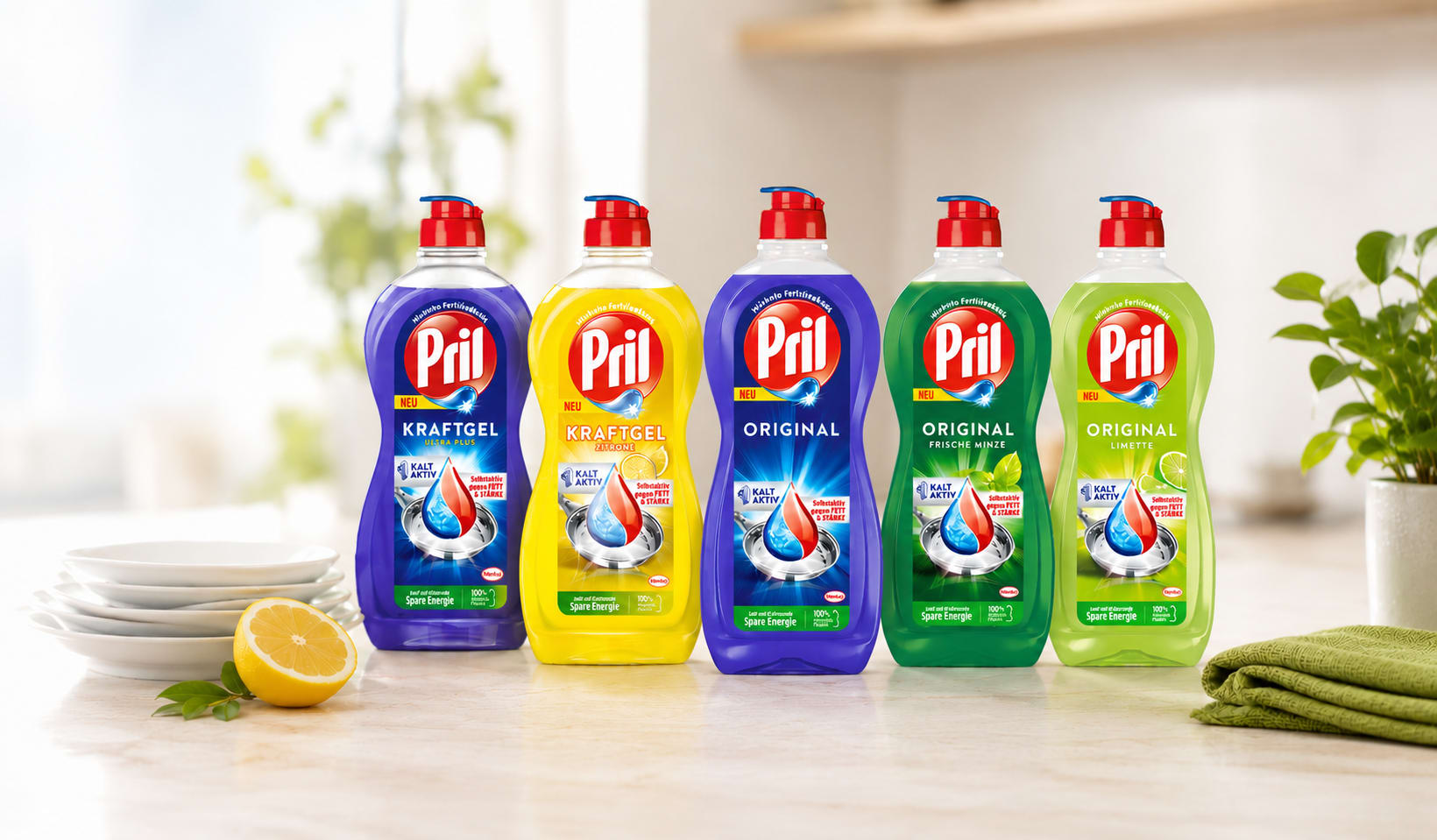
Pril's formula cut through grease, oil, and starchy residue faster than a bar could. The skin-friendly formulation that had distinguished it in Germany since 1951 remained intact in India. The fragrance variants, lime and orange, among the most popular, made dishwashing feel fresh rather than functional. And the convenience of a squeeze bottle compared to a soggy soap bar became increasingly obvious to any household that tried it once.
As Indian cities urbanised, as more households invested in modular kitchens and wanted products that felt premium, and as the generation raised on global content began to equate a liquid dishwash with a better kitchen standard, Pril was already there with three decades of trust behind it.
The 2026 Decision That Changed Everything
In May 2026, Henkel AG announced it would not renew its licensing agreements for the Pril dishwash and Fa personal care brands after May 31, 2026, following extensive discussions with Jyothy Labs. Henkel was taking Pril back.
Jyothy Labs' shares dropped over 11% in a single session after the announcement. Analysts noted that Pril commanded over 14% market share in the liquid dishwashing segment, which continues to outpace the broader dishwashing category due to rising penetration and premiumisation. The market's reaction said everything about how much value Pril had built.
Analysts estimate Pril alone accounts for approximately 12% to 15% of Jyothy Labs' total sales. For a brand that started in India as a niche luxury product in a bar-dominated category, those numbers represent a remarkable 27-year journey.
More Than Just a Dishwashing Liquid
Pril's story in India is about more than cleaning vessels. It is about the slow, patient, expensive work of changing a consumer habit that had been unchanged for generations.
It took a German chemical company's 1951 laboratory breakthrough, a 1999 India launch into a category that did not exist, fifteen years of investment by an Indian FMCG company, and the daily experience of millions of Indian homemakers who simply found that a squeeze of Pril worked better than anything they had used before.
Some brands change what people buy. Pril changed what people do in their kitchens every single day.