From Indian Ingredients to a ₹50,000+ Crore Legacy: The Patanjali Success Story
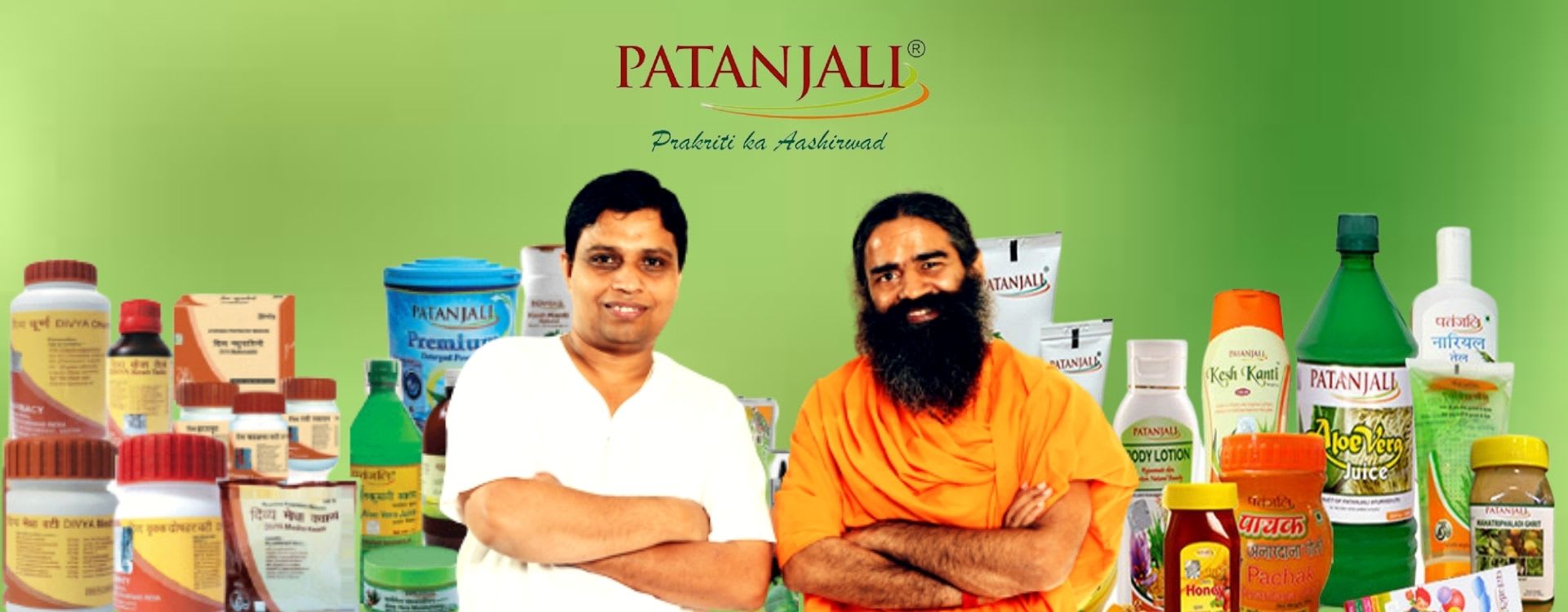
When Indian Consumers Were Buying Foreign Brands
Walk through any Indian supermarket in the early 2000s, and the shelves told a clear story. Toothpaste meant Colgate or Pepsodent. Soap meant Lux or Lifebuoy. Cooking oil meant Fortune or Sundrop. Shampoo meant Pantene or Head and Shoulders. These were not just products. They were category defaults, owned by multinational giants who had spent decades and hundreds of crores building brand awareness across every tier of Indian society.
There was no serious homegrown challenger. No Indian brand could compete on scale, price, and category breadth simultaneously. Ayurveda existed in small pockets of the market but remained niche, medical, and not positioned for everyday mass-market consumption.
Into that landscape walked a yoga teacher from Haridwar with no marketing budget, no distribution infrastructure, and no FMCG experience. What he had instead was something none of the multinationals could buy: the trust of millions.
The Partnership That Built an Empire
The Patanjali story begins not in 2006 but in 1995, when Baba Ramdev and his close associate Acharya Balkrishna set up Divya Pharmacy in Haridwar to make Ayurvedic and herbal medicines under the aegis of Swami Shankar Dev's ashram. Ramdev was born Ram Kisan Yadav in Haryana in 1965. He had left home as a teenager to study yoga and Sanskrit at various gurukuls, including Khanpur Gurukul in Haryana, where he met Balkrishna. The two formed a partnership that would define both their lives: Ramdev as the communicator, teacher, and public face, and Balkrishna as the formulator, operator, and builder behind the scenes.
Balkrishna, born to Nepalese parents who had migrated to India, is the science and business mind of the partnership. He holds over 94% of Patanjali's shares and draws no salary from the company. He manages around 34 companies and three trusts associated with the Patanjali brand, handling everything from hiring senior management to dealing with advertisers, largely alone. His net worth today stands at approximately ₹30,310 crore.
Divya Pharmacy's Ayurvedic medicines became popular enough that the founders wanted to scale and diversify. But the trust structure made expansion difficult. With Ramdev's popularity growing and sizeable loans arriving from NRI supporters Sarwan and Sunita Poddar, as well as local supporter Govind Agarwal, the conditions for something larger were finally in place. In 2006, Patanjali Ayurved was incorporated as a private limited company. The following year, it became a public limited unlisted entity.
The Idea That Nobody in FMCG Expected
Patanjali's founding proposition was both simple and radical: sell Ayurveda-based products at prices lower than any multinational brand, back them with Ramdev's personal credibility, and position the entire enterprise as a swadeshi movement.
The strategy worked because it aligned commercial behaviour with emotional identity. Buying Patanjali was not just a purchase decision. It was a statement of national preference. Consumers who had never thought twice about Colgate suddenly had a reason to reach for Dant Kanti instead. Not because the product was necessarily superior in every case, but because buying it felt like the right thing to do.
Ramdev did not advertise in the conventional sense. He sold Patanjali products at his yoga camps attended by millions across India. He promoted them on Aastha and Sanskar television channels, which had enormous reach in middle-class and rural homes. His followers did not just buy his products. They advocated for them. That network of personal trust, built over a decade of yoga teaching before Patanjali even existed, became the most powerful distribution channel any brand in India had seen.
Patanjali also followed a "Branded House" strategy, placing a single recognisable name across every product from ghee to shampoo to biscuits to honey. This was fundamentally different from the "House of Brands" approach used by HUL and P&G. Every new product immediately borrowed the trust of every product that had come before it.
The Challenges Nobody Could Have Predicted
Building a national FMCG company from Haridwar without conventional infrastructure meant racing to catch up on manufacturing, quality control, and distribution simultaneously. As demand grew faster than planned, supply chains strained, and product consistency became a genuine concern.
The brand also faced serious scrutiny over its health claims. Patanjali regularly advertised products as cures for diabetes, hypertension, and various other conditions. In 2022, the Indian Medical Association filed a petition against the brand alleging exaggerated disease-cure claims and disparagement of modern medicine. In 2024, the Supreme Court issued a complete ban on Patanjali advertising its products as disease cures, imposing contempt notices on both Acharya Balkrishna and Baba Ramdev. The court stated the entire country was being taken for a ride through misleading advertisements. Patanjali apologised publicly, but the court rejected the apology, questioning whether it was as prominently placed as the original advertisements.
The brand has also faced ongoing legal battles with Dabur, with the Delhi High Court in 2025 restraining Patanjali from running advertisements that called Dabur's Chyawanprash a "dhoka" for consumers.
The Disruption That Changed Indian FMCG
Even accounting for the controversies, Patanjali's impact on the Indian FMCG industry is impossible to overstate. By 2016, it had become the fastest-growing FMCG company in India according to CLSA research, displacing established players across multiple categories almost simultaneously.
Colgate and HUL lost oral care market share. Hindustan Unilever accelerated its own Ayurvedic launches in response. Dabur changed its communication strategy to defend its herbal positioning. Every major FMCG player in India made strategic shifts as a direct response to Patanjali's rise. A brand that had not existed fifteen years earlier had forced the entire industry to adapt.
By 2018, Patanjali was listed 13th in India's most trusted brands, ranking first within the FMCG category.
Where Patanjali Stands Today
Patanjali Ayurved reported total income of ₹9,335 crore in FY24, a 23% rise over the previous year, with a five-fold jump in net profit to ₹2,901 crore. The Patanjali Group, including the listed entity Patanjali Foods, which handles the food and edible oil business after acquiring Ruchi Soya through insolvency proceedings, posted consolidated group revenue of approximately ₹31,961 crore in FY24. Patanjali Foods currently carries a market capitalisation of approximately ₹50,000 crore on the NSE.
From 150 to 200 dedicated outlets at its early peak, Patanjali products are now available across 10,000 exclusive stores and all major grocery chains. The group operates across healthcare, hair care, dental care, food and beverages, home care, textiles through Patanjali Paridhan, and renewable energy through Patanjali Renewable.
More Than Just an FMCG Company
Patanjali is not a brand that grew from a marketing strategy. It grew from a movement. A yoga teacher who believed Indian ingredients, Indian knowledge, and Indian pricing could take on multinational brands that had dominated Indian kitchens and bathrooms for fifty years, and win.
The brand made mistakes. Some of its claims went too far. Its advertising tactics drew legitimate regulatory scrutiny. These are real parts of the story and cannot be separated from it.
But the disruption was real, too. It gave Indian consumers an alternative they had never had before. It forced the largest FMCG companies on the planet to rethink their India strategies. And it proved that trust, built the right way over a long enough time, can compete with any marketing budget in the world.