From ISRO Engineer to India’s First Space-Tech Unicorn
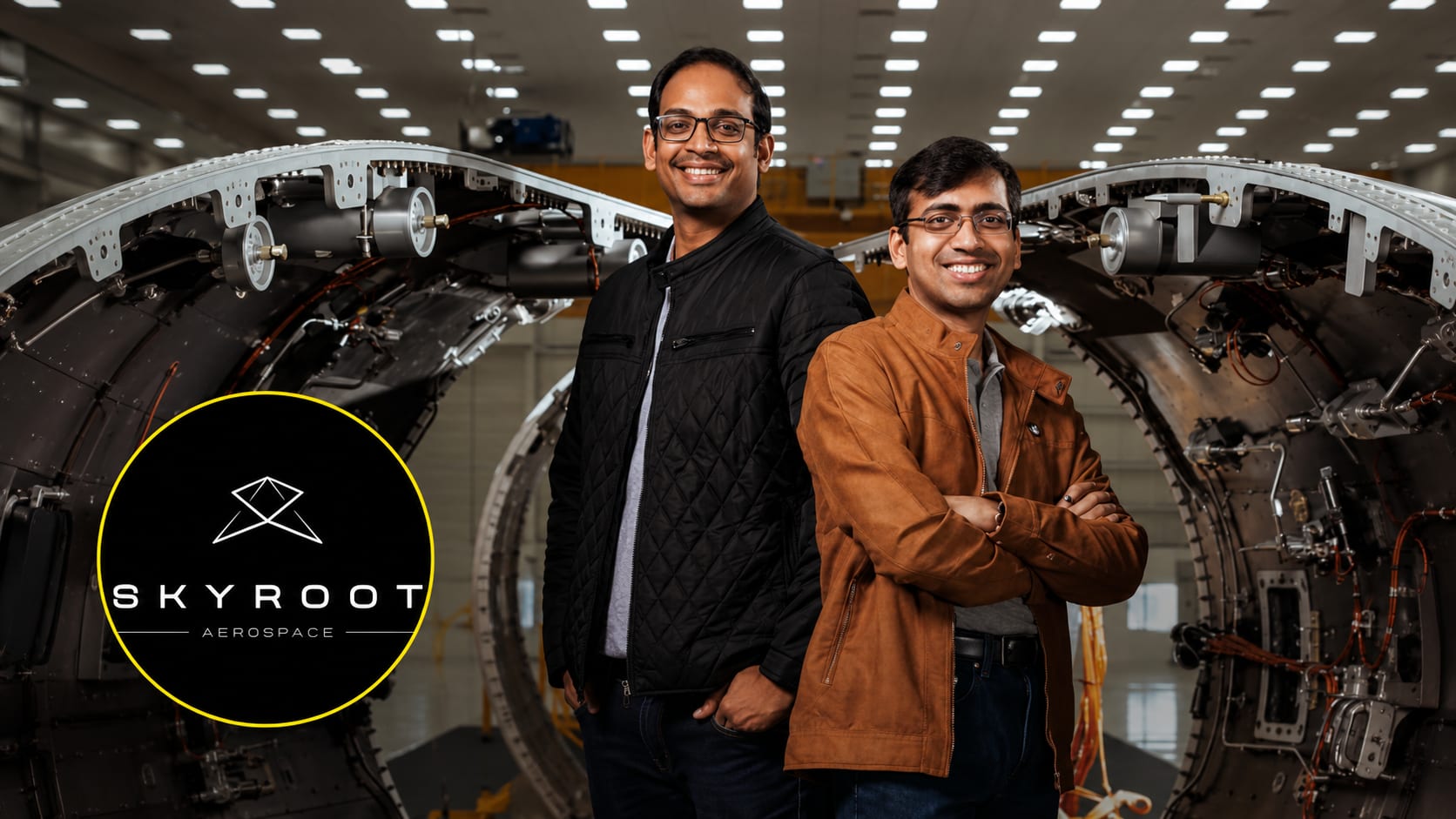
In 2018, Pawan Kumar Chandana did what most would consider career suicide. He walked away from a stable, respected job at the Indian Space Research Organisation (ISRO) to start a private space company in a country where private rocket launches were not even legally possible yet.
No business experience. No deep investor network. No guarantee that government regulations would ever support private players. Just a burning belief that India’s space future needed private innovation.
Today, his company Skyroot Aerospace is India’s first space-tech unicorn, valued at $1.1 billion, having raised over $160 million. Its Vikram-1 rocket recently became the country’s first privately built rocket to reach orbit. This is the story of audacity, persistence, and turning the “impossible” into reality.
The Leap of Faith
Chandana, an IIT Kharagpur alumnus, was working at ISRO when he saw the limitations of a purely government-led space programme. He wanted to build faster, cheaper, and more frequent launch vehicles.
He had no playbook. India’s space sector was tightly controlled. There were no dedicated space-tech investors and no clear regulations for private companies to build and fly rockets.
But Chandana started anyway. He cold-messaged a senior IIT Kharagpur alumnus who had built successful consumer startups. That single meeting led to his first major believer and $1.5 million in seed funding.
Along with co-founder Naga Bharath Daka, another ex-ISRO engineer, he founded Skyroot in 2018.
The Brutal Early Years
The timing could not have been worse. The COVID-19 pandemic hit soon after, freezing fundraising when Skyroot needed capital the most.
Building rockets is nothing like building software. It requires factories, expensive materials, rigorous testing, and physical infrastructure. A funding winter for a hardware company felt like a death sentence.
On top of that, India still lacked a proper regulatory framework for private space companies. Skyroot was literally building before the rules existed.
Yet, Chandana and his team pushed forward. They focused on developing their Vikram series of rockets, named after Dr. Vikram Sarabhai, the father of the Indian space programme.
Policy Tailwinds and First Milestones
In 2020, the Indian government opened the space sector to private players. Skyroot became the first startup to sign an MoU with ISRO — a crucial validation.
In November 2022, Skyroot’s Vikram-S became the first rocket built by a private Indian company to reach space. It was a sub-orbital flight, but it proved the technology worked.
This success opened doors. Investors who once saw space as too risky and capital-intensive began paying attention. Skyroot raised substantial rounds, bringing the total funding to over $160 million.
The Unicorn Moment: Vikram-1 Reaches Orbit
The crowning achievement came recently when Vikram-1 successfully reached orbit. This made Skyroot India’s first private company to achieve orbital launch capability — joining an elite global club.
Vikram-1 is a four-stage rocket capable of delivering up to 480 kg to Low Earth Orbit. The mission, named Aagaman, was flawless, with each stage performing as designed, including the innovative 3D-printed liquid engine in the Orbital Adjustment Module.
With this launch, India became only the third country (after the US and China) with private orbital launch capability.
Why Skyroot’s Success Matters
Skyroot’s journey is significant on multiple levels:
Democratising Space: It proves that private players can build reliable launch vehicles in India.
Cost Reduction: Private innovation is expected to bring down launch costs significantly, enabling more frequent missions for satellites, research, and defence.
Atmanirbhar Boost: Skyroot strengthens India’s self-reliance in critical space technology while creating high-skilled jobs.
Inspiration: For thousands of engineers and dreamers, Chandana’s story shows that leaving a safe ISRO job to build something audacious can actually work.
The Road Ahead
Skyroot is now preparing for more ambitious missions. Future plans include larger rockets, higher payload capacities, and more frequent launches. The company is also exploring opportunities in the growing small satellite market and potential international collaborations.
Chandana’s vision extends beyond rockets. He sees Skyroot as part of a larger ecosystem that will make India a global space power through private innovation working alongside ISRO.
Lessons from Chandana’s Playbook
Pawan Kumar Chandana’s journey offers powerful lessons for entrepreneurs:
Bet on Timing and Policy: He started just before major regulatory changes, positioning Skyroot perfectly.
Leverage Alumni Networks: A single cold message to a senior alum unlocked crucial early funding.
Build for the Long Game: Hardware businesses require patience and conviction through years of losses and uncertainty.
Focus on Execution: Despite funding winters and regulatory hurdles, consistent technical progress kept investors and ISRO engaged.
Dream Big but Stay Grounded: Chandana combined ISRO-honed engineering excellence with startup agility.
A New Chapter for Indian Space
Skyroot’s success as India’s first space-tech unicorn signals the beginning of a new era. The space sector, once the exclusive domain of ISRO, is now seeing vibrant private participation.
From a cold email and a leap of faith in 2018 to orbital success and unicorn status in 2026, Pawan Kumar Chandana has shown what’s possible when technical excellence meets entrepreneurial courage.
His story is not just about building rockets. It is about expanding India’s imagination of what is possible in space — and proving that private Indian companies can compete with the best in the world.
The sky was never the limit. For Chandana and Skyroot, it was just the beginning.