From Mumbai to Every Kitchen in India: The Snapin Success Story
When India’s Best Spices Were Leaving the Country
India is the world’s largest producer and exporter of chillies. Andhra Pradesh alone accounts for nearly 60% of the country’s chilli production. The Guntur district, in particular, has been growing some of the world’s most sought-after chilli varieties for centuries. Known for their vibrant colour, intense pungency, and rich flavour, Guntur chillies are prized from the USA and UK to China and the Middle East.
In FY24, India exported chillies worth over Rs 12,600 crore to global markets. Multinational spice companies and international food processors lined up to source from Andhra Pradesh. The irony was hard to miss: India was sending its finest produce abroad while Indian kitchens at home were still shaking powder out of plain sachets with no traceability, no story, and no assurance of quality.
Two guys from Mumbai decided to do something about it.
The Idea Behind Snapin
Dhruv Pahwa and Vishal Gupta were not farmers or food scientists. They were entrepreneurs who looked at India’s rich spice heritage and asked a question that no one had taken seriously enough: why was premium, traceable, properly sourced Indian spice not available in a form that everyday Indian homes could actually buy and use?
The spice market in India was dominated at the top by massive legacy brands. MDH, Everest, and others had built enormous distribution empires over decades. But their products were blended masalas built for the Indian cooking tradition. Nobody had seriously looked at the growing category of herbs and seasonings, things like oregano, chilli flakes, piri piri mixes, and international-style condiments, and tried to bring Indian sourcing standards and quality to them.
That was the gap Snapin stepped into.
They combined the global appeal of seasoning formats with the quality of homegrown Indian ingredients, starting with what India already had in abundance: the finest chillies on the planet, sourced straight from Guntur.
The Challenges Behind Snapin
Building a premium spice brand in India comes with layers of complexity that are easy to underestimate from the outside.
The first challenge was sourcing. Getting consistently high-quality raw produce from farmers in Andhra Pradesh required building relationships, setting quality standards, and creating supply chain infrastructure that most small brands simply do not have the resources to build at the start. Guntur chilli varieties range enormously in heat, colour, and flavour. Selecting the right variety, at the right stage of drying and processing, was a product decision that had to be made right every single time.
The second challenge was market education. Most Indian consumers in 2009 were not thinking about where their chilli flakes came from or whether their oregano was fresh. The premium seasoning category barely existed as a consumer habit. Snapin was not just selling a product. It was building awareness of an entirely new way of thinking about everyday cooking ingredients.
The third challenge was pricing. High-quality, traceable, properly sourced spices cost more to produce than the generic powders available on every kirana shelf. Convincing consumers to pay a small premium for meaningfully better quality in a category they had always bought by price alone required patience, consistency, and genuine product performance.
Why Indian Consumers Started Paying Attention
The timing eventually worked in Snapin’s favour. A new generation of Indian cooks was emerging, shaped by food content on YouTube, recipe platforms, Instagram cooking pages, and the explosion of home cooking during and after the pandemic years. This generation was reading ingredient labels, experimenting with global recipes, and looking for products that could help them recreate restaurant-style flavours at home.
Snapin was already there waiting for them.
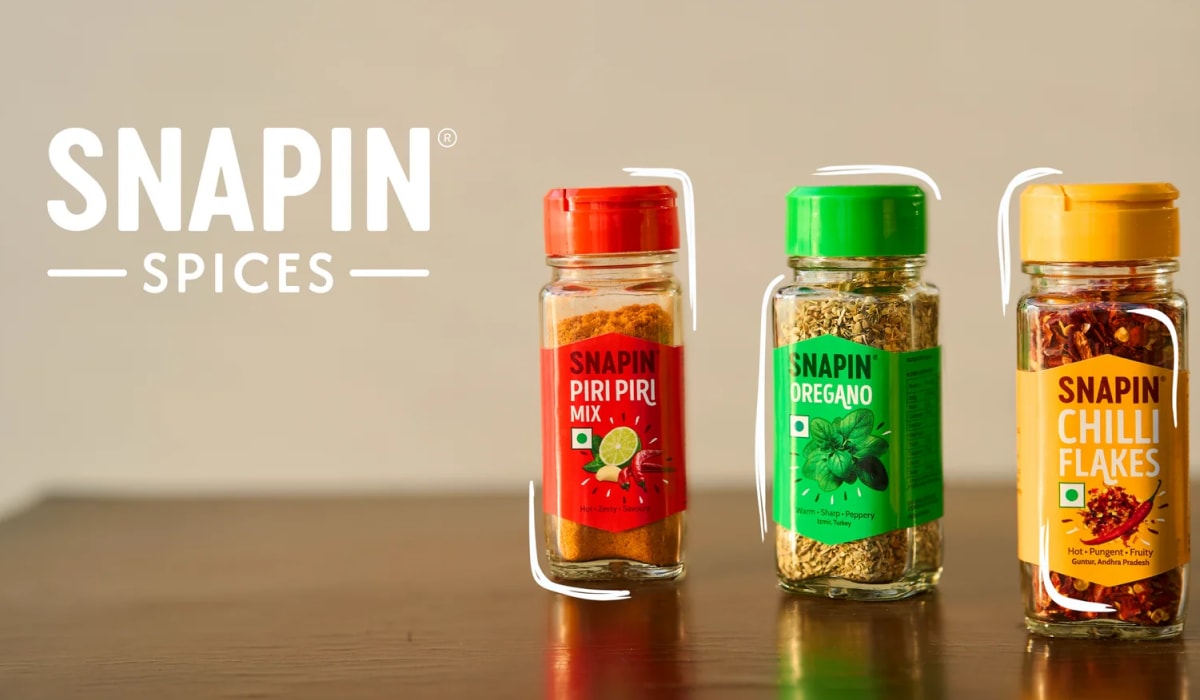
The brand’s Chilli Flakes, sourced directly from Guntur, offered the kind of heat and flavour that generic imported alternatives simply could not match. The Oregano brought freshness and aroma that mass-produced variants lacked. The Piri Piri Mix delivered a bold, layered spice experience that resonated with younger consumers drawn to global flavour profiles.
Products were packaged in clean, modern glass jars with a bright label design that communicated quality and confidence. They were not trying to look like an Indian masala brand, nor were they pretending to be an import. They occupied a space that was distinctly their own: proudly Indian in sourcing, modern in presentation, and genuinely good in quality.
The Product That Built the Brand
Of all the products in the Snapin range, the Chilli Flakes became the brand’s most recognisable calling card. Sourced from Guntur, Andhra Pradesh, known for its chilli trade with countries across the globe, the product turned one of India’s most exported commodities into something that finally stayed home.
It was a simple product with a powerful story behind it. India grew the world’s best chilli. Snapin bottled it for India first. That proposition resonated with consumers in a way that went beyond flavour. It felt like a corrective act. Something that should have existed a long time ago.
The Oregano, the Piri Piri Mix, the Mixed Herbs, the Pizza Mix, and the growing range of seasonings each added a layer to the brand. Together, they built a pantry staples identity that consumers could return to regularly, making Snapin part of the everyday kitchen rather than a one-time novelty purchase.
Growth That Came From the Kitchen
Snapin’s growth has been organic and consistent rather than funded and explosive. The brand remains bootstrapped, with no external investment rounds, growing through product quality, retail expansion, and the quiet momentum of consumers who discovered the brand, liked what they found, and came back.
The brand is available across Amazon, Flipkart, BigBasket, and other major e-commerce platforms, as well as through retail grocery channels. With 151 employees as of 2025 and a year-on-year growth in team size of over 30%, the brand is clearly in an active scaling phase. Revenue has crossed ₹20 crore annually, a milestone that reflects consistent demand across a growing consumer base.
Where Snapin Stands Today
Today, Snapin offers a wide range across chilli flakes, oregano, piri piri, mixed herbs, pizza mix, cardamom powder, onion powder, garlic powder, pasta mixes, and baking essentials. The range caters to both Indian and global cooking styles, positioned for the home cook who wants quality, convenience, and flavour without compromise.
The brand competes in a category that now includes global players like McCormick and homegrown challengers like ZOFF Foods. But what Snapin carries that most competitors cannot easily replicate is its sourcing story. It did not make its way into Indian kitchens. It started with what India already had, treated it with the respect it deserved, and made sure Indian homes got first access to it.
More Than Just Spices
Snapin is not a brand that was built by chasing a global trend or designing a product for Instagram. It was built by two people from Mumbai who looked at a genuine imbalance: India exporting its finest produce while domestic consumers settled for less, and decided to fix it from the ground up.
They built slowly, sourced honestly, and let the product speak before the marketing did.
And sometimes, the most important brands are not the loudest ones in the room. They are the ones who quietly made something better and trusted consumers to notice.