How a Bullock Cart Soda Seller’s Son Built a ₹1,000+ Crore Empire That Defeated Coca-Cola
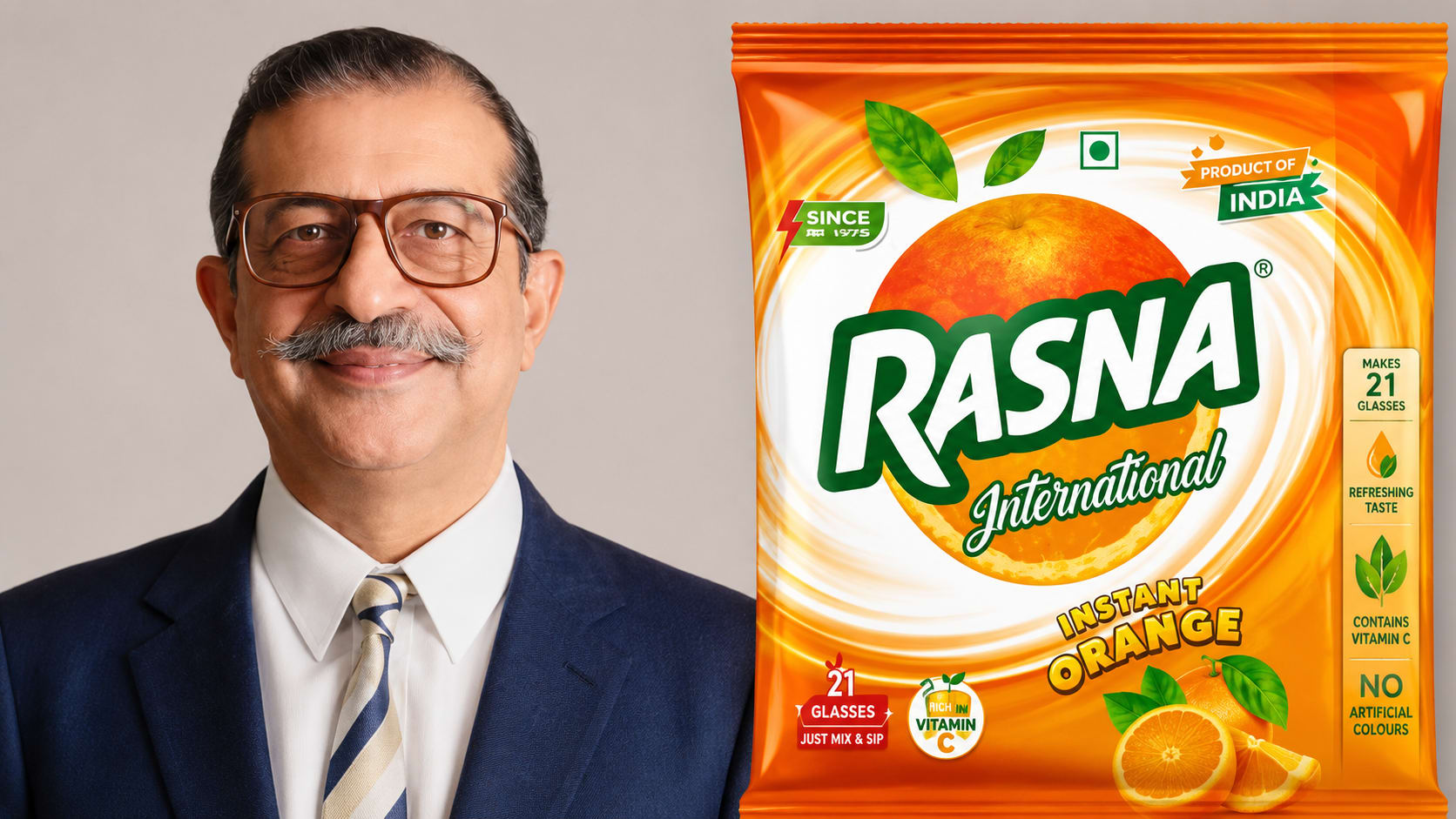
In the 1920s, a determined man in Ahmedabad pushed a bullock cart through narrow lanes, selling soda water bottle by bottle. Little did he know that his simple hustle would lay the foundation for one of India’s most resilient consumer brands decades later.
His son, Areez Khambatta, would transform that modest family trade into a household name that dominated the powdered soft drink category for generations and successfully fought off challenges from some of the world’s largest beverage corporations.
This is the inspiring journey of Rasna.
The Early Days: From Jaffe to Rasna
Areez Khambatta grew up immersed in the world of affordable refreshment. Watching his father deliver soda door-to-door instilled in him a deep understanding of Indian consumers’ desire for simple, economical, and tasty drinks.
In 1976, he leaped and founded a company initially called Jaffe. By 1980, it was renamed Rasna, a name that would soon echo in millions of Indian homes.
The core idea was brilliantly straightforward: offer a high-quality powdered soft drink concentrate that households could mix with water at home. It was far cheaper than bottled soft drinks, required no refrigeration, had a long shelf life, and allowed families to adjust sweetness according to taste.
In a country where large joint families were the norm and budgets were tight, Rasna was a perfect fit.
The Cultural Phenomenon: “I Love You, Rasna”
The brand’s real breakthrough came with its advertising. The iconic jingle “I Love You, Rasna” captured the imagination of an entire generation. Airing during the 1980s when television was becoming central to Indian households, the campaign turned Rasna into more than just a drink; it became a symbol of joy, togetherness, and childhood memories.
Mothers loved it for its convenience and economy. Children loved the fruity flavours. Rasna quickly became the generic term for powdered soft drinks in many parts of India, a rare “brand to category” dominance similar to Maggi or Xerox.
By the mid-1980s, Rasna had established itself as the undisputed leader in its segment.
The Multinational Challenge: Four Giants, Zero Surrender
Success always attracts competition, and Rasna’s dominance did not go unnoticed.
Global beverage giants saw the potential in the powdered soft drink category and launched direct challengers:
Coca-Cola introduced Sunfill.
Hindustan Unilever (through Kissan) launched Fruit Kick.
Fanta (Coca-Cola group) entered the powder format.
Tropicana also tried its hand at the category.
These were not small players. They brought massive marketing budgets, global R&D, sophisticated distribution networks, and years of international expertise.
Most Indian brands would have crumbled under such pressure.
But Rasna didn’t just survive it thrived.
One by one, each competitor eventually retreated from the powdered concentrate space. Rasna held its ground, maintained its leadership, and continued growing.
What Made Rasna Unbeatable?
Several factors contributed to its remarkable resilience:
1. Deep Consumer Insight
Rasna understood the Indian middle-class psyche perfectly: the need for value, taste, variety, and convenience. While multinationals focused on premium positioning, Rasna stayed true to the mass market.
2. Relentless Focus on Quality and Innovation
The company continuously improved its formulations, packaging, and flavours while keeping prices accessible. It never compromised on taste, which helped retain customer loyalty.
3. Strong Distribution Network
Rasna built and defended an extensive distribution system reaching even smaller towns and villages, something many competitors struggled to replicate cost-effectively.
4. Emotional Brand Equity
The “I Love You, Rasna” campaign created deep emotional connections across generations. That nostalgia proved incredibly difficult for new entrants to break.
5. Bootstrapped Discipline
Rasna remained a self-funded, zero-debt company for decades. This independence allowed quick decision-making and long-term thinking without pressure from external investors.
Rasna Today: An Enduring Success Story
The numbers speak for themselves:
Rasna commands roughly 90% market share in India’s powdered soft drink concentrate category.
The brand is available in 1.8 million retail outlets across the country.
It has expanded its presence to 40–53 countries internationally.
The company has stayed completely debt-free and self-reliant throughout its journey.
Even today, Rasna remains a staple in Indian kitchens. Generations have grown up with its bright colours and fruity flavours, creating a powerful legacy that continues to deliver results.
In 2023, Areez Khambatta was posthumously awarded the Padma Shri, one of India’s highest civilian honours, in recognition of his outstanding contribution to Indian industry. The award came a year after his passing, a fitting tribute to a visionary entrepreneur.
Lessons Every Indian Founder Can Learn from Rasna
Rasna’s story is rich with timeless business wisdom:
Solve real consumer problems: Focus on affordability, convenience, and taste rather than chasing trends.
Build emotional connections: A strong brand feeling can be more powerful than superior technology or global muscle.
Defend your moat: When competition comes, double down on what makes you unique instead of copying others.
Stay disciplined with capital: Bootstrapping can give you freedom that funded startups often lack.
Play the long game: True market leadership is built over decades, not quarters.
In today’s startup ecosystem, where valuation often takes precedence over sustainable profits, Rasna offers a refreshing counter-narrative — a company that grew steadily, profitably, and independently for nearly five decades.
The Legacy Lives On
From a bullock cart in the streets of Ahmedabad to millions of glasses raised in celebration across India and beyond, Rasna represents the very best of Indian entrepreneurship: frugal innovation, deep consumer understanding, and unyielding resilience.
Areez Khambatta didn’t just build a company. He created a brand that became part of India’s cultural fabric a sweet reminder of simpler times, family gatherings, and childhood summers.
In an era of rapid disruption and global competition, Rasna stands tall as proof that with the right product, sharp execution, and unwavering focus, an Indian brand can not only compete with the world’s best but also defeat them on home ground.
Here’s to Rasna, a true Indian success story that continues to refresh generations.