How Bengaluru Startup Hooly is Building an AI Fitness Coach That Actually Cares
We’ve all been there. You set a New Year’s resolution to hit the gym, download a popular fitness app, and track your meals for exactly four days. Then, a late-night work meeting runs over, you skip a workout, and the app hits you with a cold, robotic notification: “You missed your goal today.” Guilt sets in, the app gets buried in a folder on your phone, and the fitness journey ends before it even begins.
The truth is, the world doesn’t lack fitness information; it lacks sustainable motivation. Most fitness apps operate purely in the feedback loop: they tell you what you did or didn’t do after the fact. But what if a fitness coach could intervene before you quit?
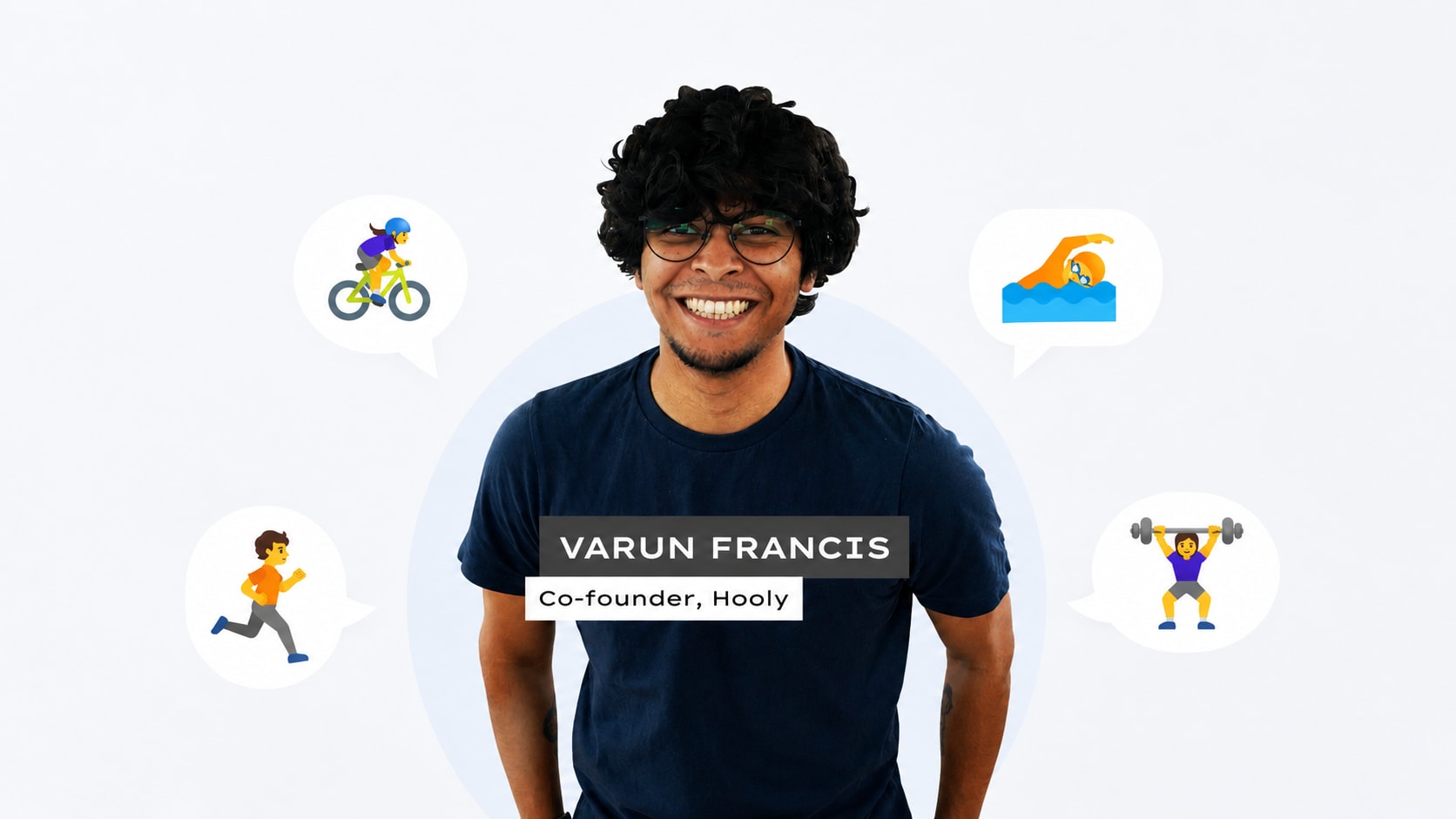
That is the exact problem Bengaluru-based healthtech startup Hooly is trying to solve. Founded by Varun Francis and Pavan Gowda, Hooly is an AI-powered fitness accountability coach designed to understand human psychology, behavioral nudges, and the unique challenges of staying fit, especially for those over 35.
A Health Coach That Understands Motivation
According to a 2024 report, only one in 10 Indians exercises on any given day. Historically, Indians have not prioritised structured fitness in the same way people in Western countries have. Hooly is built with this reality in mind.
Francis explains that while India may not have a strong gym culture, it has always had a deep-rooted focus on health through practices like yoga and nutrition. The country’s diversity, however, makes a one-size-fits-all approach difficult.
“Very few people have tried to solve this problem for the Indian subcontinent while keeping its diversity in mind. That’s where personalisation, enabled with AI, comes in. A 45-year-old man with a knee injury will have very different health goals from someone in their 20s. With Hooly, we want to be that personalised health coach,” says Francis.
Hooly’s approach:
The system learns each user’s goals, schedule, and physical condition.
It recommends realistic exercises rather than generic plans.
It adjusts suggestions in real time when life intervenes.
It uses gentle behavioural nudges instead of rigid daily plans.
It prioritises consistency over perfection.
Standing Out in a Crowded Fitness Ecosystem
Metropolitan cities in India are showing greater fitness awareness. Morning runs, crowded gyms, and health apps are now common. In such a crowded space, the question arises: why is another solution needed?
Francis says the answer lies in the product’s architecture. “Our architecture allows us to be proactive in a way most apps are not able to. If you think of habit formation as a loop of trigger, action, and feedback, most apps operate in the feedback stage. We come in the trigger and action stages of the cycle.”
When users say they cannot complete a certain exercise, the AI has been able to change their minds about 30% of the time by suggesting a simpler or more realistic alternative. Another key differentiator is access: Hooly operates on WhatsApp, removing the friction of downloading yet another app.
The founders have also designed the product to avoid information overload. “LLMs like ChatGPT tend to answer queries with long explanations. But sometimes, users don’t want to learn; they just want a quick answer. We keep our responses to one or two lines at the most,” says Francis.
On the technology side, Hooly uses OpenAI’s GPT models for conversational responses, while Anthropic’s Claude powers more analytical outputs such as weekly performance feedback. It uses ElevenLabs for voice check-ins.
Funding and the Road Ahead
Ahead of its pivot in 2025, Hooly raised ₹10 lakh from friends and family. The startup is now preparing to raise $500,000 in a pre-seed round to fuel its next phase of growth.
“The idea is to use the funding to double down on our go-to-market strategy and get to 10,000 active users,” Francis says.
Hooly competes with other Bengaluru-based startups such as SuperLiving and HealthifyMe. Francis believes its capacity for personalisation and proactive conversation sets it apart. “Users don’t need to download another app to talk to Hooly. It is also far more conversational and proactive in both training and nutrition,” he says.
While many consumer healthtech startups choose to build and scale from the US, Francis and Gowda have decided to remain headquartered in India. “Hand to heart, I really love Bengaluru. The US market is very crowded, and most players are focused on younger users, and not the slightly older segment we are building for. From a business standpoint, there’s a white space we can capture in India—and on a personal level, I genuinely like being here.”
By combining AI personalisation, WhatsApp accessibility, and behavioural nudges, Hooly is attempting to solve a problem that traditional fitness apps often overlook: sustained motivation. For users who know what they should do but struggle to do it consistently, a thoughtful online fitness coach that adapts to real life may prove more valuable than another tracking dashboard. As the product moves beyond its early users, the test will be whether this empathetic, proactive approach can scale while retaining the personal touch that current users appreciate.
FAQ: What Makes Hooly Different from a Typical Online Fitness Coach?
Q: How is Hooly different from other fitness apps?
A: Most apps focus on tracking after you finish a workout. Hooly acts earlier in the habit loop by providing triggers and realistic actions, functioning more like a proactive online fitness coach.
Q: How much does Hooly cost?
A: The product is currently priced at ₹999 per month. It was earlier tested at higher price points, including $30 for early US users.
Q: How does the cost compare to a human trainer?
A: At ₹999, or even at the earlier $30 price, it remains far cheaper than a personal trainer or traditional online fitness coach, while offering personalisation and 24×7 availability.