PRESS RELEASE
How Lighting Changes Wall Texture Design: Choosing Textures That Look Better Day and Night
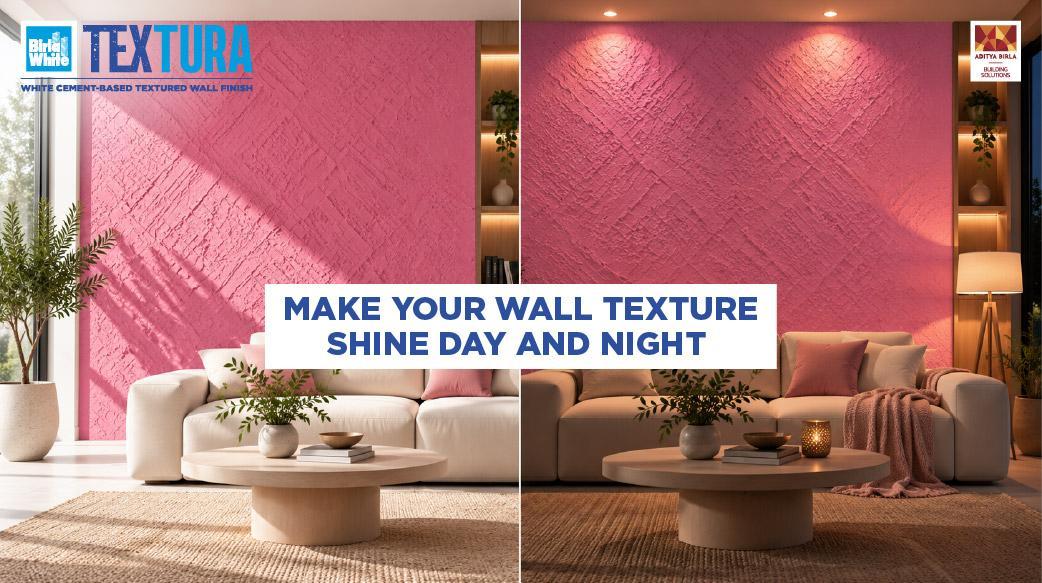
A wall with the perfect texture can make a world of difference - the moment the lights are turned on.
When Meera first redesigned her living room, she knew that she wanted a wall with a beautiful wall texture design that would create a feeling of warmth, sophistication and a sense of the contemporary.
After days of browsing through texture paint designs, she eventually found one that she absolutely adored.
She had a beautiful texture, with delicate shadows in the afternoon light. Depth, character, the perfect amount of drama. It couldn't have been better.
But that evening, something was off.
With the ceiling lights turned on, Meera noticed that the wall did not have as much depth as it did in the afternoon.
Some marks stood out while others were swallowed up by the new lighting.
What Meera had discovered was a design secret that many homeowners miss out on.
While texture gives a wall its character, the lighting in which this character is revealed can change the perceived appearance of a wall.
When it comes to painting a living room, bedroom, hallway or façade, the lighting can affect how the patterns on a wall are revealed and the overall finish.
So, before you choose from the latest modern texture paint designs, think not just of the wall, but also of how the wall will look with the natural light, the gentle glow of evening and the bright lights that dominate the evening.
Why Does Lighting Matter When Choosing a Wall Texture Design?
Texture creates variation in the depth of the wall.
This variation interacts with light to create highlights and shadows.
While a smooth paint wall tends to reflect light quite evenly, a textured surface can reflect and scatter light across its surface.
This means that the same wall texture design can look completely different depending on:
- Different angles of light
- Different intensities of light
- Warm or cool lighting
- Natural or artificial lighting
- The distance at which the light source is placed from the wall
- Texture depth and pattern
This is why choosing a texture should not be an independent exercise.
Wall texture + colour + lighting = the final perception.
1. When Natural Light Becomes Your Design Partner
Back to Meera's living room.
As the morning sun peeks in through the window, she notices how the light falls across the wall. As the day goes on, the varying angles of the sun create subtle shadows on the wall.
This effect does not make the wall move, but it does create the illusion that it does.
For homes where there is ample natural lighting, homeowners can consider experimenting with textures with visible patterns, depth or even directional movement.
Consider:
- The angle of the windows
- How much sunlight comes into the room
- Whether the wall is directly lit or not
- How the texture looks at different times of the day
A subtle texture that appears understated in the morning can become more dramatic when afternoon sunlight falls on it.
Design tip: Before you choose a texture, observe the wall at different times of the day. The relationship that the wall has with sunlight can be just as important as its colour.
2. Warm Lighting Can Make Texture Feel Cosier
As the evening comes around, Meera switches off the bright overhead light for the warmer glow of evening.
Once again, the wall transforms.
Warm lighting can help create this feeling of cosiness and can make certain texture finishes feel richer and more intimate.
This can be particularly useful in:
- Living rooms
- Bedrooms
- Reading corners
- Dining spaces
- Feature walls
If a warm and comforting environment is the goal, think about how warm lighting will interact with the colour and texture paint designs that you want.
A textured surface can become a part of this aesthetic, complementing the other elements in the room.
3. Directional Lighting Can Highlight Texture
If you want your wall texture to become the star of the room, this is where directional lighting can make a noticeable difference.
Rather than illuminating the whole room evenly, a directional light can be used to highlight the varying depths of the texture.
A textured wall can become:
More dimensional.
More dramatic.
More architectural.
When the intention of your design is to highlight your texture, light-washing and grazing light styles should be considered.
However, very directional lighting can sometimes exaggerate imperfections. This is where the quality of the texture, surface preparation and overall application comes into play.
4. Not Every Texture Needs Dramatic Lighting
Another thing that Meera learnt from her wall texture was that a feature wall does not always need to make a statement.
Some modern texture paint designs are created to add subtle depth and not stand out from the crowd.
For minimalist interiors, gentle lighting combined with a more modest texture can create a sophisticated backdrop.
This can be a good option if the room has features like:
- Statement furniture
- Decorative lighting
- Bold colours
- Patterned fabrics
The key is not just choosing a beautiful texture but choosing a texture that complements how your space is illuminated.
From Daylight to Dinner: See Your Wall Differently
Back to Meera's living room.
Morning: the wall looks fresh.
Afternoon: sunlight brings out its depth.
Evening: warm lighting softens the finish.
Night: an accent light is carefully placed to throw shadows that make the texture stand out.
All in one wall, but with four unique moods thanks to different lighting.
This is what happens when we combine texture and lighting thoughtfully.
Before you go ahead and paint a wall, consider placing a sample or test patch in the intended location and looking at it under both natural and artificial lighting to see if the lighting fits with the purpose of your design.
They are chosen for how they come alive on a wall.
Give Your Walls More Than a Finish
Looking to transform an ordinary surface into a wall that will catch light and shadow and bring depth and character to your space? Textures can add a touch of elegance or make a statement that extends your space and adds interest.
Whether you'd like to enhance the beauty of your wall or want to make a feature of it, these different textures will help you make the most of your space.
Explore Birla White Textura and discover finishes that can bring your wall texture design ideas to life. Give your walls a finish that looks distinctive, feels intentional, and complements your overall décor.