How Miraggio Built a Handbag Brand Between High Street and Luxury
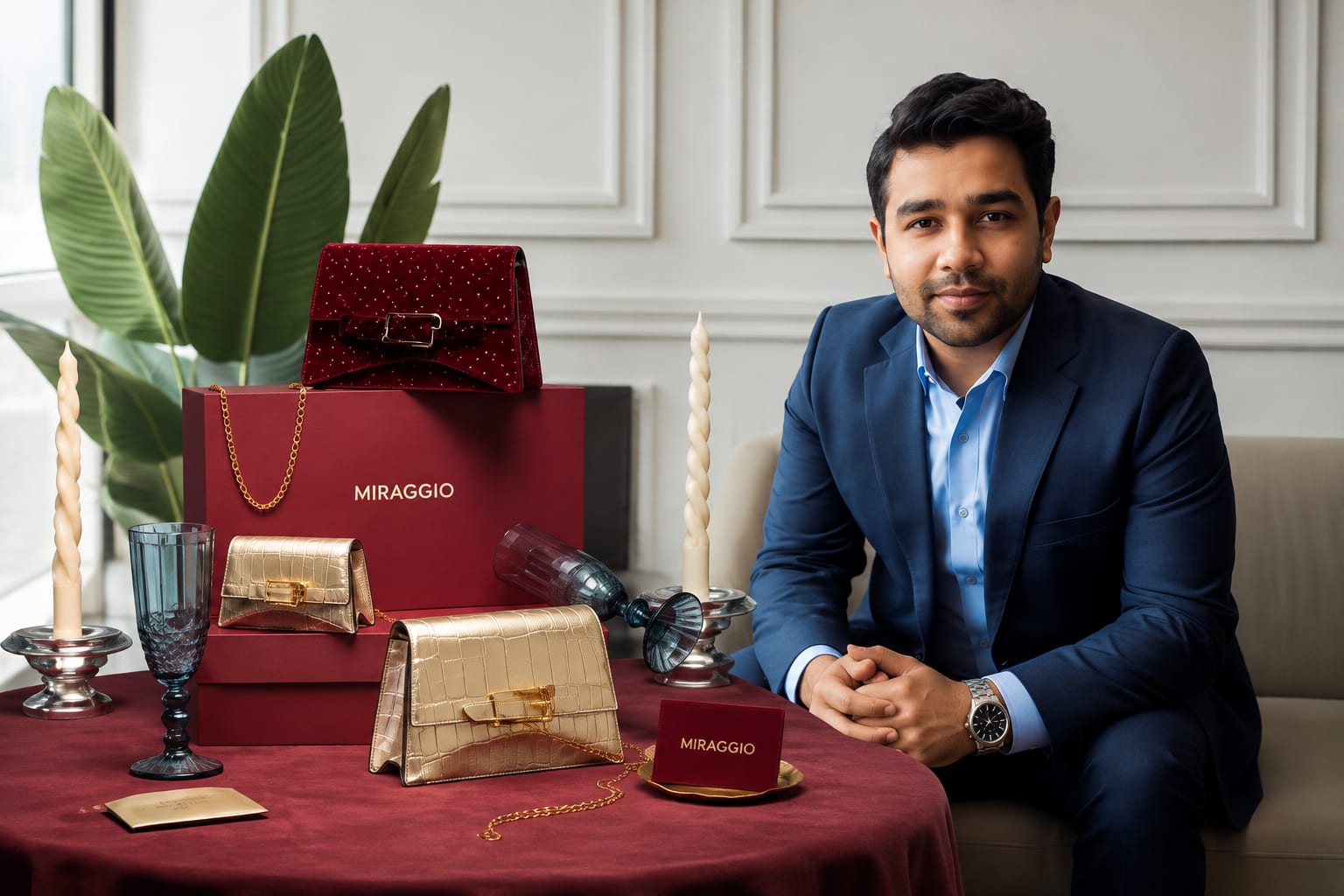
Since 2019, direct-to-consumer bag maker Miraggio has been carving out space in India’s handbag market, a category long divided between high-end luxury labels and budget-friendly mass products. With an average price point of around Rs 3,000, the Gurugram-based brand aims to occupy the relatively under-served mass-premium segment.
Miraggio has so far operated as a digital-first brand, selling through its own website as well as marketplaces such as Myntra, Amazon, Ajio, Nykaa and Tata CLiQ. It is now preparing to strengthen its omnichannel presence by expanding into multi-brand outlets like Shoppers Stop and Lifestyle, and by exploring airport stores or kiosks. The company’s ambition is to reach Rs 100 crore in annual recurring revenue.
“Our ability to build the brand on the digital front across the domains, staying ahead of fashion trends, bringing the agility to launch bags every month and adapting to emerging trends are our key differentiators,” says Mohit Jain, Founder of Miraggio.
Filling the Gap in Homegrown Handbags
Jain set out to create a made-in-India alternative that could match the quality and experience associated with more expensive international handbags. Although the brand was founded earlier, pandemic-related disruptions meant it only began selling in September 2021.
He describes the market as split between two poles. On one side were mass-market brands such as Caprese and Lavie, largely priced below Rs 2,000. On the other were international premium labels that often sold in India at significantly higher prices than in their home markets. Miraggio positioned itself in the Rs 2,000–6,000 range to serve customers looking for better design and quality without crossing into full luxury pricing.
The company works with a team of about 10 people, including four Indian designers and two overseas consultants. Designs are created in-house, while manufacturing is outsourced to factories across Asia. Contract manufacturers send samples for evaluation, and only selected designs move into production. This model allows the brand to move relatively quickly while keeping overheads controlled.
Design, Materials and Sustainability
Miraggio’s bags are made of faux leather. The company uses recyclable packaging materials and includes a reusable dust bag with each order. “These dust bags serve a dual purpose—they protect our products and encourage our customers to minimise waste by using these bags in their daily lives,” Jain explains.
The focus on faux leather and reusable packaging reflects an effort to reduce environmental impact while remaining commercially practical in a price-sensitive category.
Business Model and Traction
The brand primarily targets consumers under the age of 35, though Jain emphasises that the products are intended for anyone who finds them appealing. As of May 2024, Miraggio reported a gross merchandise value of Rs 80 crore.
Around 25–30% of sales come from its direct-to-consumer website, with the remainder generated through ecommerce marketplaces. The brand reports a 26% customer retention rate and has seen about 15% month-on-month growth on Myntra, where it ranks among the stronger contributors in its category. Similar traction is reported on other platforms.
Miraggio currently offers products across four main categories: satchels, totes, crossbody bags and shoulder bags. With more than 350 SKUs live, the company expects to expand to 500–600 SKUs within 12 months. Branding and marketing account for roughly 17–18% of expenses, reflecting the importance of visibility in a visually driven fashion category.
“Our core brand strategy caters to consumers between the age group of 20-35 years but my personal belief is that we make interesting products for interesting people, irrespective of age group,” Jain says.
Funding and Competitive Landscape
India’s handbag market is competitive, with players such as Zouk, Charles & Keith, Aldo and Da Milano. Industry estimates have projected the market to approach nearly $2 billion. Despite operating at a higher price point than many mass brands, Miraggio claims 120% year-on-year growth and says it is profitable.
In November, the company raised $1.2 million in a pre-Series A round co-led by Seven Rivers Holding and Magnetic. Before that, it was bootstrapped and supported by Jain and his family. “We have built this brand very sustainably, without burning money. The capital with which I built this business is very little compared with other businesses at this stage... it’s a very frugal way of running the business,” he adds.
What’s Next
Over the following six months, Miraggio plans to introduce new subcategories, including backpacks, wallets, small leather goods, laptop sleeves and laptop bags. The brand intends to remain focused on women-centric products for the foreseeable future.
Alongside product expansion, the shift toward offline retail through multi-brand stores and airport locations marks an important next step. Success in those channels will depend on consistent design, quality control and the ability to translate a digital-native brand into physical retail environments.
By targeting the space between budget and luxury, maintaining a relatively lean operating model and expanding both its assortment and distribution, Miraggio is attempting to build a durable position in India’s evolving handbag market. The coming phase of omnichannel growth will test how effectively a digitally built brand can scale beyond its original online base.