FOUNDERS
How Nataraj and Apsara Made Hindustan Pencils a Household Name in India
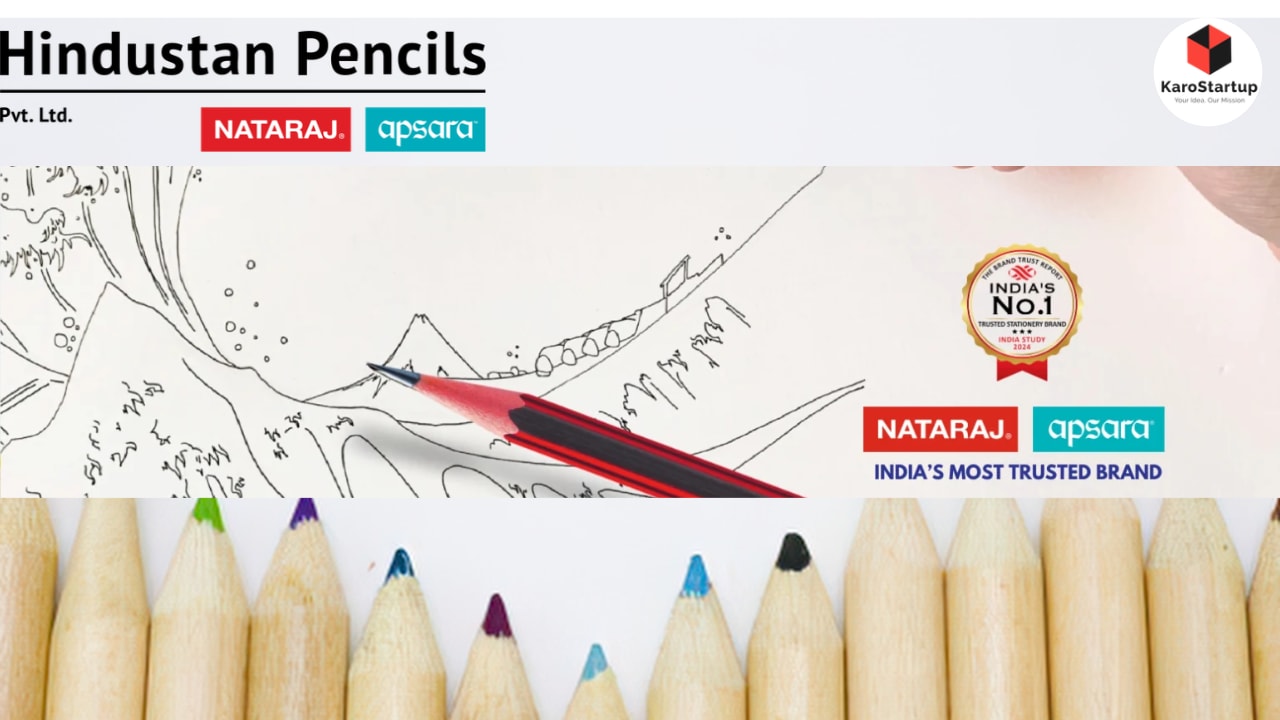
It’s the 1950s, and a child in a Bombay classroom bends over a notebook, pencil in hand.
The teacher is speaking. The words are coming fast. The child presses down to keep up.
Snap.
The lead is gone, and so is the thread of the lesson. The child reaches for the sharpener and turns the pencil slowly. The wood splinters and the point crumbles again. By the time it is fixed, the teacher has moved on.
This happened in classrooms all over the country, every day. Pencils broke. Children sharpened them and went on.
The good pencils, the ones that held a point and sharpened cleanly, came from somewhere else. They came from Germany, the UK and Japan. If you wanted a pencil that worked, you needed one that had crossed an ocean to reach you.
In Bombay, three friends found they couldn’t accept that.
Their names were B.J. Sanghvi, Ramnath Mehra and Mansookani. Why, they wondered, should a country full of children depend on pencils made in other countries? It was wrong, and they believed it could change.
There was only one problem. They had no idea how to make a pencil.
Most people would have let the idea go there. These three bought tickets to Germany.
They didn’t go as experts or as visitors. They went as students, to a place that had spent generations perfecting the craft. They stood in workshops and watched, listened and asked questions, and slowly the secrets of the humble pencil opened up to them.
They learned how to choose the right wood, the kind that sharpens smoothly instead of splintering in a child’s hand. They learned how to mix graphite and clay in precisely the right ratios, because that balance decides whether a pencil writes soft or hard. And they learned the hardest lesson of all, which was how to make every pencil exactly the same as the last.
In 1958, they came home and started Hindustan Pencils in Bombay.
Their first pencil carried a name taken from Lord Shiva’s dance form: Nataraj.
Twelve years later, in 1970, they launched a second brand, made for artists: Apsara.
Then something quiet happened, the kind of change nobody announces. The red and black stripes slipped into everyday life across India.
They appeared in exam halls, gripped by nervous fingers in the silence before the paper began. They appeared in drawing books, where first rivers, mountains and houses took shape. They appeared in school bags, rattling in the corners, lost, found, borrowed and lost again.
For generation after generation, these pencils became part of what it meant to grow up in India.
And the story didn’t stop at the classroom door. Today, Hindustan Pencils makes:
8.5 million pencils a day
2.7 million erasers a day
1.7 million sharpeners a day
Its products travel to more than 50 countries, and it runs 10 factories across India.
The country that once waited for pencils to arrive from overseas now sends its own out into the world.
India once imported its pencils. Now the world buys India’s.
What this story teaches
If you don’t know how, go and learn. The three friends didn’t guess their way through. They travelled to Germany before making a single pencil.
Solve a problem everyone has, every day. A pencil that doesn’t break sounds small, but it is used in millions of classrooms by millions of hands.
Consistency is the product. Every pencil has to work like the last one.
So tell us: Nataraj or Apsara, which one did you use in school?
Related Articles
The ₹3 Gamble: The Story of Nirma Detergent Powder
The Student Who Believed Design Should Be Easy: The Story of Canva