How Two IIT Madras Graduates Built an Indian EV Champion
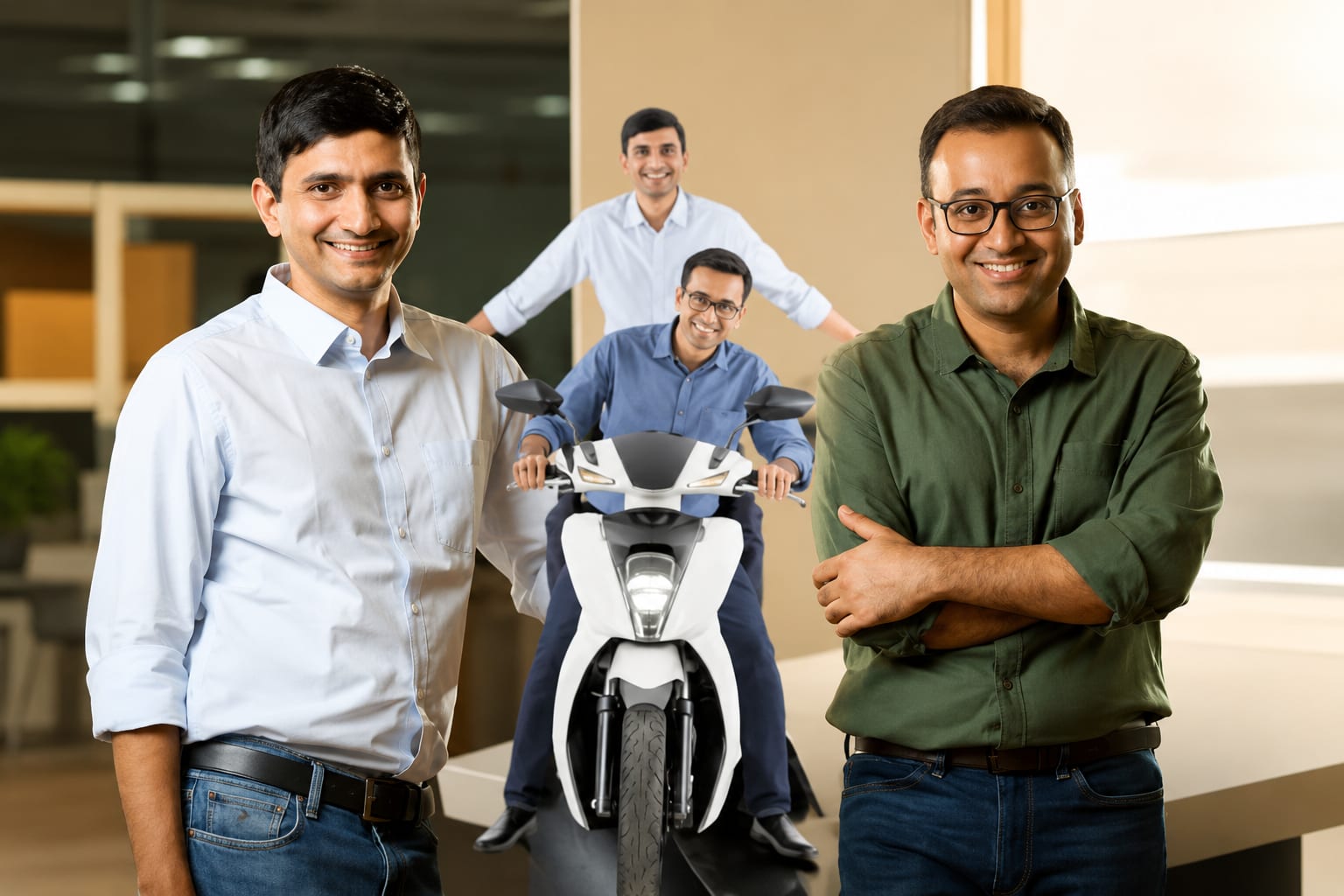
In September 2014, two young IIT Madras graduates sat in an empty hostel room and made a grim decision: shut down their company.
They had 11 months of runway when they started. Now, it was gone. No money left. No investors willing to write a cheque. Just mounting personal loans and the crushing weight of a vision that no one seemed to understand.
This is the story of Ather Energy how it almost died (by some accounts, five times) before becoming one of India’s most valuable electric vehicle companies.
From Battery Packs to a Full Reimagination
Tarun Mehta and Swapnil Jain didn’t set out to build a scooter. They wanted to solve India’s battery problem. Lithium-ion packs in early electric two-wheelers were terrible degrading fast, unreliable, and imported.
The deeper they dug, the clearer it became: you couldn’t just slap a better battery into existing designs. The entire electric two-wheeler had to be rethought hardware, software, user experience, charging. There was no playbook for this in India.
When they pitched investors on a genuinely smart, connected electric scooter, one response became infamous: “Why don’t you just buy a Honda Activa and convert it to electric?” Swap the engine for a motor. Done.
Mehta and Jain refused. They wanted to build something real, not a hack. That stubbornness nearly killed them.
The First (and Almost Final) Crisis
By September 2014, the tank was empty. They survived October on personal loans and sheer willpower. They had set a deadline: if nothing changed by November, Ather would close for good.
A potential investor group in Bengaluru seemed like the last hope. Tarun traveled from Chennai for the meeting. It collapsed the investors backed out.
As despair set in, Tarun remembered a cold email he had sent months earlier. Flipkart co-founder Sachin Bansal had replied positively. In a last-ditch move, Tarun reached out.
Bansal didn’t just invest he and Binny Bansal put in the entire $1 million seed round themselves in December 2014. Ather survived.
The Road Was Still Full of Potholes
That wasn’t the only brush with death. According to Tarun Mehta, Ather faced near-existential crises multiple times in the early years funding dry spells, product development delays, cost overruns, and scaling nightmares in a market that lacked an EV ecosystem.
They built prototypes in frugal conditions at IIT Madras.
Early revenue came from professors and angels who believed in the vision.
They insisted on in-house development for critical components (batteries, chargers, software) when shortcuts were the norm.
Supply chain issues, semiconductor shortages, and high costs tested them again and again.
Yet they persisted. The first scooters (340 and 450) launched in 2018. The connected, premium experience with over-the-air updates, a strong app ecosystem, and Ather Grid charging network set them apart.
Where the Hostel Room Dream Landed
Today, Ather Energy is listed on the NSE (ATHERENERG). As of mid-2026, its market capitalization hovers around ₹46,000–47,000 crore.
Hero MotoCorp is the largest shareholder, with a stake that has grown significantly (approaching or exceeding 30% in various reports).
Ather ranks among the top electric two-wheeler makers in India, known for premium, tech-forward scooters like the 450X series and Rizta.
Cumulative sales have crossed hundreds of thousands of units, with strong growth in recent years and an expanding retail and charging footprint.
Lessons from the Brink
Being right early doesn’t protect you from almost dying. The idea was sound India’s shift to EVs was inevitable but building the right thing took far longer and cost far more than anyone expected.
Ather’s story shows that success in deep-tech hardware isn’t just about the product. It’s about resilience, the right people believing in you at the right moment, and refusing to compromise on quality even when shortcuts look tempting.
Sometimes, the difference between a company that survives and one that doesn’t is one phone call to the right person.
Tarun Mehta and Swapnil Jain turned an empty hostel room into a company that helped redefine India’s electric mobility landscape. Their journey proves that the best startups aren’t the ones that never face failure they’re the ones that refuse to stay dead.