Killer Jeans: From a Mumbai Gamble to India’s Denim King
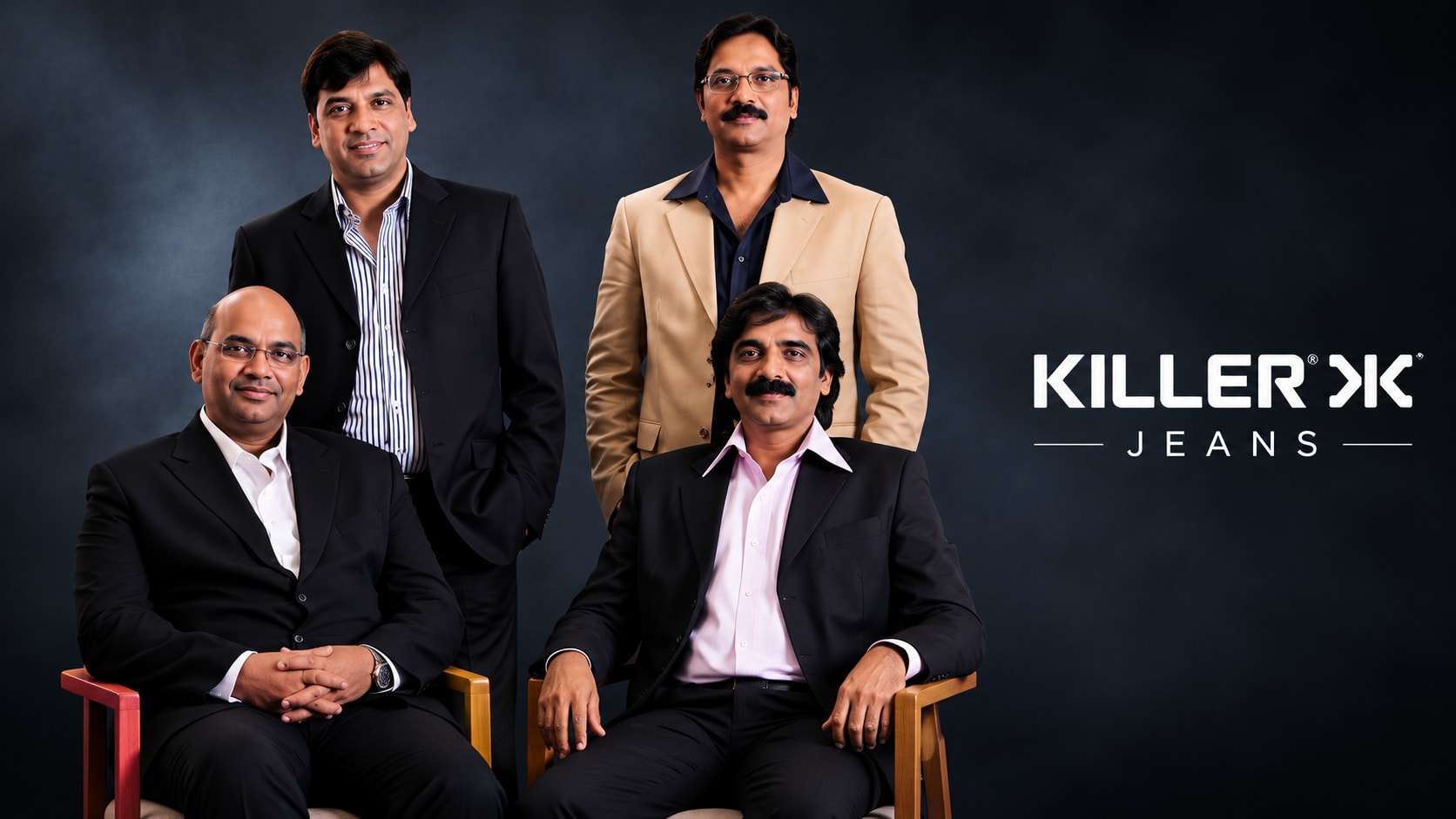
In the 1980s, India had no real homegrown denim brand. Jeans were either imported, expensive, or poor-quality imitations. Young Indians aspired to that rebellious, international look, but local options were limited.
Then a determined man in his late 20s decided to change that.
His name: Kewalchand Jain. In 1989, he launched Killer Jeans, a brand that would go on to become one of India’s largest-selling denim labels and help build a multi-hundred-crore apparel empire.
The Spark: Pride in Indian Jeans
Kewalchand Jain came from a family with roots in the garment trade. While running the family business, he spotted a massive opportunity. Denim was exploding globally, but India lacked a strong domestic player capable of delivering style, quality, and value at scale.
He wanted Indians to feel proud wearing desi jeans that could stand shoulder to shoulder with Levi’s, Wrangler, or Pepe Jeans. The name “Killer” was chosen deliberately bold, youthful, rebellious, and unapologetic. It captured the spirit of a new generation.
Killer made a low-profile entry, focusing on fashionable jeans that offered great value for money. Building a pan-India distribution network was tough. Competing with international brands entering the market added pressure. But Killer doubled down on innovation, fit, washes, and accessibility.
Building Differently: No Discounts, Full Price, Full Pride
One of Killer’s early principles set it apart: no discounts on fresh inventory. Kewalchand believed a brand should command its price through quality and perception, not constant sales. This full-price strategy helped build stronger brand loyalty and healthier margins in the long run.
The company (formally incorporated as Kewal Kiran Clothing Limited, KKCL in 1992) invested in design, manufacturing, and unique finishes. They brought in international talent, patented innovative stitches and washes, and focused relentlessly on the youth segment (primarily 16–35 age group).
Over time, Killer evolved from just jeans into a full lifestyle brand: trousers, shirts, t-shirts, cargos, jackets, innerwear, accessories, and more. Innovations like low-rise jeans, distressed “shreds,” Jeanos (jogger-jeans hybrid), water-saver denim, and premium fits kept the brand fresh and relevant.
The Empire Today
What started as a single denim brand has become a fashion powerhouse under KKCL. Killer remains the flagship and one of India’s largest-selling denim brands. The company now houses multiple brands: Integriti, LawmanPg3, Easies, Junior Killer, and the women’s wear addition Kraus, offering a complete wardrobe solution.
Revenue: KKCL crossed ₹1,200+ crore in FY26, with strong double-digit growth.
Scale: Hundreds of exclusive brand outlets, thousands of multi-brand points, robust e-commerce presence, and expanding retail footprint.
Manufacturing edge: In-house capabilities, patents for unique processes, and a focus on quality that rivals international standards without compromising on Indian pricing sensibility.
The company is listed (since 2006) and maintains healthy profitability, often among the best in its category.
What Made Killer Win
Deep Understanding of the Indian Consumer: Fit, price, durability, and style tailored to local tastes.
Innovation Culture: Constant product refreshes and first-mover moves in washes and fits.
Distribution Discipline: Building reach across Tier 1 to smaller cities.
Long-Term Thinking: Family-led (now into the second generation with brothers and next-gen involved), profitable growth over hype.
Rebellious Brand Soul: Staying true to youth, attitude, and self-expression even as trends evolved.
The Bigger Legacy
Killer Jeans didn’t just sell pants; it helped democratize denim in India. It proved that a homegrown brand could compete with globals on quality while winning on relevance and value. In doing so, it inspired a generation of Indian apparel entrepreneurs and contributed to the growth of the domestic denim market.
From a single ambitious idea in the late 1980s to a fashion empire touching millions of wardrobes, Kewalchand Jain and the KKCL team turned rebellion into a sustainable business success story.
In an era of fast fashion and global giants, Killer reminds us that authenticity, innovation, and patience still win.
Killer isn’t just a brand. It’s an attitude that India wears proudly.
Lessons from the Killer Journey
Kewalchand Jain’s story is a classic Indian entrepreneurship tale: spot a gap, back your conviction, build for the long term, and stay innovative.
In an era when foreign brands dominated aspirations, Killer proved that a homegrown label could win by understanding Indian bodies, Indian budgets, and Indian attitudes while delivering global-level style and rebellious energy.
It wasn’t overnight. It took decades of grinding distribution, constant product innovation, and staying true to a no-compromise pricing philosophy. But the result? Millions of Indians rocking Killer jeans with pride.
Today, Killer isn’t just selling denim. It’s selling attitude, confidence, and a piece of Indian fashion history.
The rebellious spirit that started in 1989 is still very much alive.