Nexular: Helping EV Manufacturers Monitor and Monetise Vehicles in a Rapidly Growing EV Market
India’s EV market is projected to nearly triple by 2032, with most of that growth expected to come from two- and three-wheelers that power last-mile mobility. Yet many EV manufacturers entered the EV market without a clear plan for managing vehicles after they reach customers. They often lacked visibility into vehicle location, battery performance, or emerging faults.
Mumbai-based Nexular aims to close that gap. The startup provides connected hardware, cloud software and an AI-powered intelligence layer that allows EV manufacturers across India, Southeast Asia and Africa to monitor, manage and monetise their fleets.
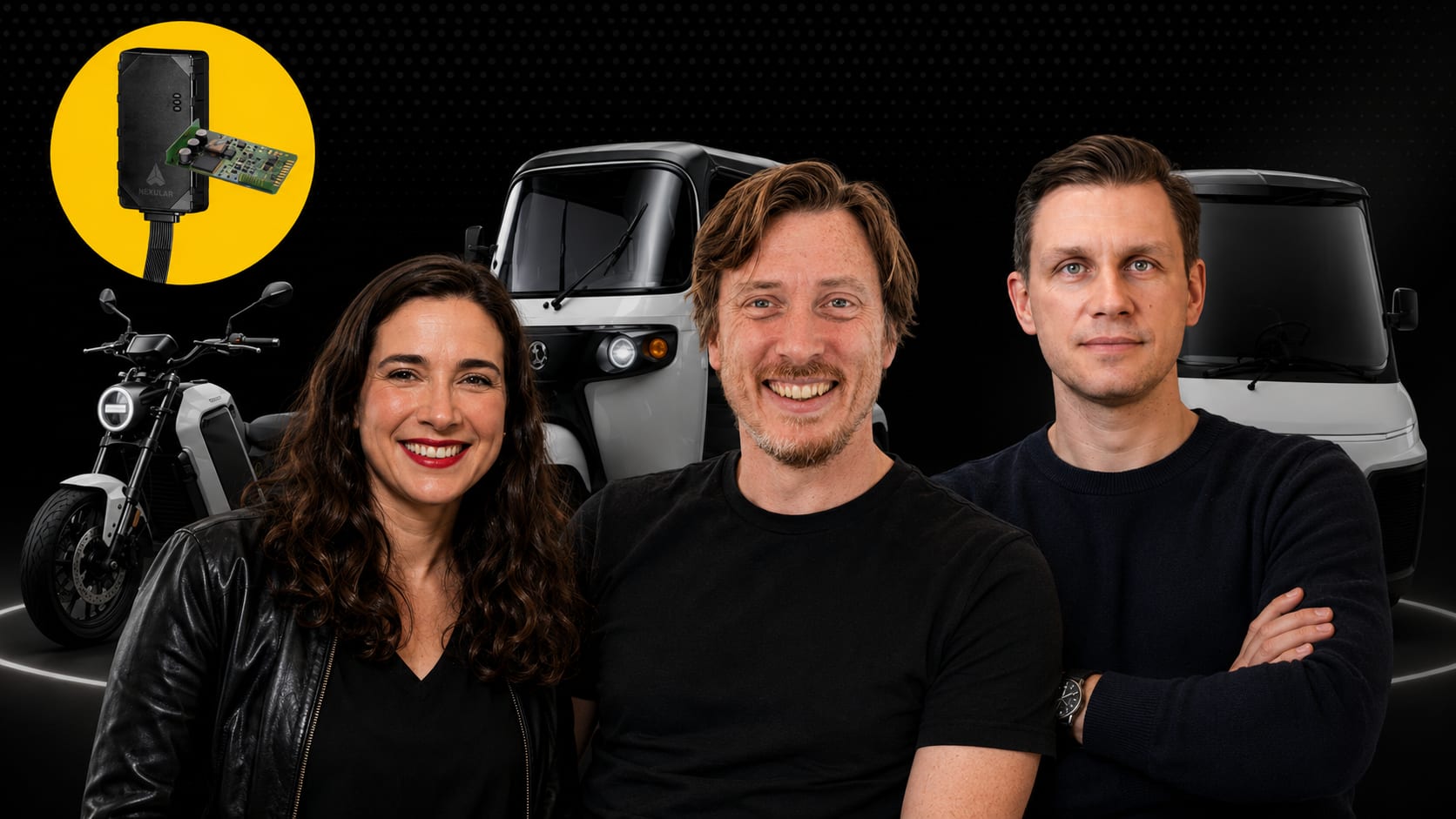
Founded in 2023 by Sweden-trained computer scientists Joel Rozada and Emma Rozada, who have co-founded more than ten companies together, along with mobility and product expert Matthias Hultén, Nexular positions itself as a full-stack connectivity partner. Joel serves as Chairman, Emma as CFO, and Matthias as CEO.
“Manufacturers had already made the decision to connect their vehicles,” Joel Rozada says. “The only open question was which supplier to use, and at what price.”
Three Layers of Vehicle Connectivity
Nexular’s solution begins with compact hardware installed on the production line alongside the battery, tyres and motor. The device captures data such as location, battery health and speed, and can remotely disable a vehicle if required. Different hardware variants are offered for different segments of the EV market.
Each of the EV manufacturers operates within its own dedicated software environment, with data stored on private local servers. This approach keeps customer information secure and helps companies meet local data regulations as they expand.
The third layer is the intelligence system. Because Nexular owns the full technology stack, it can release new features far more quickly than competitors that rely on multiple vendors. Payment tools, analytics dashboards, and remote-control functions can be added without rebuilding the platform. Rozada claims the company can move up to 100 times faster than conventional development cycles. “A project that would normally take a year, we can do in two days,” he says.
Unlike petrol vehicles, which become largely disconnected after sale, electric vehicles remain digitally linked throughout their lives. This continuous connection enables EV manufacturers to manage battery-swapping networks, leasing programmes and after-sales services but only if they have reliable data on how vehicles are being used.
That same visibility also affects financing. When lenders know a vehicle’s location and usage patterns, risk declines and borrowing costs can fall. “For delivery riders and gig drivers, that interest-rate gap can be the difference between being able to buy a vehicle, and the income it enables, or not,” Rozada notes.
Turning Data into Business Tools
Riders experience the technology through a simple mobile app that shows location, battery level and a digital key. EV manufacturers and fleet operators gain access to dashboards displaying live vehicle locations, service alerts and maintenance warnings. These systems can integrate with existing platforms or power white-labelled apps for customers and leasing partners.
Nexular charges a one-time fee for each hardware unit plus a recurring software subscription. Clients can adopt individual modules or the full platform. The company is also developing software that uses vehicle data to automate financing, rentals and battery-swapping services—particularly valuable in parts of the EV market where vehicle financing remains slow and paperwork-heavy.
Fitting into the Automotive Supply Chain
Rather than selling directly to riders, Nexular works with vehicle makers as a Tier I supplier. Its customers include motorcycle company Roam and micromobility players Clean Motion and EVX Mobility. The platform supports two-wheelers, quadricycles and public service vehicles.
In the competitive landscape of solutions for EV manufacturers, Nexular competes with firms such as Vecmocon Technologies, which focuses on battery management and vehicle intelligence, and Intangles, known for AI-driven predictive fleet maintenance.
The company has signed three OEM contracts worth more than $400,000 and is negotiating five additional deals. Its commercial pipeline exceeds one million vehicles across India, Southeast Asia and Africa, representing a potential first-year opportunity of $10–20 million.
“Most people from Europe go west when they expand. We went east, first to China, then India, because we saw the same inflexion point,” Rozada says. He compares the current stage of India’s EV market with China’s earlier growth, pointing to companies such as BYD that evolved from domestic players into global brands within a decade. “We are building the infrastructure for the ones that do,” he adds.
Nexular describes itself as “Made in India, international standard,” combining local manufacturing with export-ready technology. Owning the complete stack remains its core speed advantage when serving EV manufacturers.
Funding and Future Ambitions
Rozada initially invested about $3 million of his own capital. In March 2026, the company raised an additional $550,000 from Saganaki Ventures, 8+ Ventures, Lindia Invest, Skare Invest, and a group of European angels. The funds supported manufacturing, hiring, and customer acquisition. The Edge Series is now in full production in India.
With production running, Nexular’s immediate priority is fulfilling existing orders and expanding market share. A Series A round is planned as sales increase. In the near term, the company aims to become the leading connectivity platform for the EV market in India and Southeast Asia.
Longer-term, Rozada sees connectivity becoming the foundation for a broader mobility ecosystem. “We are building the infrastructure that will change how vehicles are owned, financed and operated across India and Southeast Asia,” he says. He expects AI-powered financing, rental, and leasing tools to sit atop the platform within two years.
“We can automate financing decisions at the vehicle level and cut the cost of credit,” he explains. “That makes EVs affordable for people who use a bike as their business, not just transport.” For riders whose livelihoods depend on their vehicles, lower financing costs could significantly improve access. At that scale, Rozada believes Nexular has the potential to become “a multi-x unicorn” serving EV manufacturers across high-growth regions of the global EV market.