Nikol EV: Developing India’s EV Charging Infrastructure
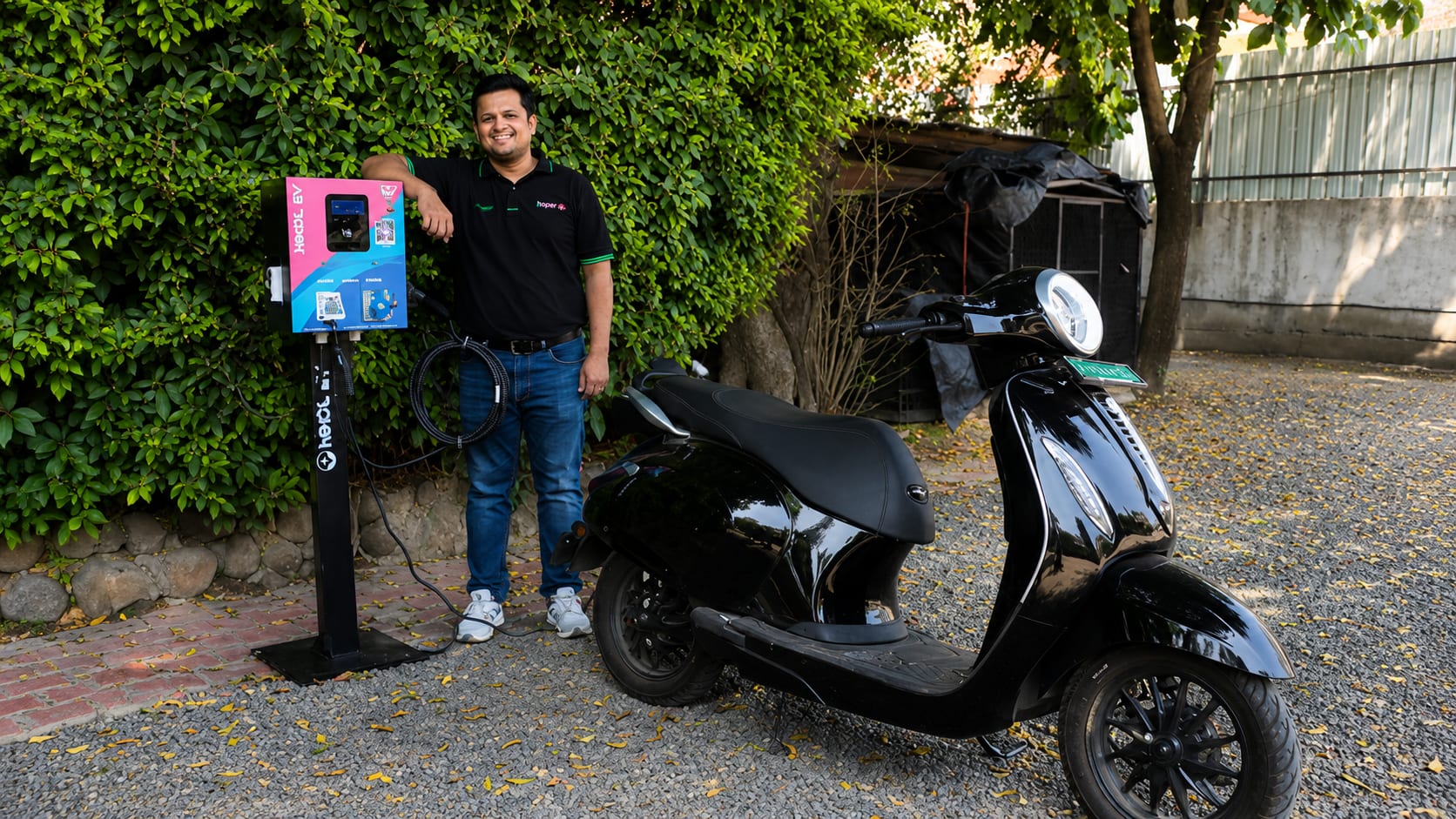
Electric vehicles are being increasingly adopted as sustainable means of mobility. India has also witnessed a similar trend, yet the adoption in India is slower than in countries like the US, China, and even the European Union. So, while Indiacontributes 7.1% to global GDP through its automotive sector and ranks 4thin global vehicle production,the anxiety around range and suitable charging infrastructure is still one of the biggest challenges that EV adoption faces in the country.
Sensing an opportunity, Arjun Pawar, Founder of Nikol EV, wanted to overcome this obstacle. But before building one of India's growing EV charging infrastructure companies, Arjun spent nearly five years in the corporate world before taking the entrepreneurial route in 2017. He experimented with multiple businesses from digital marketing and real estate to restaurants before stumbling upon an opportunity that would eventually shape his future.
The turning point arrived while building EVDuniya, an EV-focused platform. Conversations with vehicle owners, manufacturers, and industry stakeholders revealed a common pattern. Electric vehicles were becoming more popular, but the charging infrastructure wasn't evolving at the same pace. Arjun saw a problem as well as an opportunity, eventually leading to the creation of Nikol EV.
Building Confidence, One Charger at a Time
The conversation around electric mobility often revolves around batteries, subsidies, and sustainability. Arjun prefers looking at it differently. For him, India's EV transition has always been about affordability and accessibility.
With most Indian consumers purchasing vehicles within highly price-sensitive segments, electric vehicles have gradually become a practical option. He mentions that around 80% of four-wheeler sales are in the sub-₹30 lakh segment, while the majority of two-wheeler buyers look for vehicles below approximately ₹1.2 lakh. Battery technology is improving, ownership costs are becoming more attractive, and consumer awareness is steadily increasing.
But adoption doesn't happen because technology exists. It happens because people believe it will work when they need it. That belief is what Nikol EV wants to build.
Instead of measuring success simply by the number of charging stations installed, the company focuses on creating reliable charging experiences. Every charging station is expected to deliver consistency, allowing EV owners to stop, grab a meal or take a short break without worrying about whether their charging session will suddenly stop midway.
Looking Beyond India's Metro Cities
One of Nikol EV's biggest strategic decisions has been to expand beyond metropolitan markets. While most conversations around electric mobility revolve around Tier-1 cities, Arjun believes the real opportunity lies in Tier-3 and Tier-4 cities that are witnessing encouraging EV adoption. Shorter daily commutes, lower traffic congestion and greater access to rooftop solar make electric vehicles financially attractive for consumers living outside major urban centres.
The missing ingredient has often been dependable charging infrastructure. By focusing on building network density rather than simply expanding into every geography, Nikol EV hopes to ensure that customers always have another charging option nearby if one station is occupied.
Learning Without a Playbook
Building charging infrastructure in India wasn't straightforward. When Nikol EV started operations in 2020, the industry was still finding its feet. There were very few experienced professionals, limited institutional knowledge and almost no established processes for installing and operating charging stations.
Obtaining approvals, coordinating with power distribution companies and educating stakeholders about charging infrastructure was a learning curve that required patience as much as technical knowledge. The company learned by installing chargers, supervising electrical work, solving on-ground problems and continuously refining its processes. Those years of experimentation eventually became one of its biggest strengths.
Scaling Through Trust
Unlike many infrastructure businesses, EV charging is capital intensive. Each station requires significant upfront investment, making expansion difficult without strong financial backing and investor confidence.
Nikol EV addressed this challenge through a Franchise Owned, Company Operated (FOCO) model, allowing investors to own charging infrastructure while the company manages operations, maintenance, customer support and technology. For franchise partners, the model lowers operational complexity. For the company, it enables measured expansion without compromising service quality. Once again, the underlying theme remains trust.
The Road Ahead
India's electric mobility story is often told through ambitious sales numbers and policy announcements, but infrastructure is what quietly determines whether that story succeeds.
As India's EV ecosystem matures, companies like Nikol EV are betting that the future won't belong to the businesses with the largest networks alone, but to those that people trust the most. Because sometimes, the biggest barrier to adopting new technology isn't innovation. It's the confidence that it will be there when you need it.