BANKING
RBI forward dollar short position hits $239 billion as IDFC First projects weaker rupee
Central bank must accumulate dollars to meet swap maturities, capping currency appreciation through 2027.
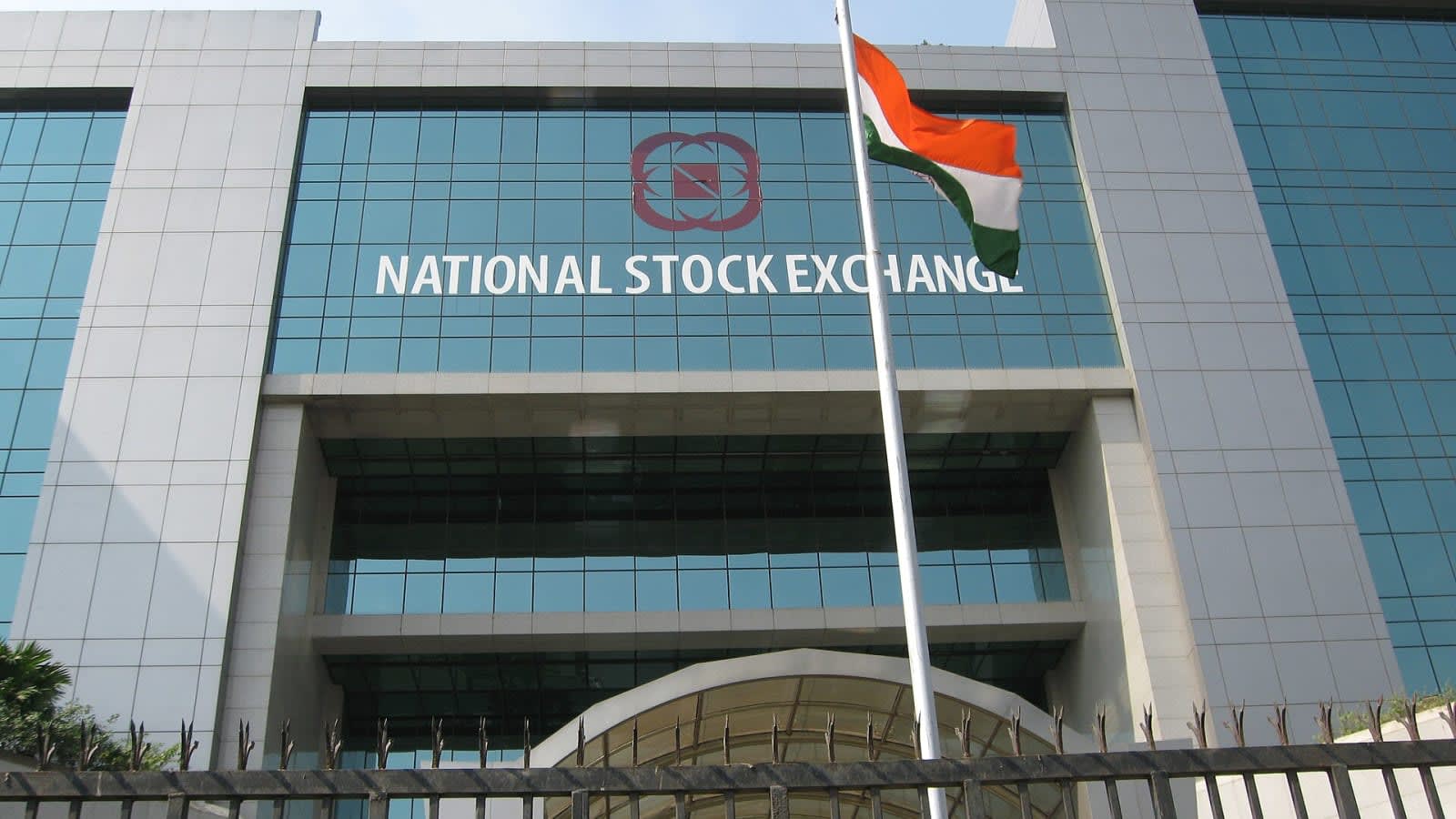
The Reserve Bank of India held a net short position of $239 billion in the forward dollar market as of September 2026, a commitment that will cap the rupee's ability to appreciate even as foreign portfolio investor inflows recover, according to a research report by IDFC First Bank Economic Research.
The central bank's heavy forward book requires it to accumulate dollars as capital enters the country to meet commitments when buy-sell swaps mature. Consequently, any surge in foreign capital inflows will be absorbed by the central bank rather than driving down the USD/INR exchange rate, the report noted.
Forward dollar book maturity schedule
Of the total $239 billion net short position, $40 billion matures within one year, $56 billion between one and three years, and $143 billion over three to five years. The longer-term commitments are largely linked to the Foreign Currency Non-Resident (Bank), or FCNR (B), scheme.
The following table breaks down the maturity profile of the RBI's forward dollar short position as of September 2026:
| Maturity Period | Net Amount (USD) | Primary Underlying Driver |
|---|---|---|
| Within 1 year | $40 billion | Short-term buy-sell swaps |
| 1 to 3 years | $56 billion | Medium-term swap obligations |
| 3 to 5 years | $143 billion | FCNR (B) swap scheme |
To manage external balance pressures, the RBI has deployed various swap windows, including FCNR (B), external commercial borrowings (ECB), and overseas foreign currency borrowing facilities. Together, these windows have drawn cumulative inflows of $150 billion. Because these represent borrowed dollars, they must be repaid over a three-to-five-year horizon.
Without these swap facilities, India's balance of payments would show an underlying deficit of $85 billion for the first half of FY27, rather than the reported surplus of $65 billion, IDFC First Bank reported.
Rupee projections and foreign exchange reserves
IDFC First Bank projects the rupee to trade between 92 and 94 per US dollar by December 2026, weaken to 94 to 95 by March 2027, and touch 96 per dollar by June 2027.
While near-term appreciation remains possible if US-Iran geopolitical tensions soften, American AI stock prices correct, or foreign portfolio inflows maintain their November momentum, global headwinds persist. High US Treasury yields and intense competition from the US for international capital are expected to prevent sustained gains for the domestic currency.
Concurrently, India's unencumbered foreign exchange reserves—which exclude the forward book—saw their import cover shrink to approximately seven months in October 2026, down from 10 months in October 2025.
To cushion spot market volatility, the RBI introduced targeted intervention mechanisms, including a dedicated dollar window for oil marketing companies and the Foreign Exchange Risk Reserve for importers. These measures helped narrow the gap between client forward dollar purchases and sales to $17 billion in October 2026—a 12-month low—down from $197 billion recorded across the first seven months of FY27.
IDFC First Bank expects India's crude oil import basket to average around $85 per barrel for the remainder of FY27, compared to $102 per barrel in the first seven months. On the monetary policy front, the bank forecasts the RBI will raise interest rates by 25 basis points each in December 2026 and February 2027, with a potential final 25 basis point hike in April 2027.
RBI prepaid payment instrument statistics for September
Alongside currency market dynamics, central bank data on India's prepaid payment instruments (PPI) highlights operational trends across commercial banks and non-bank issuers. Data released by the RBI for September 2026 shows the country had 186.60 crore outstanding prepaid wallets, of which 97.65 crore were classified as active—meaning they executed at least one financial transaction over the preceding 12 months.
During September 2026, prepaid wallets generated 63.45 crore purchases of goods and services worth Rs 14,482.53 crore, alongside 10.28 crore fund transfers valued at Rs 8,312.26 crore.
PhonePe commanded the largest share of active wallets, accounting for 78.43 crore of the 97.65 crore total active wallets (80.3%). It recorded 121.40 crore total outstanding wallets. In September 2026, PhonePe users completed 5.26 crore purchases worth Rs 503.79 crore and 1.17 crore fund transfers worth Rs 1,503.79 crore.
However, transaction volume did not correlate directly with active wallet counts across issuers. Tri O Tech Solutions processed 17.30 crore purchases worth Rs 1,581.71 crore and 8.06 crore fund transfers worth Rs 1,729.69 crore across 1.11 crore active wallets—over three times PhonePe's purchase volume despite a fraction of its active base.
| PPI Issuer | Outstanding Wallets | Active Wallets | Sept Purchase Volume | Sept Purchase Value |
|---|---|---|---|---|
| PhonePe | 121.40 crore | 78.43 crore | 5.26 crore | Rs 503.79 crore |
| Tri O Tech Solutions | Not disclosed | 1.11 crore | 17.30 crore | Rs 1,581.71 crore |
| IDFC FIRST Bank | Not disclosed | 1.35 crore | 15.75 crore | Rs 3,064.98 crore |
| ICICI Bank | Not disclosed | 1.02 crore | 6.10 crore | Rs 1,452.44 crore |
| MobiKwik | 14.98 crore | 61.68 lakh | 3.65 crore | Rs 2,946.65 crore |
| Amazon Pay | 7.74 crore | 1.93 crore | Not disclosed | Not disclosed |
| Ola Financial Services | 7.98 crore | 4.88 lakh | Not disclosed | Not disclosed |
| Bajaj Finance | 4.26 crore | 1.42 crore | Not disclosed | Not disclosed |
Among bank issuers, IDFC FIRST Bank logged 15.75 crore wallet purchases worth Rs 3,064.98 crore across 1.35 crore active wallets, while ICICI Bank recorded 6.10 crore purchases worth Rs 1,452.44 crore across 1.02 crore active wallets. Razorpay Technologies reported 6.38 crore active wallets but registered 70.67 lakh purchases worth Rs 132.17 crore.
In the prepaid card segment, the RBI recorded 49.76 crore outstanding cards, with 24.33 crore active. Cardholders conducted 22.73 crore purchases worth Rs 4,556.10 crore and 2.47 lakh fund transfers worth Rs 105.10 crore during September 2026. Pine Labs led the segment with 33.52 crore outstanding and 16.37 crore active cards (67.3% of active prepaid cards), handling 9.90 crore purchases worth Rs 2,354.62 crore. Delhi Metro Rail Corporation reported 2.57 crore active cards and 4.68 crore purchases, while NSDL Payments Bank recorded 2.89 crore active cards and 74.14 lakh purchases.
Prepaid cards also saw 16.89 lakh ATM cash withdrawals worth Rs 863.62 crore, led by HDFC Bank with 12.83 lakh withdrawals (Rs 556.81 crore) and ICICI Bank with 2.06 lakh withdrawals (Rs 202.29 crore), alongside 3,954 point-of-sale cash withdrawals totaling Rs 52.71 lakh.
Why it matters
For importers, corporates, and venture-backed startups managing foreign currency exposures, the RBI's short forward position signals that the rupee is unlikely to see sustained strengthening even if capital flows rebound. Planning for foreign debt servicing or overseas software commitments will require factoring in exchange rates trending toward 94 to 96 per dollar by mid-2027.
For financial institutions and fintech operators, the RBI's detailed disclosure of PPI activity demonstrates a granular regulatory focus on transaction velocity rather than vanity metrics like total wallets issued. Issuers with low activation rates, such as Ola Financial Services (0.6% active) or Amazon Pay (24.9% active), face clear pressure to convert outstanding instruments into active transacting accounts.
What happens next
The RBI's strategic focus over the coming three to five years will center on gradually unwinding its $239 billion forward book to rebuild unencumbered reserve buffers and restore spot intervention flexibility.
Market participants will monitor the central bank's upcoming monetary policy decisions in December 2026 and February 2027 to gauge whether interest rate adjustments match research projections.