She Stayed Out of the Spotlight While Building Imarticus Into a ₹300 Crore Business
In the last week of July 2026, a Mumbai company most Indians have never heard of bought a college in Singapore for a reported Rs 800 crore. The buyer was Imarticus Learning, whose revenue for the whole of FY25 was Rs 205 crore. Place those two numbers next to each other, and the scale of the deal becomes clear.
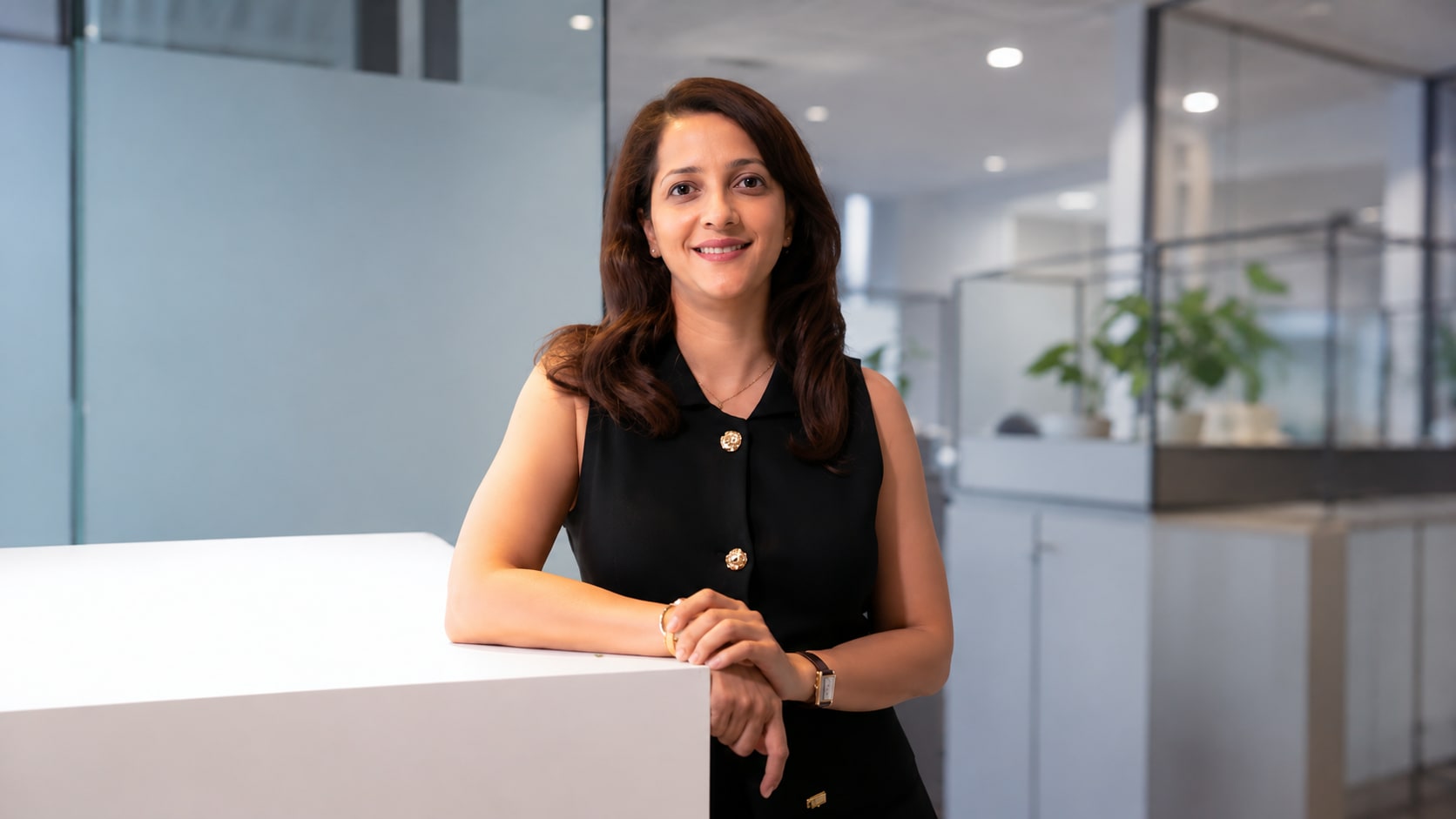
Imarticus was founded in 2012 by Nikhil Barshikar and Sonya Hooja. Barshikar is the chief executive and the more visible public face. Hooja is the co-founder who has run the operating side of the business for thirteen years, first as chief operating officer and now as president. She remains far less known than the company she helped build deserves.
Early Life and Education
Sonya Hooja has kept her private life private. There is no verified public record of her birth year, hometown, or family, and this piece will not treat online speculation as fact.
What is documented is her education and career path. She completed her undergraduate degree at Rutgers University in the United States, studying economics and information technology. That combination of finance and systems is precisely what many mid-level financial-services roles require and what traditional Indian degree programmes have often failed to deliver.
She followed it with an MBA at INSEAD in the 2009–2010 cohort, returning to business school in the immediate aftermath of the global financial crisis.
Career Before Imarticus
Before INSEAD, Hooja spent roughly a decade in consulting and financial services. She worked as a business analyst at Lehman Brothers, a project manager at ACS, and later as a senior analyst and consultant at Accenture. Just before starting Imarticus, she was based in Accenture’s Singapore office working on strategy. Her project experience spanned financial services, education, tourism, the public sector, and pharma.
The Lehman experience is particularly relevant. Lehman Brothers filed for bankruptcy in September 2008. Her co-founder Nikhil Barshikar was also a Lehman alumnus who later worked at Nomura Securities India. Two people who had watched a major bank collapse went on to build a company that trains people for jobs inside financial institutions. Living through 2008 gave both of them a clear view of how banks actually hire and what skills they need on the ground.
Why Imarticus Was Started
Imarticus opened in Mumbai in 2012 as a training institute focused on investment banking operations. It was not a marketplace or an app. It was a place where people learned to do a specific job that specific employers were hiring for.
The problem it targeted is familiar in India: large numbers of graduates who are formally qualified yet practically unemployable because a degree often certifies attendance rather than job readiness. Banks and analytics firms were hiring but spending months retraining new joiners.
Hooja has described the founding goal simply: to help people become genuinely job-ready and confident about their careers. Programmes were built around what hiring managers wanted, taught in cohorts, with placement as the measured outcome. In April 2026, the company said it had run its largest placement cycle to date, launching more than 4,500 careers in a single year across finance, data science and AI.
Building Quietly While Edtech Boomed and Crashed
Between 2015 and 2022, Indian edtech was one of the loudest sectors in the country. Capital was abundant, and valuations soared. Imarticus stayed focused on six-month vocational programmes and placement rates. It never raised a headline-grabbing round. Tracxn records roughly $15.7 million across ten rounds and 32 investors, including Caspian and Hero Corp, with some of that capital being debt rather than pure equity.
Choosing to stay relatively small when money was cheap was a difficult decision to hold for a decade. When the edtech correction arrived from 2022 onward, many heavily funded peers struggled or collapsed. Imarticus finished FY25 with Rs 205 crore in revenue, up 16 percent from Rs 177 crore in FY24, and doubled its EBITDA in the same year. The company has said it has been profitable for seven to eight years.
Acquisitions and the Road to an IPO
For FY26, Imarticus has guided to revenue of roughly Rs 300–320 crore. Acquisitions are central to that plan.
The first was MyCaptain, a Bengaluru edtech focused on younger learners, bought in May 2025 for about Rs 50 crore in a cash-and-stock deal. The second and much larger deal came in late July 2026, when Imarticus acquired BELLS Institute of Higher Learning in Singapore for a reported Rs 800 crore. BELLS brings seven training centres, a claimed alumni network of more than 1.5 lakh, and relationships with the Singapore government and SkillsFuture Singapore. The combined organisation is expected to have more than 1,100 employees across 25-plus offices in India and Singapore, and to have reached more than a million learners overall. Plans include a BELLS School of AI for working professionals and enterprise teams.
There is a quiet circularity in the geography. Hooja was working in Accenture’s Singapore office in the months before she co-founded Imarticus. Fourteen years later, Singapore has become the company’s regional base for Southeast Asia.
The company is preparing for a public listing. Reported IPO sizes vary, with some coverage pointing to a roughly Rs 750 crore issue and others describing a larger number. A draft red herring prospectus with SEBI is expected in the coming months. Until a DRHP is filed, those figures remain provisional.
Ownership and Net Worth
There is no verified public net-worth figure for Sonya Hooja. Imarticus is still a private company and has not disclosed a valuation or detailed shareholding. Because it raised relatively little external capital and generated profits for most of its life, founder ownership is likely to be substantial by startup standards. The IPO, when it happens, will be the event that puts a clearer price on that ownership.
Three Strategic Choices That Shaped the Company
The first was selling an outcome rather than access to content. Imarticus sold job readiness and placement rather than subscriptions to material. When the product is a placement, incentives align with what employers actually need.
The second was refusing to fund growth primarily with external capital. That choice looked conservative for years. After the funding winter of 2022–23, it looked like prudence.
The third is the current phase of expansion. A profitable company with a disciplined balance sheet is now using that strength, and the prospect of a listing, to acquire scale it could not have reached purely organically.
What the Story Suggests for Founders
Hooja’s path highlights the difference between visibility and substance. She spent thirteen years operating a business that compounded steadily while more heavily funded peers dominated headlines. Much of the startup conversation in India remains calibrated to notice rapid capital raises rather than consistent profitability and placement outcomes.
It also shows the power of solving a narrow, specific problem well. Imarticus began with investment banking operations rather than attempting to reinvent all of education at once. Analytics, fintech, technology and marketing programmes came later, once the core model worked.
Finally, it underlines the value of the operator. Barshikar is the founder-CEO whose name appears in the IPO and acquisition headlines. Hooja is the co-founder who built and ran the operating machine behind those headlines across thirteen years, multiple offices and more than a million learners. Both roles matter. The Indian ecosystem has historically been better at celebrating the fundraiser than the person who makes the organisation work day after day. Hooja’s career is a clear example of what the second path can look like at scale.