PRESS RELEASE
Six Things a Thousand Times": Why Dr. Ivan Misner Rejects "Fail Fast
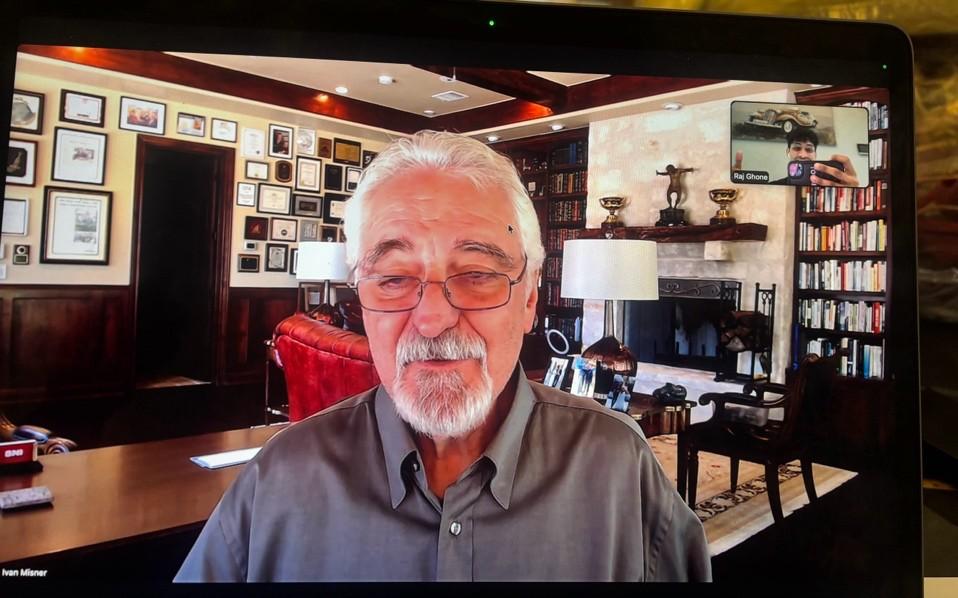
After 42 years of data on small businesses, the BNI founder explains why the world's most popular startup advice doesn't apply to most companies.
In 1985, Ivan Misner opened one referral group for his own consulting practice. One room, one meeting a week. That was the entire plan. Someone asked him to help start a second chapter. Then a third. By the end of that year there were twenty, and he hadn't changed a single rule to get there.
Ask him what would happen if he tried to build BNI today, and he laughs before he even answers.
The thousand pivots he never made
"Everyone would tell me to 'fail fast,'" he says. “And I would have listened. I'd have tried a thousand different approaches in six months, constantly pivoting, constantly chasing what's hot. But that's not how you build something that lasts.”
He didn't pivot. Same structure, one member per professional classification, same meeting format, same rules — copied into city after city. Forty-two consecutive years of growth followed. Not one down year. Not even in 2020.
"For tech companies building software, maybe it works," he says. “But if you want to build a long-lasting business, here's what you need to do: do six things a thousand times, not a thousand things six times.”
Repetition as a competitive weapon
It could be five things, he adds, or seven — the count doesn't matter. What matters is picking a core practice and refusing to let go of it until you're excellent at it. The alternative, he argues, guarantees mediocrity by design: sprint through a thousand ideas six times each, and you never build institutional knowledge, never build a real system, never get good enough at anything to defend it.
I push on the obvious objection — doesn't relentless repetition kill innovation? He pauses, pauses, before answering.
“When you repeat something a thousand times, you discover things the other person never will. You understand edge cases. You build knowledge nobody else has. That's not limiting innovation — that's enabling it.”
BNI tested it directly. What happens if chapters meet monthly instead of twice a month? The answer came back as a number, not an opinion: a 52 percent drop in referrals passed. So BNI made attendance non-negotiable — show up or you're out — because the data had already settled the argument before anyone could resent the rule.
"That's the innovation you get from doing things a thousand times," he says. “You become unbeatable at those things.”
The audience was the first tap on the shoulder. It was never the transaction.
Rules enforced like Mandela, not Attila
Hard rules invite resentment. I ask how he holds the line without souring the culture around it.
"You apply the rules like Mandela, not like Attila," he says, laughing at the line as he delivers it. Tough love — show people you care about their success and their chapter’s but never apologize for the standard. If someone can't commit to showing up, BNI isn't for them, and that's fine. The people who stay know exactly what's expected, because leadership goes first.
“When I personally decline a meeting scheduled during what should be productive time, I send a message. When I show up to every chapter event, I send a message. Culture isn't built through what you say. It's built through what you do.”
600,000 followers, and none of them the point
Misner has nearly 600,000 followers on Facebook. He'll also tell you, without hesitation, that almost nobody joins BNI because of it.
“Someone sees me on Facebook, and then the important part — they get invited to a BNI meeting by someone they trust. They go to that meeting. They experience the culture. And then they think, 'Oh, I see what this is about,' and they join.”
Social media builds awareness, he says, and that's all it builds. For a consultant, a lawyer, an accountant, a million followers who don't know or trust the person behind the account are worth close to nothing. He's not knocking influencers who make a living off views and sponsorships — that's a different business. For most people in business services, the network is the product, and it's only as strong as the relationships running through it.
“If your network is a mile wide and an inch deep, it will never be successful. You need breadth, yes. But you need depth.”
Billionaires in his phone who might not pick up
Asked what depth looks like, Misner doesn't reach for a definition — he reaches for his contacts list.
"I have some amazing contacts. Billionaires in my phone. That's nice, right? But a contact is just a name. The real question is: if I call them, will they answer? If I ask for a favour, will they help? If I need them at midnight, would they pick up?"
BNI turns that instinct into a formal system: the VCP Model — Visibility, Credibility, Profitability. You become visible, then build credibility through consistent interaction, and only then does profitability follow, and only if the first two steps were done honestly.
“Most people skip the first two and go straight to profitability. They want the business deal without the relationship. That never works.”
A GDP bigger than a hundred countries
The headline numbers are almost hard to process: 42 consecutive years of growth, $27 billion generated for members, more than 17 million referrals passed. Asked to make it concrete, Misner reaches for a comparison most CEOs wouldn't think to make.
"Last year alone, our members generated $27 billion in closed business. Self-reported. They put it in our system. That's billion with a B." The United Nations tracks GDP for every country on earth, he notes — and more than 100 of them post a lower number than what BNI's members generated in twelve months.
"We did it by showing up. By building relationships. By keeping our standards," he says. “And we grew through COVID. When everyone else was contracting, we grew. Because our model wasn't dependent on physical proximity. It was dependent on relationships and systems.”
What he'd tell himself at 23
At 70, Misner is asked what advice he'd give a 23-year-old entrepreneur today — someone with every tool he never had.
“Be a sponge for learning. Find mentors. Virtual or real. It could be someone you know and meet with in person. It could be books, podcasts, YouTube, Audible. Find somebody that resonates with you and follow their advice.”
Technology, he says, has changed what's reachable. It hasn't changed what's required.
"You still need to build relationships. You still need depth. That hasn't changed." He points to his own book, Who's in Your Room? about being deliberate with who you let close — one he wishes he'd read at 23 instead of writing at 60.
The future belongs to the boring
His targets for the next thirty years are stated plainly — a million members, $100 billion generated for them — and dismissed almost as fast as he states them.
“The number isn't really the point. The point is the impact. When you help millions of people build stronger businesses and deeper relationships, you change lives. You change communities. That's what I want our legacy to be.”
Asked if business will ever revert to cold calls and inch-deep relationships, he pauses longer this time.
“No. The world has seen what's possible now. People know that real relationships drive real results. And once you know that you can't unknow it.”
"The future belongs to the boring," he says. "To the disciplined. To the people willing to do six things a thousand times."
Dr. Ivan Misner is the founder and chief visionary officer of BNI, a global referral organization with 290,000+ members in over 70 countries. He has authored multiple books on networking and business relationships, including Who's in Your Room? which explores the role of personal relationships in shaping business and life success. He remains actively involved in BNI's strategic direction and ongoing research into relationship economics.

About the Author: Raj Ghone is a second-generation entrepreneur, Harvard Summer School Leadership & Impact Fellow, and Founder of North 1 Corporation. He oversees cross-border B2B supply chains across the GCC, Europe, and South Asia as a Business Partner in GGT LLC, and leads franchise operations for North 1 Café India. He turned his frequent discussions with global business leaders into a 1:1 interview series, making their core insights accessible to emerging youth.