Sol AI Raises $4 Million: How This Proactive AI Startup Turns Email Promises Into Action
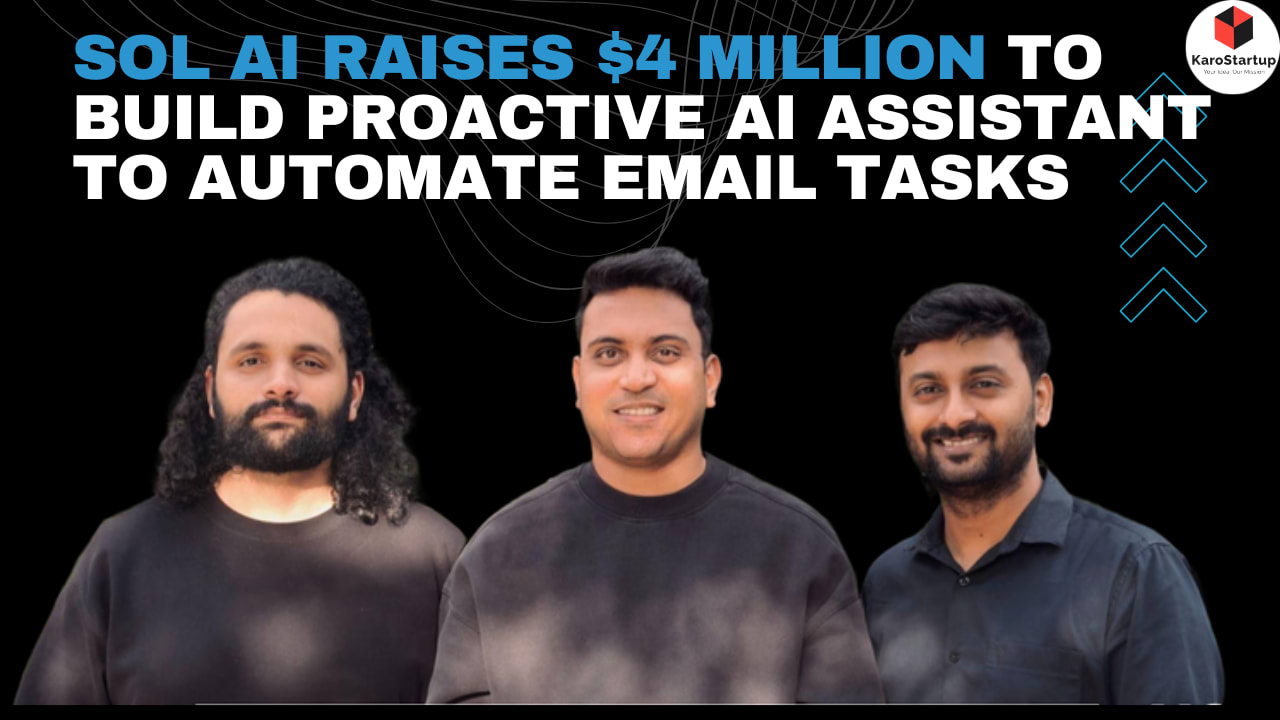
Sol AI, a proactive AI startup founded by former Cred executives, has emerged from stealth with $4 million in funding. The company builds an AI assistant that finds commitments you already made in email and starts the work without waiting for a new prompt.
This article covers what Sol AI is, how it works, who it helps, the funding details, and why proactive AI matters right now.
Sol AI Funding Details at a Glance
Aspect: | Details |
Funding amount: | $4 million |
Lead/key investors: | |
Other backers: | |
Founders: | |
Core product: | Proactive AI for Gmail commitments |
Target users: | Founders, executives, sales/marketing/consulting pros |
Current access: | Waitlist at hellosol.app |
Use of funds: | R&D, talent, computing, go-to-market |
What Is Sol AI and What Problem Does It Solve?
Sol AI is a proactive (or agentic) AI assistant focused on email-driven work. Most AI tools wait for you to type a prompt or create a task. Sol AI starts from what you already wrote.
People often say things like “I’ll send the analysis,” “I’ll share the proposal,” or “I’ll set up a meeting” in email. Then they have to remember those promises, open another tool, and repeat the request to an AI. Sol AI closes that gap. It scans Gmail for commitments, gathers context from the thread, and begins the work (research, documents, presentations, scheduling, or reply drafts) while keeping you in control of the final send, share, or schedule.
The product runs on Google Workspace, uses a browser-based environment, and draws on a library of specialized skills. No extra task list or repeated prompting is required.
Who Founded Sol and Who Backed the $4 Million Round?
Sol AI was founded in August 2025 by three former Cred executives:
- Anish Karan (CEO, second-time founder)
The $4 million round came from General Catalyst, Nexus Venture Partners, Z47’s DeVC, Peercheque, and Cred founder Kunal Shah. The capital will mainly fund research and development (including AI computing costs and talent), customer work across regions, and go-to-market efforts.
Sol AI currently has more than 100 users on its pre-launch platform. Access is selective via a waitlist at hellosol.app, with broader availability planned soon.
How Does Sol’s Proactive AI Work in Practice?
Here is a simple breakdown of the workflow:
1. Sol AI reads your Gmail for commitments and their context.
2. It starts the needed work in the background (research, document creation, slide decks, calendar coordination, or multi-thread reply drafts).
3. It brings the result back for your review and approval.
4. Nothing is sent, scheduled, or shared until you approve.
This approach targets professionals whose work lives in high volumes of email: founders, executives, and people in sales, marketing, consulting, recruiting, and agencies.
Investors highlighted the product’s simplicity. General Catalyst noted the team’s product strength and the clear problem Sol AI solves. Nexus Venture Partners emphasized that the AI “just knows when to act” with no steep learning curve.
Why Proactive AI and Agentic AI Matter in 2026
Traditional AI assistants are reactive- you prompt them. Proactive AI (sometimes called agentic AI) watches existing signals and begins work on its own. Sol AI applies this idea specifically to email commitments, a daily pain point for knowledge workers.
Search interest in agentic AI and related terms has grown sharply as more tools move from chat interfaces to systems that take action. Sol AI’s focus on email commitments positions it in a growing category of AI that reduces repetitive admin work while keeping humans in the loop for final decisions.