Tata Trusts Governance Dispute Explained: Boardroom Battle, Legal Caveats, and the Tata Sons IPO Debate
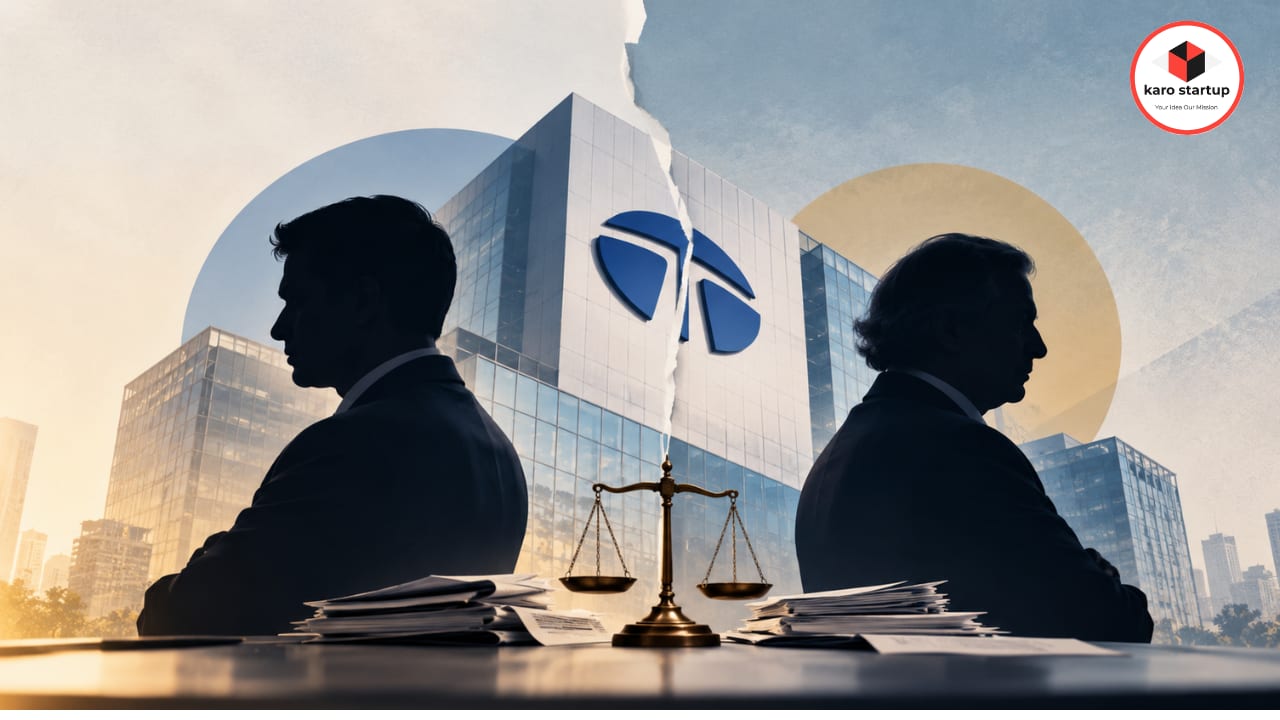
Who Really Controls Tata? The Boardroom Rift That's Heading to Court. The question of who runs Tata—one of India's largest conglomerates—has no simple answer. A September 17 board meeting at Tata Sons crystallized a deepening power struggle between Noel Tata, chairman of Tata Trusts (which owns roughly 66% of Tata Sons), and Natarajan Chandrasekaran, chairman of Tata Sons itself. The board voted 4-1 to extend Chandrasekaran's term for a third five-year period, overriding Noel Tata's lone dissent. Notably, Chandrasekaran had stated just a month earlier that he would not seek another term.
Simultaneously, the board voted to cease resisting a Reserve Bank of India (RBI) directive requiring Tata Sons to list publicly—another decision made against Noel Tata's objections.
Tata Trusts Dispute Escalates: Noel Tata and Neville Tata File Caveats in Bombay High Court
In a significant escalation, Noel Tata and his son Neville Tata have filed caveats in the Bombay High Court, following similar filings in the Mumbai City Civil Court on October 7, 2026. A caveat is a formal legal notice requesting that the court hear the filer before passing any orders in a matter that affects them. The caveats do not constitute a ruling or imply any finding of wrongdoing.
The caveats name co-trustees Venu Srinivasan, Vijay Singh, Darius Khambata, and Bhaskar Bhat as caveatees. The inclusion of Khambata and Bhat is procedural, according to Tata Trusts sources.
These filings follow a complaint submitted to the Maharashtra Charity Commissioner by trustees Venu Srinivasan and Vijay Singh, alleging governance lapses at the Sir Dorabji Tata Trust (SDTT). Tata Trusts has been granted an extension until October 19, 2026, to respond to the complaint.
What Are the Governance Allegations?
The centerpiece of Srinivasan's complaint is SDTT's Circular Resolution No. 107, circulated on September 16. He alleges the resolution was "an extraordinary attempt to prevent me from exercising my independent judgement and vote" and describes it as an attempt "to neutralise my position as a Trustee because it differed from that of certain other Trustees."
Srinivasan further claims the move represents a "power grab within SDTT" designed to influence Tata Sons' board decisions rather than allowing independent evaluation. He links the current dispute to his exclusion from key discussions in November 2025, framing both events as "a continuing effort to suppress differing views and concentrate decision-making power within a smaller group of Trustees."
Important context: These are Srinivasan's allegations. The complaint seeks regulatory scrutiny of the trust's administration, and the allegations should not be treated as findings of wrongdoing.
84 Caveats Filed: Why Both Sides Are Preparing for a Long Legal Battle
Following the complaint, multiple trusts within the Tata Trusts group filed 84 caveats before the Maharashtra Charity Commissioner. These filings are a protective measure, ensuring the trusts receive a hearing before any orders are passed.
In an article published by NDTV on October 14,2026, Gaurav Singh, Counsel at Clavius Legal, explained to NDTV: "With caveats in the City Civil Court and the Bombay High Court, and 84 more before the Charity Commissioner, both camps clearly expect the Commissioner's ruling on the Srinivasan-Vijay Singh complaint to be challenged, whichever way it goes."
Two Core Legal Questions
Singh identified two central legal issues at the heart of the dispute:
1. Perpetual Trustee Appointments: Whether the appointment of perpetual trustees survives the 2025 amendment to the Maharashtra Public Trusts Act, which caps perpetual trustees at one-fourth of a trust's board unless the trust deed explicitly provides for them.
2. Circular Resolution No. 107 vs. Independent Judgment: Whether SDTT could use the circular resolution to prevent a trustee from voting independently as a Tata Sons director, given that Section 166 of the Companies Act requires every director to exercise independent judgment.
The Wider Context: Should Tata Sons Go Public?
The trust governance dispute is unfolding against a larger disagreement over Tata Sons' future. The shareholding structure:
- Tata Trusts: ~66%
- Shapoorji Pallonji Group: ~18.37%
- Tata Group companies and other shareholders: Remaining shares
The key point of contention is whether Tata Sons should pursue an initial public offering (IPO). The Shapoorji Pallonji Group advocates for a public listing, which would provide a market for its stake and improve transparency. Noel Tata opposes an immediate IPO, arguing that alternatives should be explored first.
The listing debate gained urgency after the RBI rejected Tata Sons' request to surrender its registration as a Core Investment Company in September 2026, tying the company to regulatory listing requirements. Tata Trusts has maintained that the company's existing ownership structure is integral to the group's philanthropic model.
Key Takeaways: Tata Governance Dispute at a Glance
Boardroom split: 4-1 vote extended Chandrasekaran's term and approved RBI listing compliance over Noel Tata's objections.
Legal escalation: Noel and Neville Tata filed caveats in the Bombay High Court and Mumbai City Civil Court.
Governance complaint: Venu Srinivasan and Vijay Singh allege SDTT governance lapses; Tata Trusts has until October 19 to respond.
84 caveats filed: Multiple Tata Trusts entities have filed protective caveats before the Charity Commissioner.
Two legal questions: Perpetual trustee validity under amended law, and whether a trust circular can override a director's independent judgment under the Companies Act.
IPO debate: Shapoorji Pallonji pushes for listing; Tata Trusts resists, citing the philanthropic structure.
Sources:
https://www.economist.com/business/2026/09/24/tata-goes-to-war-with-itself