The 10-Minute Delivery Revolution: How Two Teenagers Disrupted India’s Grocery Game
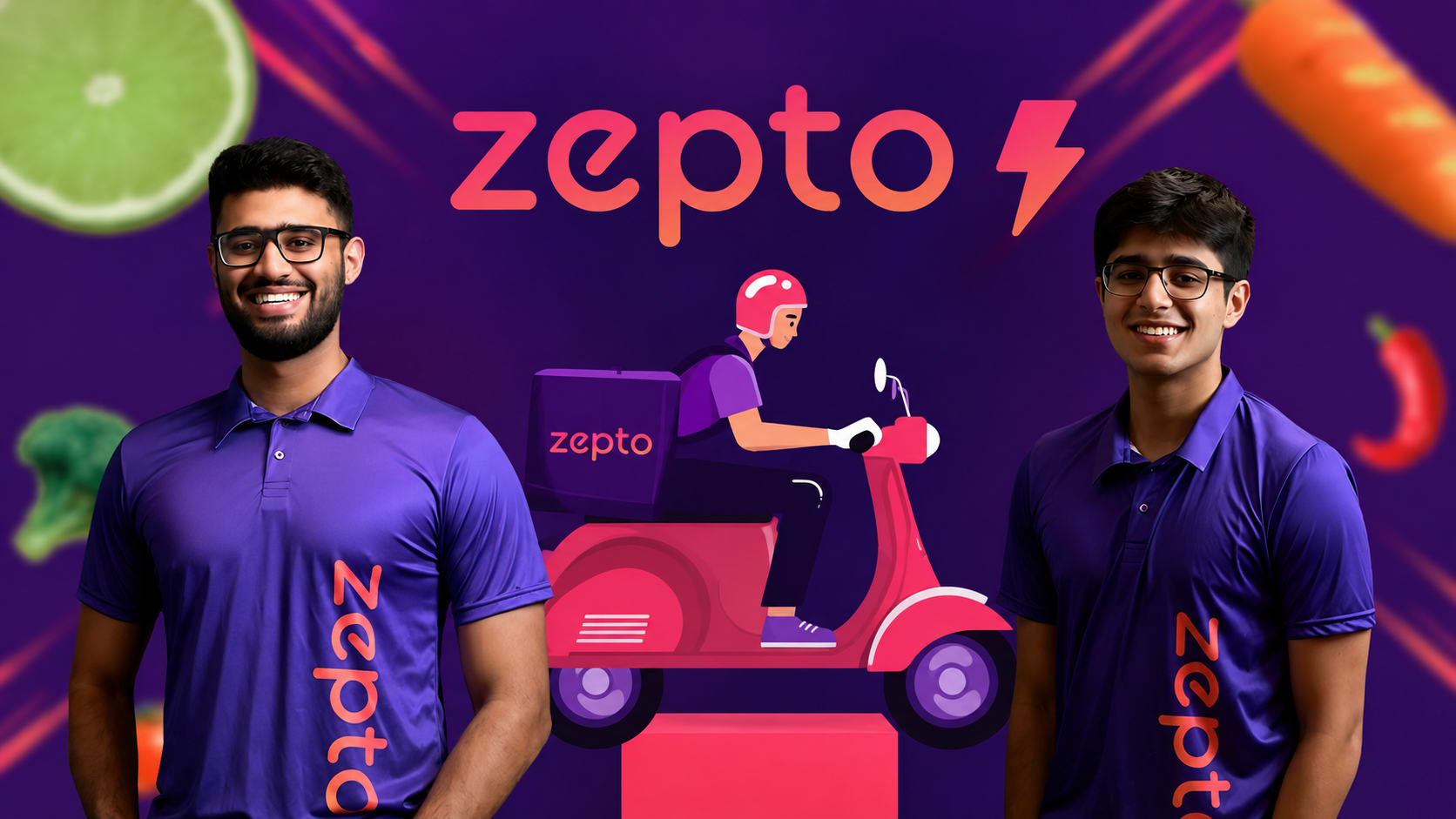
In the summer of 2021, while most of the world was still navigating pandemic lockdowns, two 19-year-old Stanford dropouts decided to solve a simple but painful problem: waiting too long for groceries. Aadit Palicha and Kaivalya Vora turned their observation into Zepto, a lightning-fast delivery startup that would fundamentally reshape urban commerce in India.
What began as an experiment to beat the 45-minute delivery standard has evolved into a high-stakes industry defined by hyperlocal logistics, massive venture funding, and intense operational innovation. The 10-minute delivery model didn’t just change how Indians shop for milk and bread; it rewired expectations of convenience itself.
The Spark: Pandemic Pain Points
During the lockdowns, Palicha and Vora noticed their neighbors in Mumbai struggling with long wait times for essential groceries. Traditional e-grocery platforms were overwhelmed, and delivery slots stretched for hours or even days. The duo realized there was a massive gap between what consumers needed and what existing players were offering.
In April 2021, they launched Zepto with a simple promise: deliver daily essentials within 10 minutes. The idea was audacious, especially from two teenagers who had dropped out of Stanford to pursue it. But their timing was perfect. Pent-up demand, rising smartphone penetration, and changing consumer habits created fertile ground for instant commerce.
The Dark Store Revolution
At the core of Zepto’s model and that of rivals like Blinkit and Swiggy Instamart lies the “dark store” network. These are micro-warehouses strategically located in densely populated residential clusters, often no larger than a small apartment.
Unlike traditional warehouses on city outskirts, dark stores operate close to customers. This proximity is what makes 10-minute delivery possible. Each store stocks only fast-moving items, carefully selected based on local demand patterns. The layout is optimized for speed: high-velocity products are placed closest to the packing stations.
The operational target is ruthless: orders must be packed in under two minutes. This leaves the delivery rider roughly eight minutes to cover a tightly defined 1-to-2 kilometre radius. Riders are equipped with optimized routes, and inventory is replenished multiple times a day to maintain freshness and availability.
This hyper-efficient system turned grocery delivery from a logistical challenge into a precision-timed operation.
Market Disruption and the Quick Pivot
Zepto’s explosive growth forced the entire industry to adapt. Older players like Grofers had to completely rethink their strategy. Grofers eventually pivoted and rebranded as Blinkit, embracing the 10-minute model to stay relevant. Swiggy Instamart and others followed suit, triggering an arms race in dark store expansion across metros and Tier-1 cities.
Venture capitalists poured billions into the sector, betting that instant commerce would become the new normal. The rapid scaling created thousands of jobs for delivery riders and micro-warehouse staff, while putting immense pressure on unit economics. Companies competed fiercely on both speed and assortment, expanding from staples to snacks, fresh produce, and even electronics accessories.
The Human Cost and Backlash
The obsession with the 10-minute clock, however, came with serious downsides. Delivery riders faced intense pressure to meet strict deadlines, often leading to rash driving, traffic violations, and safety concerns. Labor protests erupted in several cities as gig workers highlighted the unsustainable demands placed on them.
Critics argued that the hyper-focus on speed compromised rider well-being and road safety. In response, many platforms quietly softened their marketing. The rigid “10-minute” countdowns gave way to broader promises of “instant” or “express” convenience. While the underlying infrastructure remained optimized for speed, public messaging shifted toward reliability and selection rather than pure velocity.
Today’s Landscape: Beyond the 10-Minute Hype
Despite the controversies, the 10-minute delivery infrastructure has become a permanent feature of India’s urban landscape. Zepto, Blinkit, Swiggy Instamart, and others now operate thousands of dark stores across major cities. What started as a niche experiment has scaled to deliver tens of thousands of products from fresh vegetables and dairy to over-the-counter medicines and impulse buys.
The dark store network now serves as a sophisticated micro-supply chain. Companies use data analytics and AI to predict demand, optimize inventory, and refine delivery zones. This infrastructure allows them to handle not just groceries but a widening range of categories.
For consumers, the revolution has been transformative. The convenience of getting everyday needs delivered in minutes has changed shopping habits, especially among young professionals, nuclear families, and busy households. It has also raised the bar for traditional retail and slower e-commerce players.
Lessons from the 10-Minute Phenomenon
The story of Zepto and India’s instant commerce boom offers several powerful lessons. First, deep customer empathy combined with operational obsession can create massive disruption. Second, timing matters enormously. Palicha and Vora launched at the perfect intersection of need and technological readiness.
Third, rapid scaling brings complex trade-offs. The industry has had to balance growth, unit economics, regulatory scrutiny, and worker welfare. The shift from aggressive 10-minute marketing to sustainable convenience shows a maturing market.
As India’s urban population grows and digital adoption deepens, the micro-warehouse model pioneered by these young founders is likely to evolve further, perhaps into even more localized fulfillment or integration with autonomous delivery solutions.
The 10-minute delivery revolution, sparked by two teenagers during a global crisis, stands as a testament to India’s entrepreneurial energy. It transformed a simple pain point into a sophisticated logistics network that continues to reshape daily life in the world’s fastest-growing major economy.