FOUNDER
The Boy Who Kept Everything: How a Childhood Collector Became 7Trader

Every summer, a young boy traveled to Ajmer to visit his mama, his uncle, who ran an antique shop. Surrounded by old objects, he grew curious about collecting.
Priyanshu Mehta carried that curiosity home. He collected Pokémon cards, coins, stamps, chocolate stickers, pens, stones, mobile phones and Walkmans. At school, he sold pens, maps, geometry boxes and chocolates to his classmates. He had no business plan and no grand vision. “I never imagined these interests would eventually lead to a startup,” he says.
Looking back, he sees those childhood habits as the first sign of what he would build: “an object can matter because of the memory or story it carries, even when someone else sees it as ordinary.”
A Hostel Built on a Big Idea
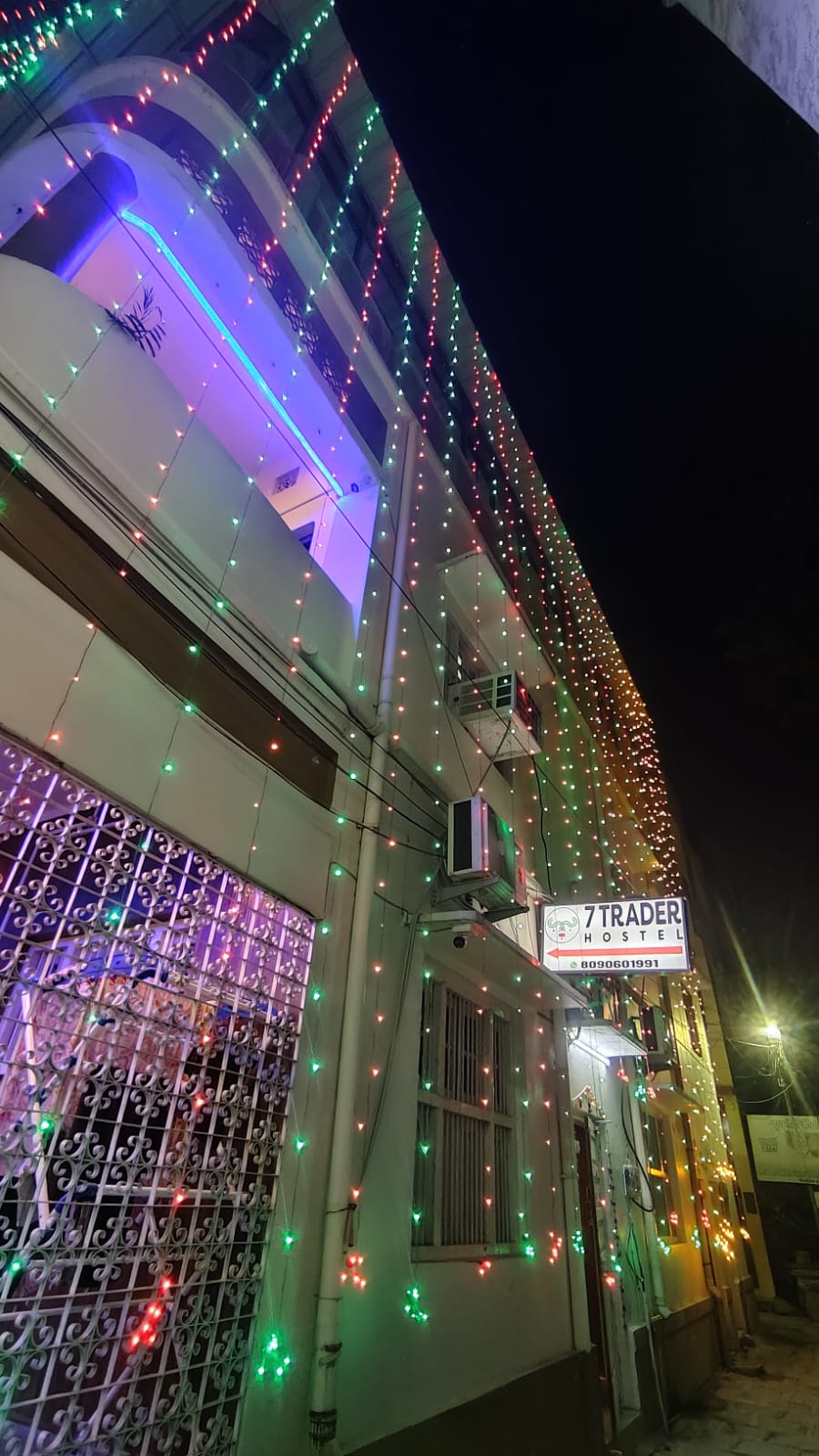
In 2024, Priyanshu invested ₹12 lakh in an unusual concept for varanasi: a trading-themed backpacker hostel in Varanasi. Rooms took their themes from Equity, Commodity and Bitcoin. Dormitories went by the names Intraday, Swing and Positional. The café introduced a concept around learning trading. This was designed to bring financial-market themes into the guest experience.
Avinash Maharaja was the hostel’s first paying guest. He booked a private room through Booking.com for a five-day trip to Varanasi, paying ₹12,500. During approximately four months of operations, the hostel hosted more than 240 guests and generated around ₹10 lakh in revenue.
Then a property-related legal dispute forced the hostel to close.
The Setback
The closure was a major setback. Priyanshu had invested ₹12 lakh and devoted months of work to the venture. The experience forced him to rethink how he evaluated properties, structured agreements, managed finances and chose business partners.
“It taught him that a strong idea is not enough,” he says. Property due diligence, clear written agreements, financial discipline and the right partnerships matter just as much. He also learned to separate a business’s long-term purpose from the first model he used to pursue it. “2024 was a lesson learned,” he says.
Rather than abandoning the underlying idea, Priyanshu spent the following two years developing a broader vision for 7 Trader: “Collect. Curate. Culture.” He began exploring how collecting, storytelling, cultural preservation and hospitality could come together in a larger model.
Chai, Ghats and Forgotten Stories
During those years, Priyanshu often sat with friends at a chai shop on the ghats. He kept noticing how many stories were fading, and how few people documented them properly, with a timestamp.
He also thought about the travelers who visit India from other countries. They did not only collect objects. They collected stories, and those stories gave the objects their value and meaning.
The two observations came together. Priyanshu began developing 7 Trader as a broader cultural collectibles venture connecting collecting, storytelling, artist collaborations and cultural preservation. Hospitality would remain one part of the long-term vision, alongside the documentation of meaningful objects, limited-edition creative products and a future collectibles marketplace. “Hospitality can be one part of the larger vision rather than the entire business,” he says.
Collect. Curate. Culture.
The new vision rests on a simple belief: collecting should not only be about rare or expensive objects. An everyday object can carry a person’s memory, a local craft, a profession, a community or a place. 7 Trader aims to help people discover the meaning behind collecting—not only rare or expensive objects, but also everyday items connected to memories, professions, craftsmanship, communities and places.
Today, the company documents meaningful objects and people’s stories, collaborates with artists, and preserves the process through films, photographs and timestamped records.
At the heart of this work sits the Varanasi Artifact Series, a planned series of 12 projects. Each project documents an object, its origins and context, and the people and stories connected to it. Artists reinterpret the objects for a modern generation. Priyanshu designed the series around Varanasi’s own people, crafts, businesses and culture, to represent the city to a global audience with international standards.
The team has already completed Artifact 002, an old boat paddle. Its theme is “Labour & Flow.”
What Comes Next
7 Trader is at an early stage, and Priyanshu says so plainly. The current initiative is pre-revenue. He has invested another ₹5 lakh from personal savings in artifact development, artist collaborations, website development and trademark registration work. The company has raised no external funding and is entirely bootstrapped.
Six people make up the team. Priyanshu leads business development and relationships full-time. Ridhi Jain handles legal documentation, and a videographer, a video editor, an IT professional and a freelance scriptwriter complete the group. They are specialists and collaborators, not six full-time employees.
Priyanshu is building the roadmap in stages:
The Artifact Series: completing and documenting Varanasi’s stories, including those of generational family businesses, with local artists and BHU art students.
Collectible-themed hospitality: a flagship backpacker hostel in Varanasi, targeted for 2027, where rooms introduce guests to collecting categories. One example is a sneaker room that displays Indian sneaker collections.
Collectible products: limited-edition collectibles made with Indian brands and handmade crafts, such as a gulabi meenakari brooch & more.
A marketplace: over time, a community and marketplace where collectors discover meaningful objects and their stories, and buy, sell and auction them.
As the model grows, Priyanshu plans to move city by city. Each collection will grow from that city’s own artists, artisans, businesses and communities, rather than repeating the same collection everywhere.
Why It Matters
For Priyanshu, the deeper reason is time. If no one documents stories today, the next generation may reshape or tilt them thirty or forty years from now. By recording them now, in the voices of the people who lived them, 7 Trader can make sure “the truth will be heard from the real person itself.”
“The goal is to build a business while preserving stories that might otherwise be lost,” he says.
Lessons from the Journey
Priyanshu’s advice to anyone starting out is practical. “Start with what you genuinely understand or care about, but do not confuse passion with proof of demand.” Talk to potential customers, test the smallest practical version of your idea, understand your costs and market, and protect yourself with clear agreements. Don’t try to build everything at once.
And a setback does not always mean the idea is wrong. “Sometimes the business model needs time to evolve,” Priyanshu says.
Follow the journey on Instagram:@7traderculture