FOUNDER
The Shopkeeper’s Question: How Zammer Is Bringing Surat’s Fashion Stores Online
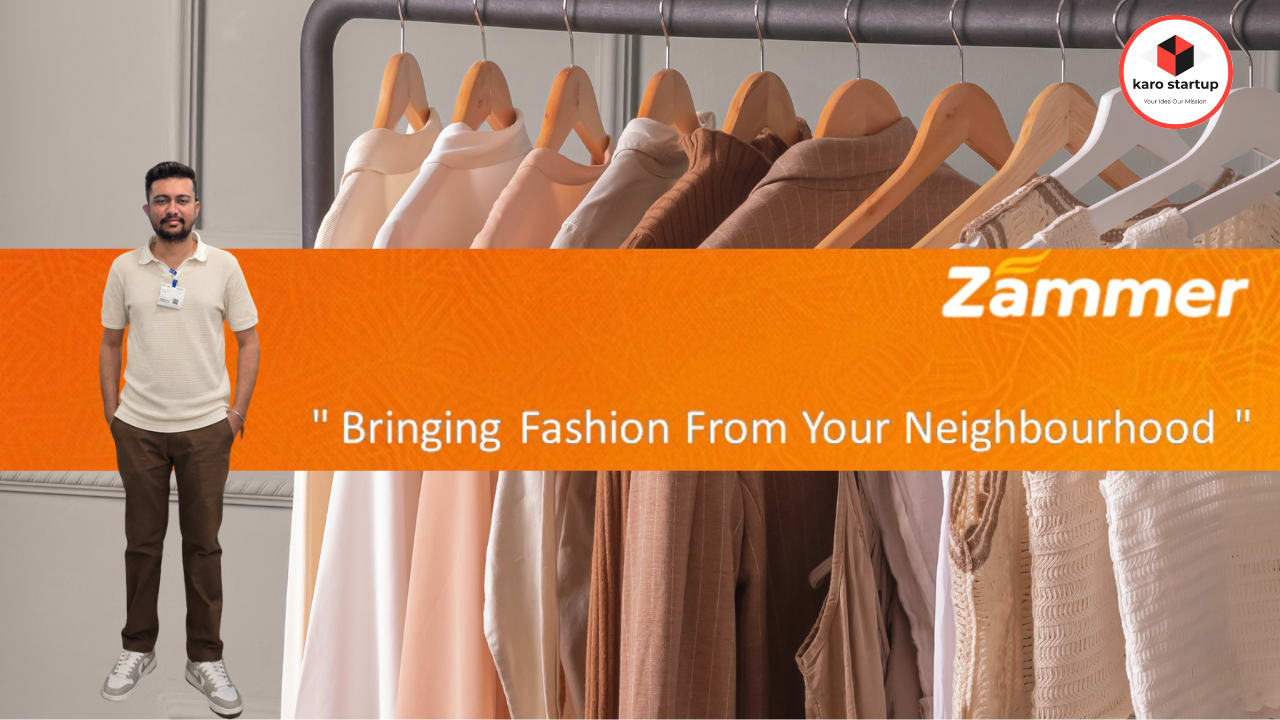
It started with a question the founder couldn’t stop asking himself.
Darshan Jadav began his career as a US IT recruiter in Surat, hiring tech talent for companies in the US and Canada. Later he moved into e-commerce and built two brands that together generated over ₹2 crore in revenue. Then COVID hit, and while working in the e-commerce industry, he noticed something.
Online sellers were getting back to business, but the shopkeepers in the offline retail market still weren’t selling their products online.
If online selling is possible, why can’t offline shopkeepers sell their products online too?
The question followed him around. What was actually stopping local retailers from going online?
A Shop with 5,000 Products
The answer came from a visit to his friend Sandip’s garment shop.
The shop held 4,000 to 5,000 products. Yet Sandip asked Darshan for products to sell online.
“Brother,” Darshan asked, “your own shop has so many products. Why are you asking me?”
Sandip explained how difficult it is to sell existing inventory on Amazon and Flipkart.
Darshan didn’t stop at one friend. He spoke with 100 to 120 offline retailers, and the pattern was the same everywhere. It wasn’t one shopkeeper’s problem. It was an industry-wide one, and it was where the journey of Zammer began.
Three Walls Between a Shopkeeper and the Internet
Darshan’s conversations showed that offline fashion retailers face three main challenges when they try to sell online.
Product modelling. Professional modelling can cost ₹400 to ₹500 or more per product. That makes little sense for inventory that is limited and can’t be repeated.
Digital marketing. Marketing demands additional investment.
Inventory management. Keeping consistent stock on marketplaces is hard. Delivery delays, returns and penalties add to the risks sellers carry.
Zammer was built to bring these barriers down with AI-powered cataloguing, virtual try-on and hyperlocal commerce, making online selling affordable and accessible for local retailers.
Three Attempts
Darshan started with ₹10 lakh and a co-founder. Building Zammer turned out to be harder than anything he had done before.
The first attempt ended when his co-founder moved to Canada to settle down. Darshan was suddenly alone, with no partner and no money to continue. The progress they had made felt like it had gone back to zero.
The second attempt began with LinkedIn. Darshan reached out to engineers, pitched his vision, and put together a team of people who believed in it and worked on it part-time alongside their full-time jobs. But coordination was hard, and the team couldn’t complete the product.
Twice, he had come close and failed. Starting again felt extremely difficult. But he still believed the problem was worth solving.
The third attempt was the turning point. He arranged funds through credit cards and personal loans, took on the financial risk, and started building again.
In September 2026, Zammer launched.
“Each setback tested me financially and emotionally,” Darshan says. “But I kept going because I believed the problem was worth solving.” The failures, he says, taught him resilience, ownership and the importance of execution.
What Zammer Is Today
Zammer is an AI-powered fashion commerce platform that brings together AI virtual try-on, AI-powered product cataloguing, personalized fashion discovery and hyperlocal delivery. It helps local fashion retailers digitize their inventory, and it lets customers discover, virtually try on and receive fashion products within 60 minutes.
Its primary customers are Tier 2 and Tier 3 offline fashion retailers, boutiques, local garment stores and D2C fashion brands. On the consumer side, it serves shoppers who want convenient, personalized and fast fashion in their own city.
Fast delivery alone isn’t what sets Zammer apart. By combining AI virtual try-on with hyperlocal commerce, it lets customers see how a product looks before buying, while drawing on nearby store inventory for quick delivery. Meanwhile, its AI tools help retailers digitize and monetize the stock they already have.
Zammer earns through seller commissions on orders, delivery charges, AI-powered cataloguing services, advertising and listing fees, and subscription services for retailers. It competes with players like SLIKK, Knot and Zilo.
Where Things Stand
Zammer is an early-stage, pre-revenue startup run by a team of four, including its founder. It hasn’t raised outside funding. Even so, more than 100 stores are already live in Surat.
Two milestones stand out so far: a grant from SSIP 2.0, and $200,000 in technical credits from an incubator.
The Road Ahead
Darshan’s vision for the next three to five years is bold: onboard 100,000 stores onto Zammer and serve over 1 million customers, empowering local fashion retailers across India to sell online affordably through AI and hyperlocal commerce.
What the Journey Taught Him
Asked about the biggest lesson of his journey, Darshan answers simply: believing in your vision means continuing even when everything falls apart.
And his advice to anyone starting from scratch?
Start where you are, with what you have. Don’t wait for the perfect moment. You don’t need a perfect team, unlimited money or a perfect plan to begin. Start small, learn from real problems, and keep moving forward. Your first attempt may fail, and you may have to start again, but every attempt teaches you something valuable. Focus on the next step instead of waiting for everything to fall into place. The perfect time may never come, so make the best of what you have today and start building.
For Darshan, that advice comes from experience. It took three attempts, a lost co-founder, a part-time team and a stack of personal loans to get here.
Learn more atzammernow.com.