
Neuroscience of Resilience — Resilient India: The Urgent National Imperative Across All Sectors
India stands at a historic inflection point. As the nation accelerates toward its vision of becoming a global economic powerhouse and innovation leader, the most critical challenge before us is no longer confined to infrastructure expansion, digital transformation, or policy reform. The defining factor of India’s future success is human resilience.
The 21st century presents continuous and compounding pressures: climate instability, rapid technological shifts, urban density, demographic expansion, artificial intelligence disruption, mental health crises, workforce burnout, economic volatility, and geopolitical uncertainty. These forces demand more than reactive systems. They demand a new national capability — neuro-adaptive resilience.
Modern neuroscience now confirms that resilience is not merely a personality trait or emotional strength. It is a measurable, trainable, and optimizable brain function. Research across cognitive neuroscience, behavioral science, and neurobiology demonstrates that stress regulation, adaptive decision-making, emotional control, learning agility, and recovery from adversity are governed by neural systems involving the prefrontal cortex, amygdala, hippocampus, and dynamic neuroplastic networks.
When these systems are intentionally strengthened through structured, science-based interventions, both individuals and institutions demonstrate superior performance under pressure. This is no longer theoretical insight — it is empirical evidence.
India must therefore transition from resilience as a motivational concept to resilience as national infrastructure.
Why India Needs a Resilience Revolution — Now
Across sectors, the signals are urgent and undeniable.
Agriculture
Indian farmers operate under mounting climate volatility, financial uncertainty, fluctuating market prices, and resource stress. Neuroscience-based resilience training can enhance cognitive flexibility, emotional regulation, risk assessment, and innovation adoption — empowering farmers to make better decisions under uncertainty.
Healthcare
Doctors, nurses, and caregivers face chronic emotional strain, high patient loads, and post-pandemic exhaustion. Burnout within healthcare systems threatens national stability. Neural recovery training and structured resilience protocols can protect cognitive endurance and emotional sustainability.
Education
Students are navigating anxiety, distraction, digital overload, competitive pressure, and an AI-driven future that constantly reshapes career pathways. Brain-based learning models and attention regulation frameworks can equip India’s youth with adaptive cognitive skills for lifelong success.
Corporate & Startups
High-performance corporate cultures without built-in recovery systems produce decision fatigue, reduced creativity, and long-term productivity decline. Neuroscience-informed resilience frameworks can balance performance with renewal, ensuring sustained economic output.
Sports
Elite athletic performance now depends as much on neural recovery and mental conditioning as physical training. Cognitive endurance, emotional composure, and attentional control are competitive advantages.
Governance & Public Services
Policy-makers and administrators operate in environments of crisis management, decision overload, and political complexity. Leadership resilience grounded in neuroscience enhances clarity, emotional stability, and strategic foresight.
Space Missions — Pre, During, and Post
Astronauts, mission planners, and support teams require proactive cognitive preparedness. Neural resilience frameworks can strengthen performance before missions, maintain stability during missions, and support recovery afterward.
Defense & Security
Modern defense environments demand rapid adaptability, sustained attention, and cognitive endurance. Resilience is not optional; it is strategic capability.
The conclusion is clear: resilience is no longer a soft skill. It is national capacity.
The Neuroscience Advantage
A National Resilience Framework grounded in neuroscience would include:
Brain-based stress regulation training
Neuroplastic learning integration in education systems
Resilience metrics aligned with economic indicators
Preventive mental health through neural skill-building
Leadership neuroscience development programs
Community-based resilience ecosystems
Global evidence demonstrates that structured resilience training improves attention span, emotional regulation, collaboration, innovation capacity, and adaptive problem-solving. These factors directly influence GDP productivity, workforce stability, and social cohesion.
In economic terms, resilience is productivity protection.
In societal terms, resilience is cohesion insurance.
In strategic terms, resilience is national strength.
The Urgent Ask
India requires a comprehensive Resilient India Mission (2026–2040) integrating neuroscience into policy architecture.
Key actions:
Embed resilience curricula from primary education through civil services training.
Establish National Centers for Neuroscience of Resilience.
Train teachers, farmers, athletes, healthcare workers, defense personnel, and administrators.
Develop public-private partnerships for scalable digital neuro-training platforms.
Include resilience indices in national development planning frameworks.
Integrate preventive neural health into public health systems.
Resilience must shift from crisis response to preventive capacity-building.
The Vision
A resilient nation is not defined solely by economic growth but by how effectively its people respond to disruption.
India’s demographic dividend can evolve into a neuro-dividend — a population trained to adapt, innovate, collaborate, and thrive under uncertainty.
The global advantage of the future will belong not merely to the strongest economies, but to the most resilient minds.
Resilient India is no longer optional. It is an urgent national necessity.
Neuroscience of Resilience — Resilient India: A Daily National Publication Imperative
India has entered an era where resilience must become a daily national conversation, not an occasional policy discussion.
The pressures shaping modern India are continuous: economic transition, climate variability, digital acceleration, social evolution, and generational shifts. Therefore, the science that enables adaptation must also be continuous.
The Neuroscience of Resilience provides a powerful framework for sustained public engagement and practical daily application.
A Cross-Sector National Knowledge Movement
A structured daily series titled Resilient India can serve multiple sectors:
Agriculture — adaptive strategies for climate resilience
Education — brain-based learning habits
Healthcare — burnout prevention and neural recovery
Corporate & Entrepreneurship — decision-making optimization
Sports — mental conditioning techniques
Governance — leadership resilience tools
Youth & Communities — emotional regulation and purpose development
The Urgent Ask
India needs a nationally supported daily publication platform across newspapers, digital media, educational portals, and public broadcasting dedicated to the Neuroscience of Resilience.
Resilience must move:
From seminars to daily practice
From theory to habit
From individual effort to national culture
A Resilient India is built one informed mind — every day.
Resilient India — Neuroscience of Resilience
Conclusion
India is poised to lead the global Resilience Era.
By integrating neuroscience into governance, education, agriculture, healthcare, defense, corporate systems, and daily public dialogue, India can transform its demographic advantage into a strategic neuro-advantage.
Resilient India.
Resilient World 2026 and Beyond.
A Scientific Path to Sustainable Growth and Progress.
The time to act is now.
Quick Share

Hyderabad, India – May 2026: Back pain and slipped discs are increasingly affecting working professionals and younger adults across India, emerging as one of the leading causes of reduced...

Move marks a strategic partnership as GIVA strengthens its position in India’s fast-growing fine jewellery market 25th May, 2026, Bengaluru, India: GIVA, India’s leading fine jewellery brand, today...
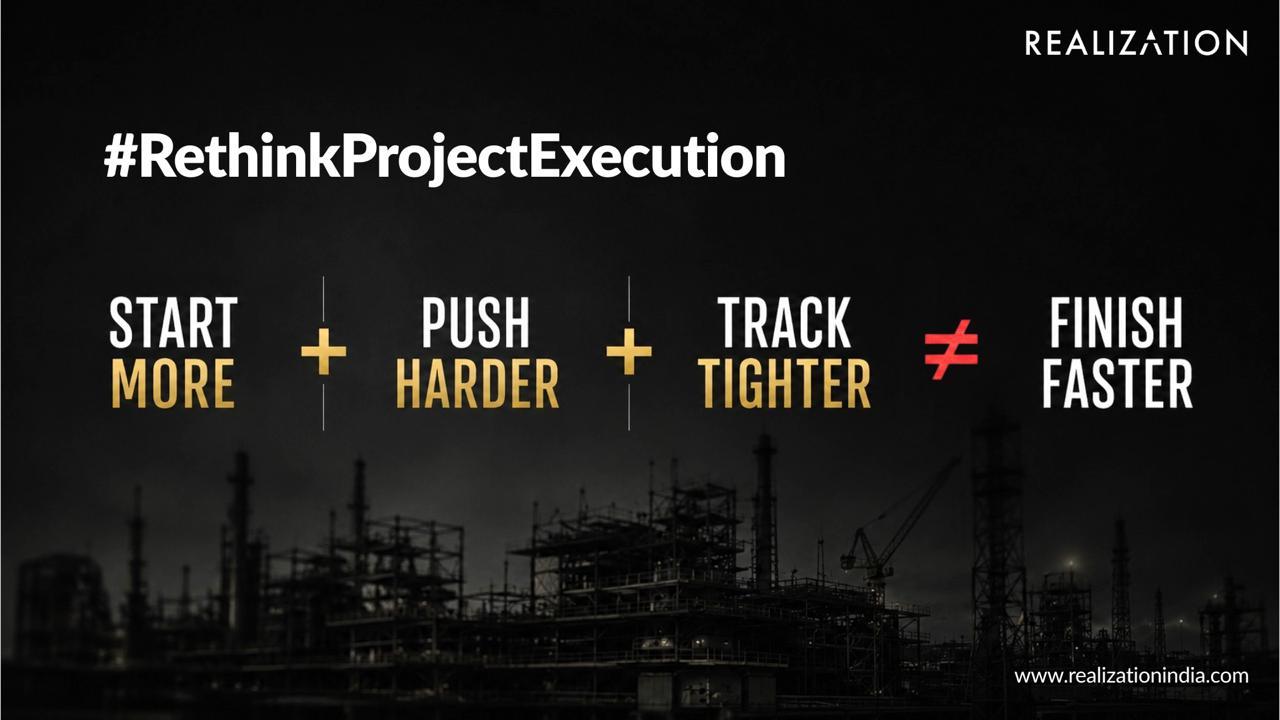
As Indian businesses continue investing in large-scale expansion projects across manufacturing, infrastructure, logistics, healthcare and industrial sectors, project execution is increasingly...