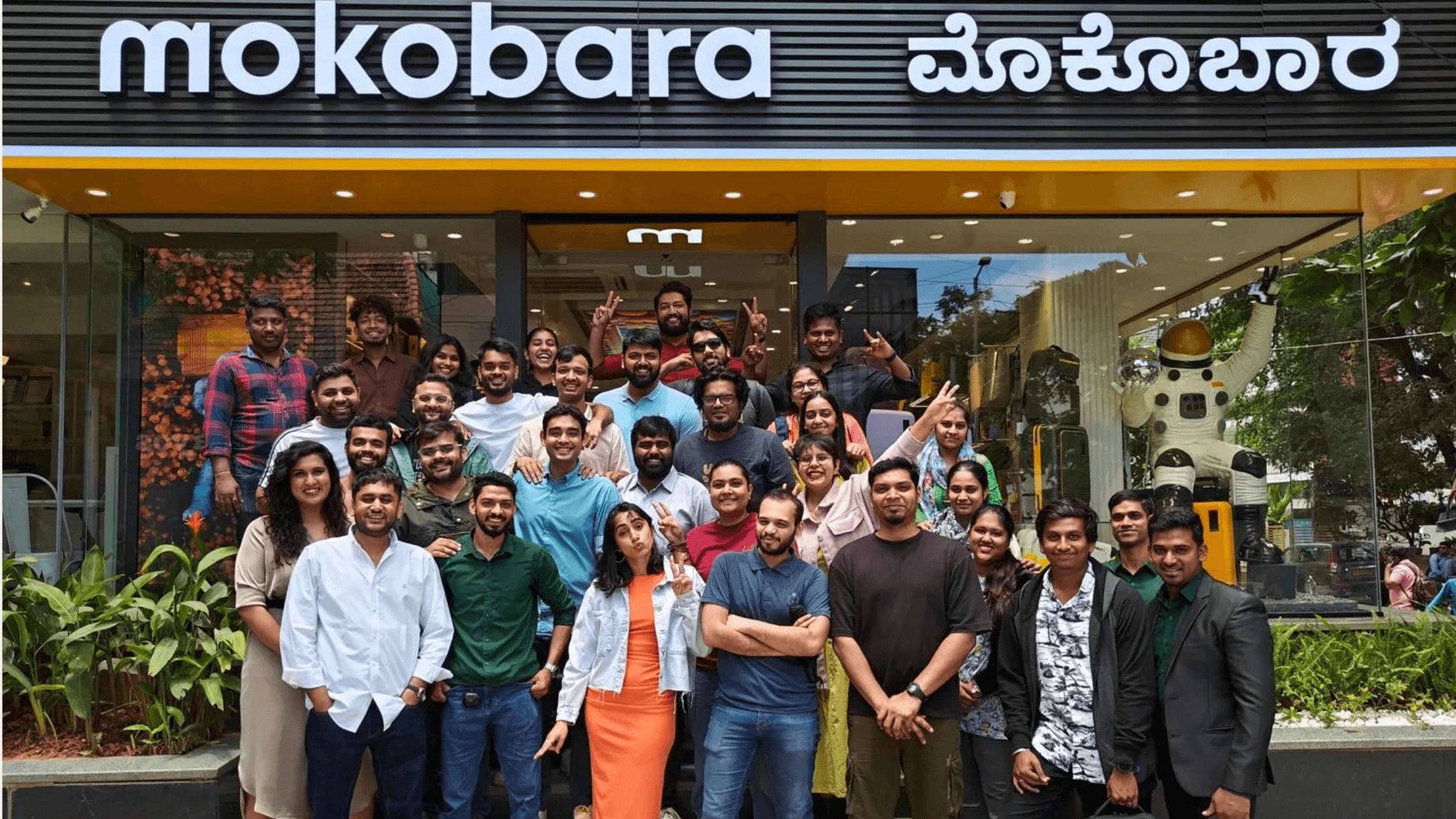
So how did it happen? This is the story of two founders who treated luggage not as utility… but as identity.
The founding insight was deceptively simple: people spend on airport outfits, shoes, headphones — but the suitcase is usually an afterthought. The category was filled with products that were either functional-but-plain or premium-but-overpriced, with very little focus on design-led “joy”. A gap existed for a brand that felt modern, global, and lifestyle-first — without pricing itself like luxury.
That gap became the opening.
Mokobara was founded by Sangeet Agrawal and Navin Parwal (Bengaluru-based). Multiple reports describe them as former executives from Urban Ladder , with complementary strengths in product and design.
Other profiles also mention experience across design-led environments like Uber and WeWork , which shaped their obsession with user experience and brand storytelling.
Their advantage wasn’t “we can make suitcases.”
Their advantage was “we can build a consumer brand that people want to be seen with.”
In early days, the product direction itself got questioned. New brands in luggage often get boxed into “cheap + mass” or “premium + niche.” Mokobara tried something harder: a design-first, mid-premium positioning — and early prototypes reportedly didn’t get unanimous validation.
Then came the plot twist: the founders started building around 2020 — and global travel collapsed.
In a category tied to movement, launching during a period when people weren’t traveling looked like the worst possible timing. But that constraint forced focus: build quality, build product depth, and build brand recall even before the world fully returned to travel.
Mokobara leaned into a clear product philosophy: aesthetics + function, with obsessive attention to details (wheels, zippers, internal feel, minimal design). Their own brand positioning emphasizes “less but better” and travel-joy as a core theme.
They also built a design-forward identity with features and finishing that felt more “global D2C” than traditional Indian luggage. Industry write-ups highlight product elements like silent wheels, thoughtful compartments, and modern styling that made luggage feel like a lifestyle accessory, not a commodity.
1) D2C first (control + feedback loop): Direct selling helped them iterate faster, control the experience, and build a premium perception.
2) Marketplaces for scale: Their presence on Amazon helped access high-intent buyers and spikes during big sales moments; the brand has spoken publicly about using marketplaces strategically while still thinking like a long-term “consumer brand.”
3) Offline stores for trust + touch: Over time, the company expanded physical presence, because luggage is a “feel-before-you-buy” category. (Even investors highlighted retail expansion as a key lever.)
Mokobara’s fundraising became a strong proof point that this wasn’t a “small niche luggage brand.”
Series A (reported): led by Saama Capital and Sauce.vc (with other investors participating).
On total funding, data platforms tracking filings have reported roughly ~₹190+ crore raised (figures vary by source and classification).
Some industry write-ups have also reported a valuation around ~₹700 crore around early 2024 (reported, not always officially confirmed).
According to FY25 filings-based reporting, Mokobara’s:
Revenue from operations: ₹230 crore (FY25) vs ₹117 crore (FY24)
That trajectory matters because it shows repeatable demand — not one-season hype.
The luggage + travel gear category is benefiting from a few macro tailwinds: rising disposable incomes, domestic travel growth, and e-commerce expansion. One 2025 market report estimates India’s luggage bags & travel gear market at ~$3.7B and highlights a shift toward hard-shell, lightweight luggage and premium products.
Industry research also notes a broader “lifestyle war” in luggage, with D2C brands capturing share via design + influencer-led branding and omnichannel retail.
In simple words: the category is moving from “utility purchase” to “lifestyle choice.” That’s exactly the wave Mokobara rode.
1) Pick an “traditional” category and make it desirable.
Big outcomes often hide in boring markets where innovation is low and incumbents are complacent.
2) Don’t fight incumbents on price. Fight them on taste.
Mokobara didn’t try to out-discount legacy brands — it tried to out-design them.
3) Build the feedback loop early.
D2C (and even marketplace presence) isn’t just a channel — it’s a learning engine when you use reviews + repeat buyers to iterate fast.
4) Timing can be bad — strategy can still be great.
Starting around 2020 meant travel demand was weak, yet the brand used the period to sharpen product, positioning, and distribution planning.
5) Omnichannel wins trust in “touch categories.”
Offline experience matters when customers want to feel materials, wheels, handles, and finish before committing.
Quick Share