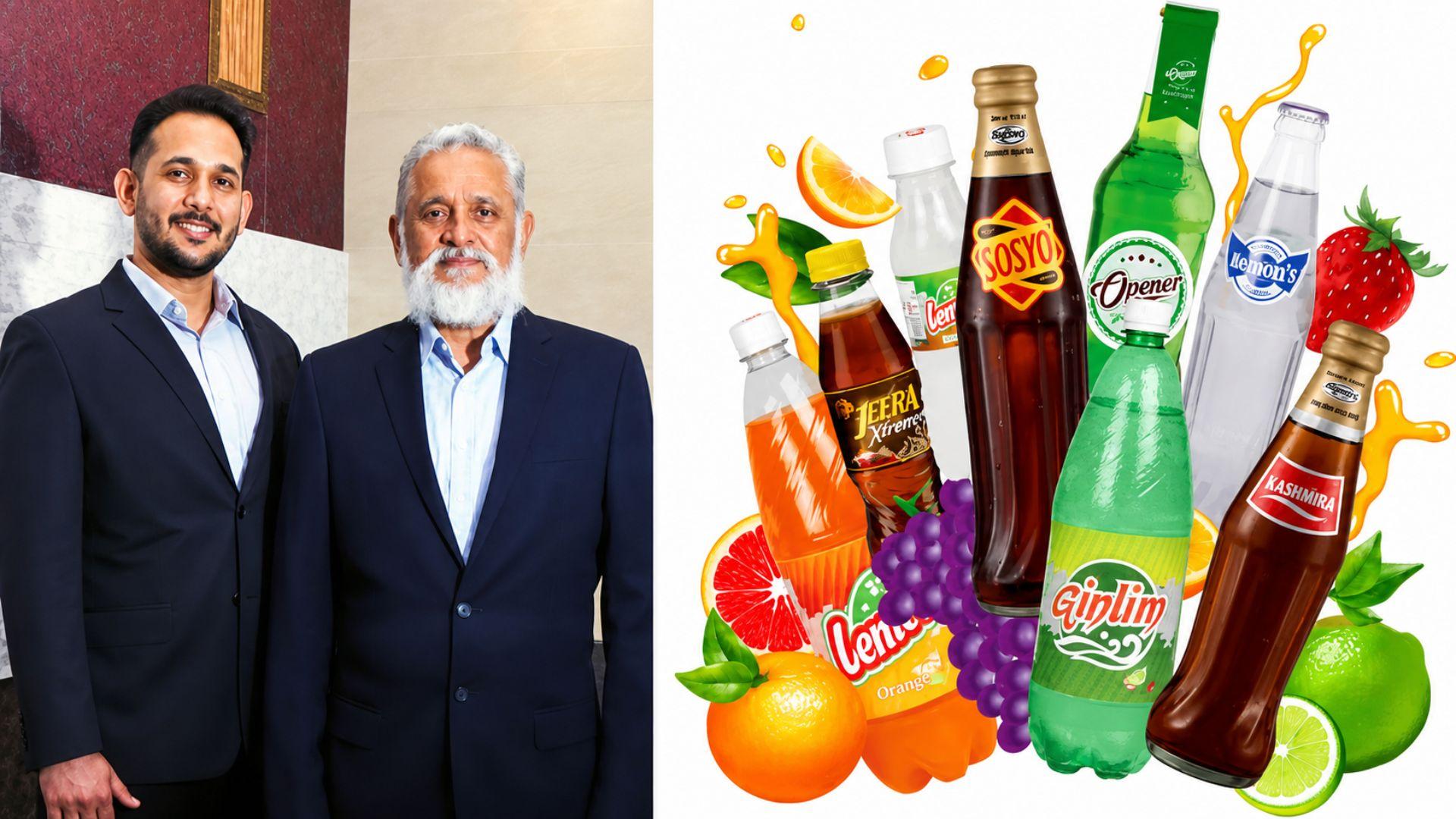
There was a time when India had no real homegrown carbonated drink. Every fridge, every dhaba, every wedding function had the same bottles. If it wasn’t Pepsi or Coca-Cola, most people wouldn't take it seriously as a soft drink. Choosing an Indian brand in those days often felt unusual.
Then came a family from Surat that quietly refused to accept that reality.
Today SOSYO is one of India's most beloved homegrown beverage brands, selling over 5 crore bottles every single year across Gujarat and beyond. But this is not just a drink story. It is a story about rejection, patience, cultural loyalty and building something India did not know it needed until it could not imagine life without it.
Decades ago India's beverage market was simple. Foreign was premium. Indian was inferior. That was the unspoken rule everyone accepted.
Carbonated drinks meant Pepsi or Coke . Period.
Small Indian brands existed but they struggled to be taken seriously. Distribution was hard. Perception was harder. Getting a dhaba owner or a small retailer to stock an unknown Indian drink over an established foreign brand required convincing people to go against everything the market had told them to believe.
That is the wall the Hajoori family walked into when they launched SOSYO in Surat.
The Hajoori family did not come from a background of big business or investor networks. They came with a product they believed in and the determination to make India believe in it too.
The early days were humbling. Walking into dhabas and small shops, pitching an Indian carbonated drink to owners who had no reason to take a chance on something unfamiliar was a daily battle. One dhaba owner looked at the founder and told him to leave and never come back.
He walked away, only to step into the next shop again. It was not arrogance, but determination. The kind that comes when you truly believe in what you have built.
When Pepsi entered India in 1989 and Coca-Cola returned in 1993, the soft drink market changed almost overnight. Many Indian brands began to fade away. They didn’t have huge advertising budgets, famous celebrities, wide distribution networks, or the brand image these global companies carried.
But SOSYO stayed.
Not by trying to out-market them. Not by chasing the same playbook. But by doing the opposite. It stayed regional. It stayed consistent. It stayed true to its unique flavour that tasted like nothing else on the market.
While Pepsi and Coke spent crores on television campaigns, SOSYO built something money cannot easily buy. Cultural memory.
SOSYO did not become popular because of advertising. It became popular because of habit and memory.
In Gujarat, SOSYO became a part of everyday life. It was seen at weddings, family gatherings, roadside dhabas, small restaurants, and local celebrations. Parents who grew up drinking it naturally passed the same choice to their children, without any advertising or effort.
That is the most powerful kind of brand loyalty. It does not live in a campaign. It lives in a memory. And memories last far longer than any ad budget.
The brand also had something multinationals could never replicate. It felt local. It felt like ours. And in a market increasingly proud of its Indian identity, that matters enormously.
SOSYO has survived decades of market disruption, the entry of global giants, changing consumer tastes and the rise of energy drinks, packaged juices and health beverages. Each of these trends could have made SOSYO irrelevant.
It did not become irrelevant because it never lost its core customer. The people who grew up drinking SOSYO never really stopped. And as India’s love for homegrown brands grew stronger, a new generation started discovering it too.
Consistency is often ignored in business. SOSYO showed that staying reliable, familiar, and present for decades can become a powerful advantage on its own.
Today SOSYO sells over 5 crore bottles every single year.
No IPL sponsorship. No Bollywood ambassador. No viral social media moment built this number.
Just decades of a family showing up. A product that delivered every single time. And a loyal customer base that never needed convincing twice.
That scale was not built overnight. It came from years of patience, consistent quality, strong regional roots, and a firm belief that an Indian drink could hold its own in a market ruled by global giants.
Many brands sell products. Very few build belongings.
SOSYO made people believe that an Indian brand could be just as good, if not better, than anything coming from abroad. It did not change the market through big funding or celebrity campaigns. It stayed relevant by simply refusing to give up.
This is not just the story of a soft drink. It is the story of what happens when a family from Surat believes in something strongly enough to keep going until everyone else starts believing too.
The dhaba owner who threw him out probably stocks SOSYO today without knowing the story behind the bottle.
And that is exactly the point.
Quick Share