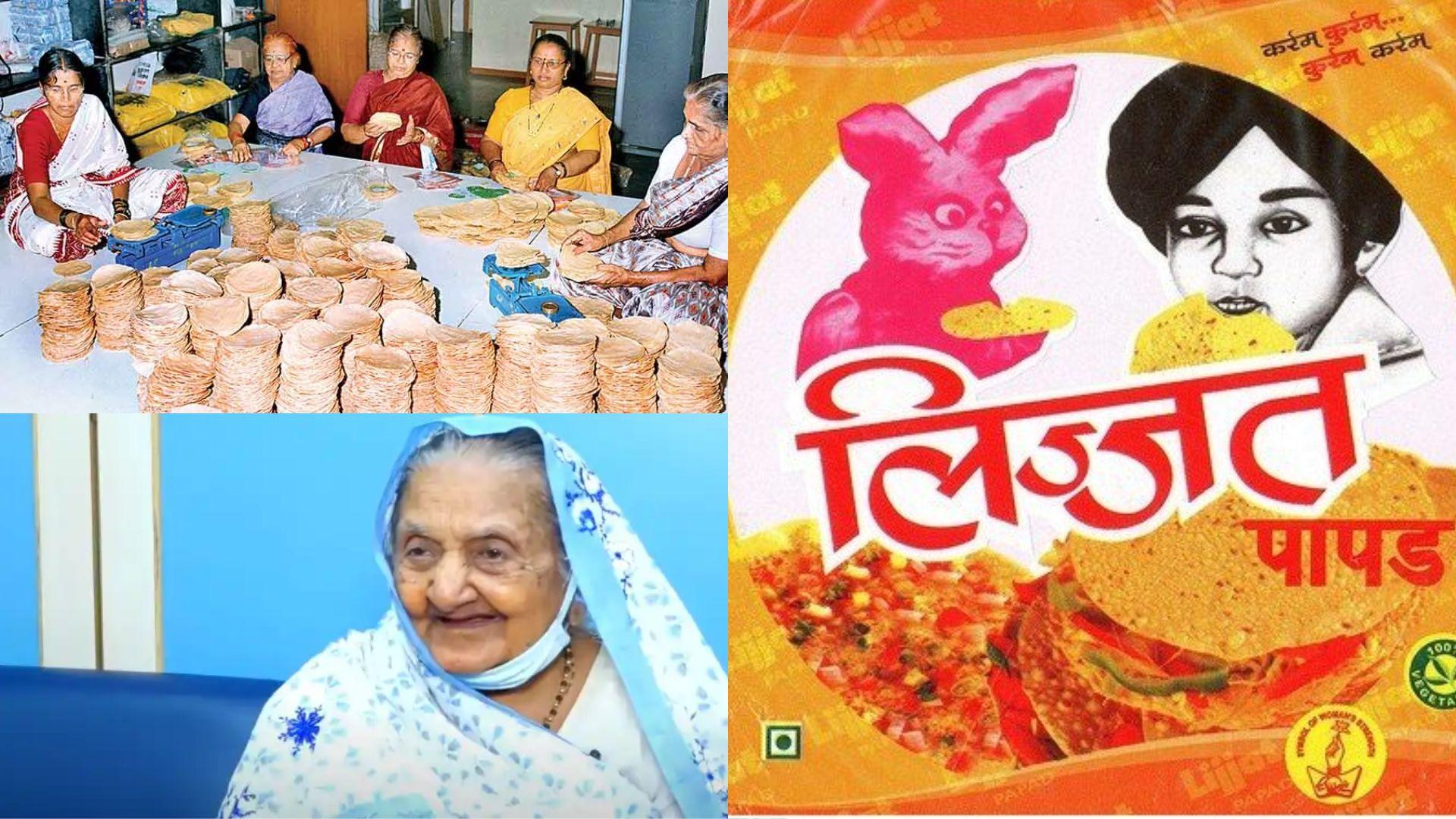
Seven common women, on a small terrace in Lohana Niwas, Girgaum, Mumbai, in 1959, came together with the extraordinary determination. Jaswantiben Jamnadas Popat, and six friends invested a meager ₹80 borrowed money through a social worker and sat down to roll papads manually. They were no entrepreneurs as we know them. They were non-business wives with no factories, investors. They had a skill and a recipe and a hunger to be self-reliant. On the first day, they prepared 4 packets of papad and sold them to one of the local merchants in Bhuleshwar.
The company they founded- Shri Mahila Griha Udyog Lijjat Papad- was called after the Gujarati term of tasty. But it was more than the taste: it was the taste of independence.
This is not what we went into to get rich. We began to support ourselves in our own feet-- and support others in theirs.
Lijjat Papad is not a firm as such, it is a women cooperative, based in Mumbai and has 82+ branches in India. Established on the basis of equality, shared ownership, and mutual trust, all the women engaged are not workers but full-fledged members-partners who own a part of the institution and equally share in its profit. What started as a home-based papad-making venture turned out to be one of the most popular FMCG brands in India - evidence that business with a purpose can do what even well-invested companies cannot.
The brainchild of Lijjat is Jaswantiben Jamnadas Popat. She was a housewife who had no professional experience in business, and the founder of a group of seven women who had had the courage to think that dignity and a livelihood can be combined. Her leadership approach was never dictatorial, she was with all the members and rolled papads herself, and this was the tone of equality that characterizes Lijjat even nowadays.
The other six founders, who were Parvatiben Ramdas Thodani, Ujamben Narandas Kundalia, Banuben N. Tanna, Fatimaben Abdul Shakoor, Rambhaben Harshadrai Sondhi and Kamalaben Dharamshi Patil, carried the same air: no titles, no ego, just the purpose.
The concept was conceived due to a basic yet so relatable irritation - the necessity to make an honorable living without leaving the house. These women were not able to work in a factory. They had to have work coming their way.
They borrowed ₹80 borrowed money through social worker Chhaganlal Karamshi Parekh and a simple recipe in their hands and began rolling papads on a terrace. The first batch was sold to a local Bhuleshwar merchant. On Day 1, they made ₹2.37 in profit. No business plan, no pitch deck, no market research. That was all uniformity--to turn up every morning, to roll every papad just as attentively, to keep the same taste, the same quality, the same fidelity.
Word spread. Demand grew. More women became members, not workers. The notion of the model was both straightforward and radical: whoever comes is a partner of equal. Profits are shared. Nobody is superior to anybody.
Lijjat was founded on a platform that most contemporary companies find difficult to define:
Since 2000s - A cemented legacy. Revenue crosses ₹1,600 crore. The product line is diversified to masalas, spices, chapati, badi, and bakery products. They have more than 45,000 women members in 82+ branches.
Lijjat is a producer cooperative - one of the most successful and purest models in Indian business history.
Raw materials are provided to every member by the central organization every morning - urad dal flour, spices and other ingredients - everything standardized to make sure it tastes the same. She brings the materials to her house, rolls the papads and delivers the finished product the next day. She earns what she produces and a co-owner in the annual profits of the organization.
Members are not supervised by supervisors. Trust, training and highly instilled pride in the product have ensured quality. The main organization takes care of purchasing, quality assurance, wrapping, distribution, and sales - allowing members to work solely on preparation of papad. This model removes middlemen, saves money, diffuses incomes, and maintains excellence in quality at an exceptionally low cost at once.
What started as a single papad recipe has grown into a diversified product portfolio:
Every product carries the same promise: made with care, consistent in quality, affordable in price.
Breaking social barriers. Convincing women — especially in conservative households — to join a cooperative and earn independently required patient community building over years, not months.
Maintaining quality at scale. As membership grew from 7 to 45,000, keeping every papad consistent was a massive operational challenge. Lijjat solved it through strict centralized ingredient supply and daily quality checks at collection points.
No external funding. Unlike today's startups, Lijjat never took investor capital. Every rupee of growth came from retained earnings and member contributions — making the pace of expansion slower but entirely self-owned.
Competition from organized FMCG brands. As large companies entered the papad market with machine-made products and aggressive pricing, Lijjat held its ground through brand trust, taste consistency, and the emotional connection consumers had with a product they knew was made by real women, by hand.
| Metric | Figure |
|---|---|
| Founded | 1959 |
| Starting capital | ₹80 |
| Annual revenue | ₹1,600+ crore |
| Active women members | 45,000+ |
| Branches across India | 82+ |
| Countries exported to | 15+ |
| Products in portfolio | 17+ |
| Years in operation | 65+ |
1. Purpose outlasts profit. Lijjat never chased valuation. It chased a mission — and the revenue followed. Purpose-driven businesses build loyalty no marketing budget can buy.
2. Equality is a competitive advantage. When every member owns the outcome, quality becomes everyone's responsibility. Shared ownership creates shared pride.
3. Start small, stay consistent. Four packets on Day 1. The magic wasn't a viral launch or venture funding — it was the compounding power of showing up every single day with the same standard.
4. Trust is the real brand. Decades before "brand building" became a buzzword, Lijjat built trust through consistent taste. The product was the marketing.
5. Scale doesn't require losing your soul. From 7 women to 45,000 — Lijjat grew enormously while protecting its founding values. Structure can scale; values must be chosen consciously and defended every day.
6. Inclusion is not charity — it's strategy. By bringing work to women's homes instead of making women come to work, Lijjat unlocked a massive, motivated, and loyal workforce that no competitor could replicate.
Lijjat Papad is not just a business success story. It is a proof of concept for a different kind of economy — one where the goal is not maximum extraction but maximum dignity.
In an era obsessed with unicorns, disruption, and billion-dollar valuations, Lijjat stands as a quiet, enduring reminder: the most powerful businesses are often built not on the smartest technology, but on the deepest humanity.
Seven women. One terrace. Eighty rupees. And sixty-five years later — a legacy that no amount of venture capital could have created.
"We are not women who work for Lijjat. We are Lijjat." — Every member of Shri Mahila Griha Udyog Lijjat Papad
From ₹2.37 in profit on Day 1 to ₹1,600 crore today — this is what happens when ordinary people are given extraordinary dignity.
Quick Share