India’s love for premium gadgets is undeniable. iPhones, MacBooks, and iPads have become aspirational symbols across cities and towns alike. But behind this aspiration lies a quieter, uncomfortable truth—millions of perfectly usable devices are discarded every year, creating massive electronic waste and an equally massive trust gap in the refurbished market.
This is the problem Grest set out to solve.
And with its newly raised ₹16 crore funding round led by Equentis Wealth , Grest is now preparing for its next phase of growth—scaling trust, sustainability, and premium re-commerce across India.
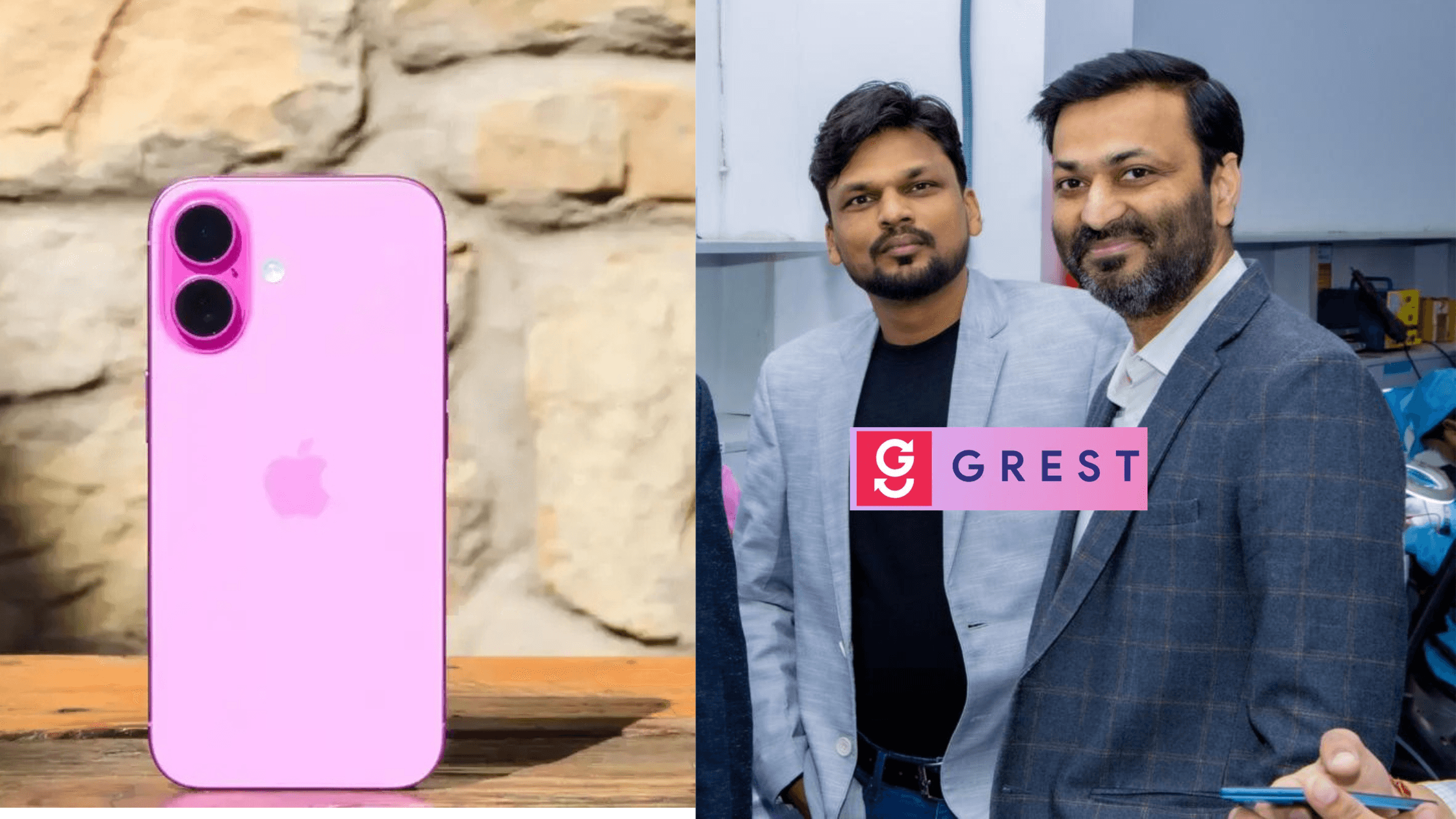
Grest was founded in 2018 by Shrey Sardana and Nitin Goyal , long before “circular economy” became a popular buzzword.
The founders noticed a strange contradiction in the Indian market. On one hand, consumers wanted premium Apple devices. On the other, they were deeply sceptical of anything labelled “refurbished.” Past experiences with unreliable sellers, inconsistent quality, and no after-sales support had broken trust completely.
At the same time, enterprises and institutions were sitting on thousands of unused devices, unsure how to renew or resell them responsibly.
The problem wasn’t demand.The problem was trust and structure .
Instead of building a simple marketplace, Grest chose the most difficult route—going full stack.
The company decided to control the entire lifecycle of a device:
sourcing and buybacks
renewal and refurbishment
quality assurance
distribution
warranties and after-sales service
This approach required more capital, more systems, and far more patience—but it also meant Grest could guarantee consistency.
The company focused exclusively on premium renewed Apple devices , including iPhones, MacBooks, and iPads. Each device goes through 50+ quality checks and is backed by a 12-month promise period , offering customers confidence closer to buying new than used.
The early years were slow and demanding.
Convincing customers to trust a renewed iPhone was not easy. Many had been burned before. Enterprises, too, were cautious about bulk device renewal, data security, and quality assurance.
Growth didn’t come from aggressive marketing.
It came from proof .
Grest’s first customers arrived through pilot programs, referrals, and word of mouth. Every successful delivery became a case study. Every satisfied customer became a brand ambassador.
Trust, once earned, began to compound.
Today, Grest operates from its renewal facility in Gurugram and has scaled steadily without losing focus.
According to the company:
it serves over 2 lakh customers ,
works with 100+ enterprises and institutions , and
has helped reduce 15,500+ metric tonnes of CO₂-equivalent emissions by extending device life cycles.
This environmental impact is not an afterthought—it is a direct result of building a structured re-commerce ecosystem that prevents devices from becoming e-waste.
The recent ₹16 crore funding round , led by Equentis Wealth, follows Grest’s earlier raise of $2.29 million from the same investor and others. The continued backing signals confidence in both the business model and execution.
While Grest has not publicly disclosed its valuation or revenue figures, the funding positions the company to:
scale its renewal capacity,
deepen enterprise partnerships,
strengthen after-sales infrastructure, and
expand its reach in India’s growing premium re-commerce market.
India’s refurbished and re-commerce electronics market is entering a decisive phase. Rising prices of new devices, growing sustainability awareness, and enterprise pressure to manage e-waste responsibly are all accelerating adoption.
What was once seen as a compromise is increasingly viewed as a smart, conscious choice.
This creates a long-term opportunity for players who can deliver consistency, reliability, and trust—exactly where Grest has focused from day one.
Grest’s journey offers a powerful lesson for founders building in Bharat:
Big outcomes often come from fixing overlooked problems, not chasing shiny trends.
The company didn’t invent new technology.
It fixed broken experiences.
It replaced uncertainty with systems.
And it chose patience over noise.
By combining sustainability with premium ownership, Grest has shown that circular economy businesses in India can be both impactful and scalable.
With fresh capital in hand, Grest is no longer just extending the life of devices.
It is redefining how India thinks about ownership itself.
And that may be its biggest upgrade yet.
Quick Share