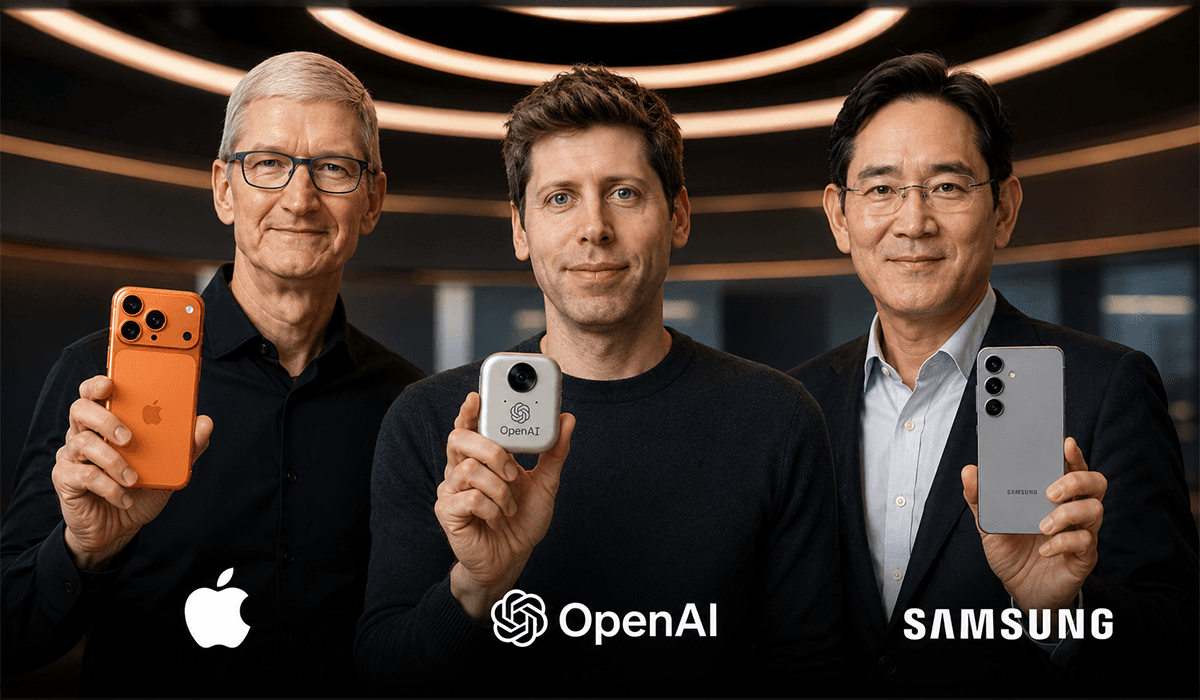
The creators of ChatGPT are working on their first smartphone to launch by 2027. When news first came out that Sam Altman was planning to build a smartphone, many people did not take it seriously. An AI company competing with Apple and Samsung sounded impossible. People online made jokes about it. Many tech experts thought the idea would fail before it even started.
But Sam Altman clearly did not forget the idea.
OpenAI is now reportedly working on its first smartphone, which could launch around 2027. This is not just a small experiment. The company is seriously entering the hardware market, a space that Apple and Samsung have dominated for years.
The reason is actually very simple.
OpenAI created ChatGPT, and millions of people use it every day. But users access ChatGPT through Apple’s App Store or Android phones made by Google and Samsung. OpenAI does not control those devices or platforms.
That creates a problem.
If AI becomes the main way people use technology in the future, then OpenAI cannot depend completely on other companies’ phones. The company wants direct access to users through its own device.
Because in tech, the company that owns the device usually controls the user experience too.
This phone is not expected to be a normal smartphone with just a ChatGPT app added to it.
Reports suggest OpenAI wants to build a phone where AI is the main part of the entire experience. A device that understands users better, learns their habits, and helps naturally with everyday tasks.
Instead of opening many different apps, people may simply talk to the phone and let AI handle things like writing messages, planning schedules, searching for information, or creating content.
One of the biggest signs that OpenAI is serious came from reports that the company has discussed ideas with Jony Ive, the famous designer behind the original iPhone.
That immediately got the tech industry’s attention.
The truth is that smartphones have started feeling repetitive.
Every new iPhone looks very similar to the previous one. Samsung phones also improve every year, but the overall experience stays mostly the same.
The excitement around phone launches is not what it used to be.
At the same time, AI tools have become a part of daily life for many people. People now use AI for studying, working, writing, researching, and even planning their day.
But current smartphones were not originally built for AI-first experiences.
OpenAI believes that the company that creates the best AI-powered smartphone could shape the future of the industry.
Still, building a phone is not easy.
Apple and Samsung have spent decades building factories, stores, software systems, and loyal customer bases. OpenAI has no experience selling phones yet.
There is also the issue of trust.
Phones contain private information like photos, messages, bank details, and locations. Many people are already worried about AI and privacy. OpenAI will need to clearly explain how user data will stay safe.
And making the phone itself is only one challenge. Building an entire ecosystem with apps, services, and a smooth user experience is much harder.
The bigger message here is important.
Big tech companies no longer want to focus only on software. They want control over devices, too.
Google has Pixel phones. Apple is adding AI to iPhones. Microsoft is bringing AI deeper into Windows. Now, OpenAI also seems to want its own device.
The reason is simple: owning the device means owning the connection with users.
For customers, this competition could actually be good news. More competition usually means better products, faster innovation, and improved experiences.
Right now, OpenAI has not officially confirmed all the details publicly. The 2027 launch timeline is still based on reports and industry discussions.
Many things remain unknown, including the design, features, and price of the phone.
But one thing is already clear.
OpenAI wants to become more than just an AI company. It wants to become a major hardware player too.
Whether the phone becomes the next iPhone-level success or not, it has already done something important it has made the smartphone industry exciting again.
Quick Share