STARTUPS
Arctus Aerospace: How a 23-Year-Old IIT Grad Is Building India’s High-Altitude UAVs for Real-Time Earth Observation
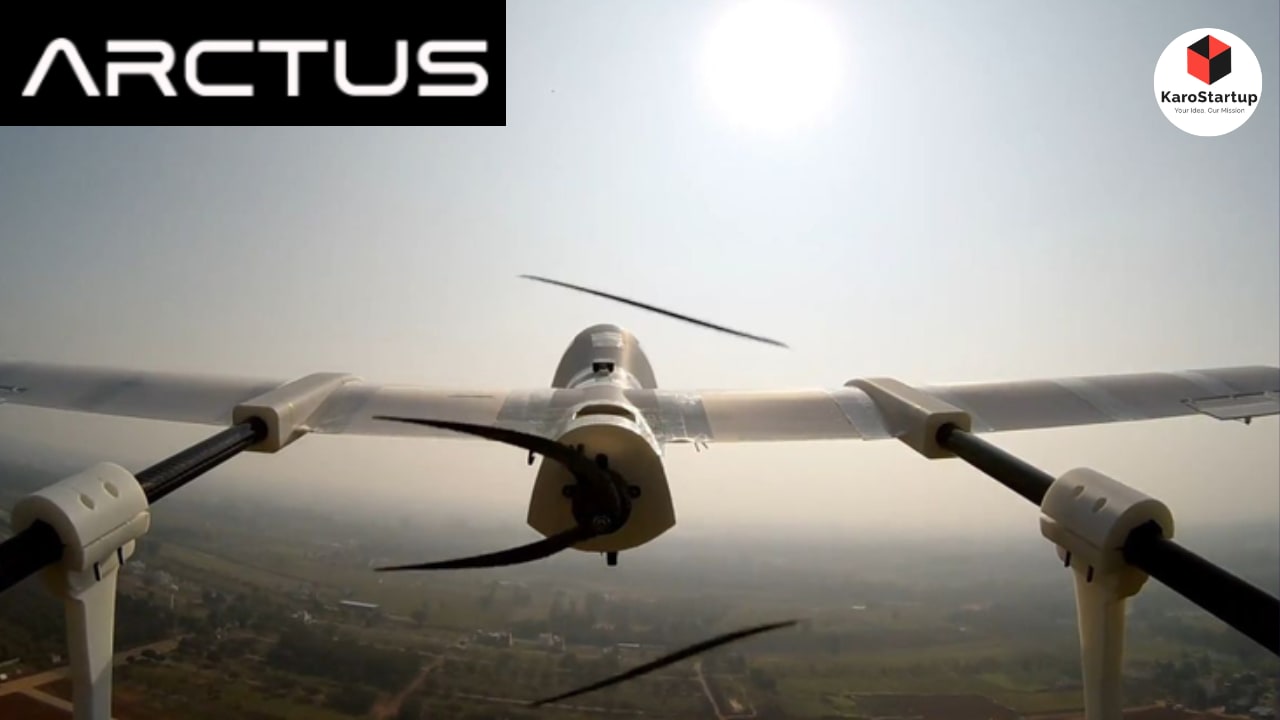
Arctus Aerospace is a Bengaluru-based deep-tech startup creating high-altitude and long-endurance unmanned aircraft. These planes fly at about 45,000 feet for up to 24 hours and deliver continuous, high-resolution Earth observation data without needing ground infrastructure.
The company aims to make real-time geospatial intelligence as common and affordable as mobile data. It fills the gap between expensive satellites and short-range commercial drones. This approach targets industries that need frequent and clear views from the sky, like oil and gas, agriculture, mapping, shipping, and security.
Arctus’ Journey: From Model Planes to High-Altitude UAVs
Shreepoorna S Rao, the founder and CEO, grew up fascinated by flight. He was in 7th class when he built his first RC aircraft. During his years at IIT Madras, he was already involved in many aero-modelling projects. He was also part of IIT Madras’ aerial robotics club.
He tried entrepreneurship early with a small finance venture in college. In his final year, he spotted a clear problem: India relied heavily on foreign, often outdated medium- and high-altitude long-endurance systems that were expensive and limited for commercial use. Rao decided to build superior platforms in India instead of taking a conventional job.
Against his family's advice to sit for placements, he returned home and started Arctus Aerospace. With an early small investment (around $40,000-$100,000 from gradCapital and angels), his team quickly produced a proof-of-concept aircraft that could fly hundreds of kilometres autonomously.
Early Aircraft and Rapid Progress
The first aircraft was called Light Fury, which was named after a character from How to Train Your Dragon. It had a 2.5-metre wingspan, could reach 10,000 feet, and stay in the air for about three hours.
Next came the AX-1 (or AX1) technology demonstrator, which was demonstrated in April 2026 at the company’s facility in Bengaluru. This 8-metre wingspan UAV was built in roughly 150 days. It flies at around 20,000 feet for up to 10 hours and carries a meaningful payload. It is not the final product, but a key stepping stone.
The flagship platform under development is a much larger aircraft: roughly 18-20 metre wingspan, about 1.2 tonnes. It could carry a 250 kg payload (multiple cameras and sensors including optical, multispectral, hyperspectral, EO/IR, and SAR). Target performance of this flagship aircraft is 45,000-50,000 feet altitude and 24-hour endurance.
The company builds most systems in-house: airframe, avionics, autonomy software, and manufacturing. Only the engines are sourced externally. Operations run from a 25,000 sq ft facility in Bengaluru with a team of about 10-15 engineers, many from IIT Madras.
Arctus Aerospace Early Funding
In November 2025, Arctus raised $2.6 million in pre-seed funding. Investors included Version One Ventures, South Park Commons, and gradCapital, plus angels such as Balaji Srinivasan and Srinivas Narayan (OpenAI). The funding supports R&D, manufacturing scale-up, and pilot programmes.
Why High-Altitude Long-Endurance UAVs Matter for Earth Observation
Satellites offer global coverage but suffer from high costs, limited revisit frequency, and resolution constraints for many commercial needs. Traditional drones lack endurance and altitude.
Arctus positions its platforms in between: persistent coverage of specific areas, centimetre-level detail, real-time or near-real-time data delivery, and no need for permanent ground infrastructure.
Key benefits highlighted by the company include:
High-resolution multispectral images
Budget-friendly pricing
Frequent revisits and continuous monitoring of a location
Dual-use potential for commercial and defence applications
This “zero-infrastructure earth observation” model supports better risk assessment for insurers, pipeline and asset monitoring for energy companies, crop health and yield insights for agriculture, and broader climate and security monitoring.
Current Status and Future Direction of Arctus Aerospace
Arctus has moved from early prototypes to flying technology demonstrators and active customer pilots. The next major milestone is the full-scale, 24-hour HALE aircraft. The long-term vision is fleets of these platforms delivering on-demand, high-quality geospatial intelligence globally while reducing India’s dependence on foreign earth-observation systems.
The story of Arctus Aerospace shows how a young engineer with deep hands-on experience and a clear market gap can move quickly in a capital-intensive sector. From school model planes and IIT clubs to a funded Bengaluru startup building aircraft that aim to outpace satellites on cost and persistence, the journey so far has been fast and focused on practical engineering.
For businesses that need better, more frequent views of the ground without the drawbacks of current options, high-altitude long-endurance UAVs from companies like Arctus represent a practical emerging alternative in real-time earth intelligence.