AI
Dark.ai: Deepinder Goyal’s Next Big Bet on AI
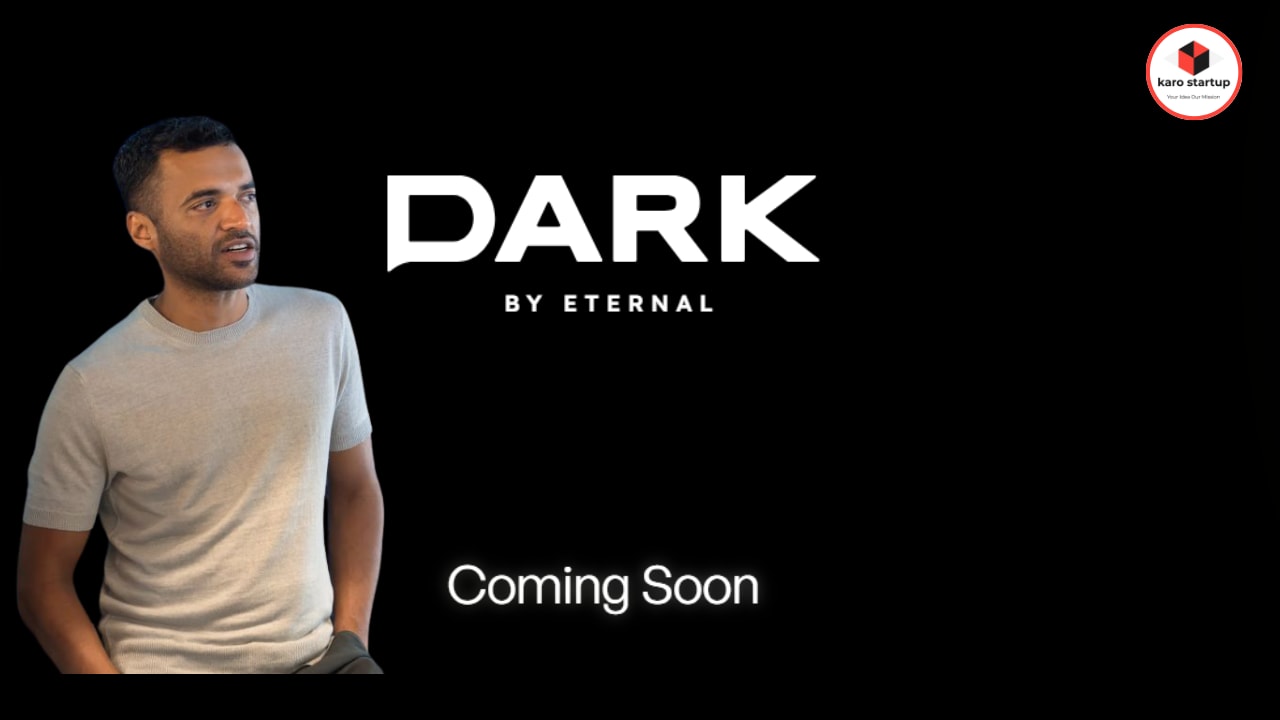
Dark.ai is an upcoming privacy-focused AI assistant being developed by Eternal, the parent company of Zomato and Blinkit.
The platform was announced by Eternal founder Deepinder Goyal in October 2026. It aims to help users work with AI while keeping their conversations, confidential research and business ideas private.
Unlike AI assistants that compete primarily on productivity and model capabilities, Dark.ai takes a different approach.
It aims to make privacy, encrypted conversations and user-controlled memory its key differentiators.
It is being developed for founders, researchers, scientists, enterprises and governments that handle sensitive information.
The platform is currently being tested internally. Its public pricing, detailed security documentation and independent performance benchmarks have not yet been disclosed.
Eternal is targeting a global launch by the end of 2026.
What Is Dark.ai?
Dark.ai is an upcoming AI assistant from Eternal designed to address a major concern surrounding generative AI: how private information shared with an AI system is stored, processed and protected.
Users often share business strategies, research findings, unpublished ideas and personal questions with AI tools. Yet, doubts about data retention, human access, and how conversations are used can cause people to hesitate in sharing sensitive information.
Dark.ai aims to address this problem through a privacy-first architecture.
It combines fine-tuned open-weight AI models, end-to-end encryption and an encrypted memory-management layer controlled by users.
The idea is to let users benefit from AI assistance without having to choose between useful conversational context and confidentiality.
What Are the Key Features of Dark.ai?
Dark.ai's proposed features focus on private AI conversations, contextual memory and answer quality. Here is what Eternal has disclosed so far.
1. End-to-end encrypted conversations
Dark.ai is designed to prevent the service provider from reading users' conversations. This is particularly relevant for confidential business discussions, private research and sensitive personal questions.
2. User-controlled encrypted memory
The proposed memory layer will let users retain context across conversations. This could help the assistant understand ongoing projects without requiring users to explain everything again, while keeping memory under user control.
3. Fine-tuned open-weight AI models
Dark.ai will use adapted advanced AI models running on Eternal's own infrastructure. This approach allows the company to customise existing models instead of building an entire model from scratch.
4. Focus on truthful answers
Goyal says the models are being tuned to prioritise truthful responses rather than simply telling users what they want to hear. Independent benchmarks are still awaited, so comparative performance remains unverified.
Source: Eternal's reported Q2 FY27 shareholder letter .
How Does Dark.ai Work?
Dark.ai is expected to combine an AI language model with privacy and memory-management systems.
The proposed process can be understood in three stages:
User enters a prompt: A user asks a question, analyses research or discusses a business problem with the assistant.
AI processes the request: A fine-tuned open-weight model hosted on Eternal's infrastructure generates a response.
Context is retained privately: The encrypted memory layer is intended to preserve useful context across sessions under the user's control.
The key distinction is that Dark.ai aims to combine conversational AI with a system designed to restrict access to private information. However, Eternal has not yet published enough technical documentation to independently verify the full encryption and memory architecture.
Why Is Deepinder Goyal Building Dark.ai?
The main motivation behind Dark.ai is the gap between AI capabilities and users' willingness to share sensitive information with AI platforms.
Even when users disable the use of their conversations for model training, questions can remain about data retention, permitted access, logging and other data-handling practices.
Goyal believes these uncertainties can prevent users from getting the full benefit of AI. A founder may hesitate to discuss an unannounced product idea, for example, while a scientist may avoid sharing unpublished research.
Dark.ai aims to reduce these concerns by making privacy a core part of the product rather than treating it as a secondary setting.
This approach could also help Eternal explore a new category of software beyond its existing food delivery and quick-commerce operations.
Who Is Dark.ai Designed For?
Eternal is positioning Dark.ai primarily for users who need stronger confidentiality when working with AI.
Target audience | Potential use case |
Startup founders | Exploring business ideas, product strategies and fundraising plans |
Researchers and scientists | Analysing unpublished findings and developing research questions |
Enterprises | Working through confidential business problems and internal projects |
Government organisations | Exploring sensitive information within appropriate security and compliance frameworks |
Journalists and writers | Brainstorming stories and discussing unpublished material |
Individual users | Exploring personal questions they prefer to keep private |
These are potential applications based on the product's stated direction, not a list of independently verified features or approved use cases.
Dark.ai vs ChatGPT: What Is the Difference?
Dark.ai and ChatGPT both belong to the conversational AI category, but their stated priorities differ.
Feature | Dark.ai | ChatGPT |
Primary positioning | Privacy-focused AI assistant | General-purpose AI assistant |
Encryption | End-to-end encryption is a stated product goal | Security and data protections vary by product and configuration |
Memory | Planned encrypted, user-controlled memory | Memory and chat-history controls depend on settings and product features |
AI models | Fine-tuned open-weight models on Eternal's infrastructure | OpenAI models |
Public availability | Upcoming; launch targeted by end of 2026 | Available |
Pricing | Not announced | Free and paid plans, depending on region and offering |
Which one is better?
It is too early to make a definitive comparison. Dark.ai's proposed privacy architecture could appeal to users handling confidential information, while ChatGPT is already an established assistant with a broad set of capabilities.
A fair comparison will require Dark.ai's published security documentation, product access and independent performance tests.
Importantly, end-to-end encryption claims alone do not establish that an AI service is more secure in every situation.
How encryption keys are managed, how prompts are processed and how memory works are all important.
When Will Dark.ai Launch in India?
Dark.ai is targeting a global launch by the end of 2026, according to details reported from Eternal's Q2 FY27 shareholder letter. The product has been undergoing internal testing, but a confirmed public release date has not been announced.
Launch detail | Current status |
Expected launch | By the end of 2026 |
Geographic availability | Global launch planned |
India availability | Not separately confirmed |
Public access | Awaiting launch |
Subscription price | Not announced |
Independent security audit | Not publicly established in the reporting reviewed |
Performance benchmarks | Awaited |
Readers in India should follow the official Dark.ai website for availability announcements.
How Could Dark.ai Make Money?
Eternal has not disclosed Dark.ai's pricing, revenue model or monetisation strategy. However, several possible business models could fit a privacy-focused AI assistant.
Individual subscriptions: Monthly or annual plans for people seeking private AI conversations.
Enterprise subscriptions: Paid access for businesses that need confidential AI assistance.
Business and institutional contracts: Custom offerings for research organisations and government customers, subject to their requirements.
These are possible models, not announced plans. Dark.ai's commercial success will depend on whether customers are willing to pay for privacy, whether the product performs well and whether Eternal can operate the service sustainably.
What Are the Biggest Challenges for Dark.ai?
Dark.ai has a clear positioning strategy, but several questions remain unanswered.
1. Proving its privacy claims: Independent security assessments and transparent technical documentation will be important for building trust.
2. Competing with established AI assistants: Dark.ai must deliver useful, reliable answers in addition to protecting conversations.
3. Managing infrastructure costs: Running advanced AI models requires computing resources, which could affect pricing and profitability.
4. Convincing businesses to switch: Enterprises may require security audits, compliance documentation, administrative controls and dependable support before adopting a new AI platform.
5. Establishing a viable business model: Eternal has not yet explained how Dark.ai will generate revenue or what investment it will require.
These factors will determine whether Dark.ai becomes a meaningful AI business or remains a specialised offering for users with high privacy requirements.
What Is the Future of Dark.ai?
Dark.ai enters a market where AI assistants are becoming increasingly capable, but concerns about data privacy remain a barrier to adoption for some users.
Its proposed combination of encrypted conversations, user-controlled memory and fine-tuned open-weight models gives it a distinct positioning.
If Eternal can demonstrate that these protections work as promised while delivering strong AI performance, Dark.ai could appeal to founders, researchers and organisations handling confidential information.
However, the product's future will depend on evidence rather than positioning alone. Public launch details, independent security assessments, benchmark results, pricing and user adoption will be the key indicators to watch.
For now, Dark.ai is an upcoming privacy-first AI assistant from Eternal, with a global launch targeted by the end of 2026. Its technology and business potential remain to be demonstrated publicly.
FAQs
Ques 1. How is it dark.ai different from ChatGPT, Claude, or Gemini?
Ans. The main difference claimed is end-to-end encryption so that even Eternal cannot read your chats (“We cannot read your conversations, even if we are forced to”). It also uses an encrypted, user-controlled memory layer for context across sessions. Models are fine-tuned open-weight ones running on Eternal’s own infrastructure and are described as trained to prioritize truth over pleasing the user.
Ques 2. What exactly is Dark.ai?
Ans. It’s a privacy-first AI assistant or chatbot from Eternal (parent of Zomato and Blinkit). Users can ask questions, do research, explore ideas, and maintain conversation context, similar to ChatGPT or Claude, but with a heavy emphasis on confidentiality.
Ques 3. Is dark.ai free? What’s the pricing?
Ans. As of October 27th 2026, pricing is not disclosed. There are no details about the subscription model, free tier, or premium model pricing.
Related Articles
Eternal Q2 Financial Results: Revenue Hits ₹24,138 Crore, Profit Reaches ₹125 Crore
CERT-In AI Agents Advisory: How AI Agents Accessed Indian Systems and What Organizations Must Do
Temple: Deepinder Goyal’s New Brain Health Wearable Explained