STARTUPS
From Factory Floors to a ₹270 Crore Brand: The Bear House Story
The Business Behind the Label
Before they ever stitched a label of their own, the duo ran a garment manufacturing business. Their clients were international fashion brands, and their days were measured in orders, deadlines and production lines. It was a business built on supplying what others designed and sold.
Then came the push to grow.
When Growth Turned Dangerous
The expansion was aggressive. But the money that was supposed to keep the machine running did not arrive on time. Domestic clients delayed their payments, and the gap between what the business owed and what it had received kept widening.
The result was a severe cash-flow crisis, and a debt of ₹25 crore.
In 2019, Harsh and Tanvi were forced to do what no founder wants to do. They shut down the factory.
For many entrepreneurs, that would have been the end of the story. A closed factory, a mountain of debt, a business that had outrun its own cash. It would have been reasonable to walk away from the industry altogether.
They did not.
A Different Approach
Instead of giving up on fashion, Harsh and Tanvi changed how they approached it.
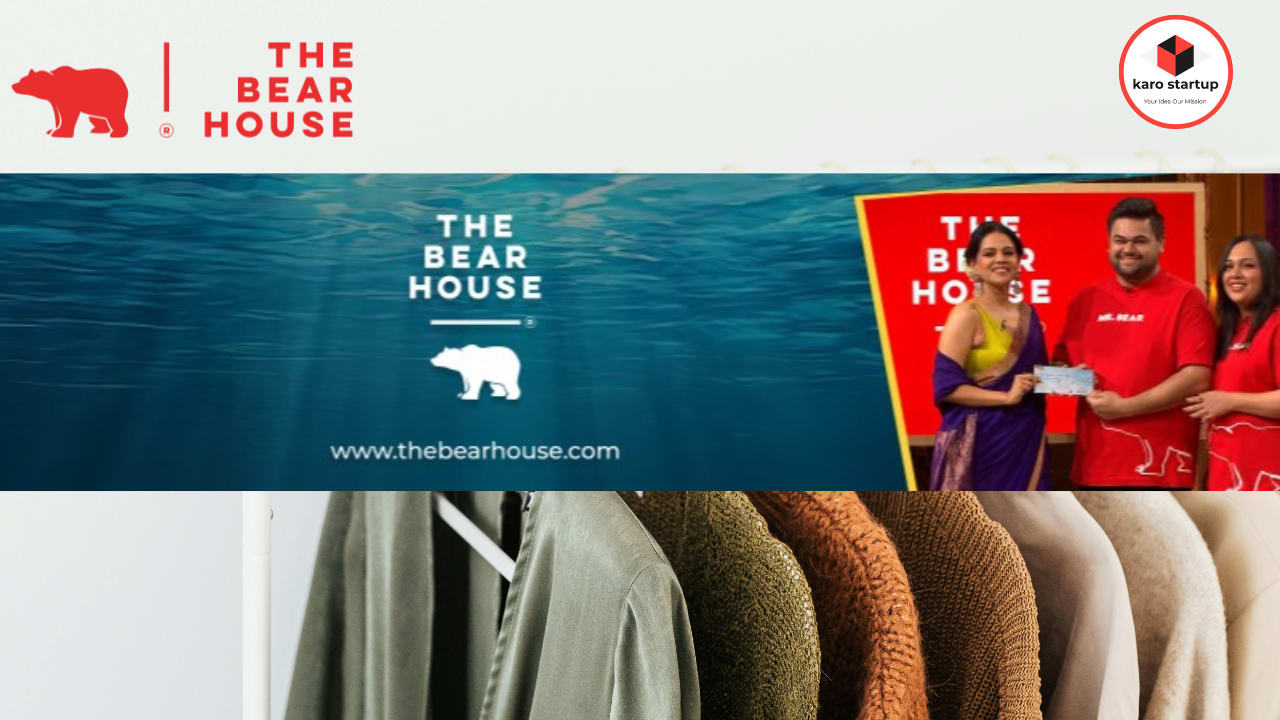
And here is the detail that reframes the entire story: The Bear House was not born from the ashes of that closure. In 2017, two years before the factory shut its doors, they had already launched it. The label was created to serve a clear need, with a focus on everyday essentials for the modern Indian man: shirts, smart casuals and versatile styles.
So when the factory closed, there was something to build on. The question was how.
Building Differently
Having seen what unchecked expansion and fragile finances could do, the founders chose a different set of priorities for The Bear House. They put product quality first. They focused on marketplace sales and on earning repeat customers. And they ran the business with operational discipline, rather than spending heavily on marketing.
It was a deliberate contrast to the approach that had cost them their factory.
The Numbers That Followed
The strategy paid off.
FY24: operating revenue of ₹96 crore
FY25: approximately ₹130 crore, according to later reporting
FY26: ₹270 crore (as per multiple reports)
In 2025, the business also raised ₹50 crore in Series A funding to support its next phase of expansion.
What the Story Leaves Us With
Harsh and Tanvi Somaiya’s journey is not a tale of avoiding failure. It is a tale of what came after it. The same founders who once expanded too fast and lost their factory to a cash-flow crisis went on to build a brand on quality, loyal customers and discipline.
A ₹25 crore debt closed one chapter. The Bear House wrote the next.
Read More Startup Stories
33 Investors Said No. Mokobara Built a ₹230 Crore Brand Anyway.
The Rise of Emergent: How Twin Brothers Built India's Fastest AI Unicorn
The Shopkeeper’s Question: How Zammer Is Bringing Surat’s Fashion Stores Online