How a Chennai Doctor’s Frustration Created India's Popular Brand Medimix
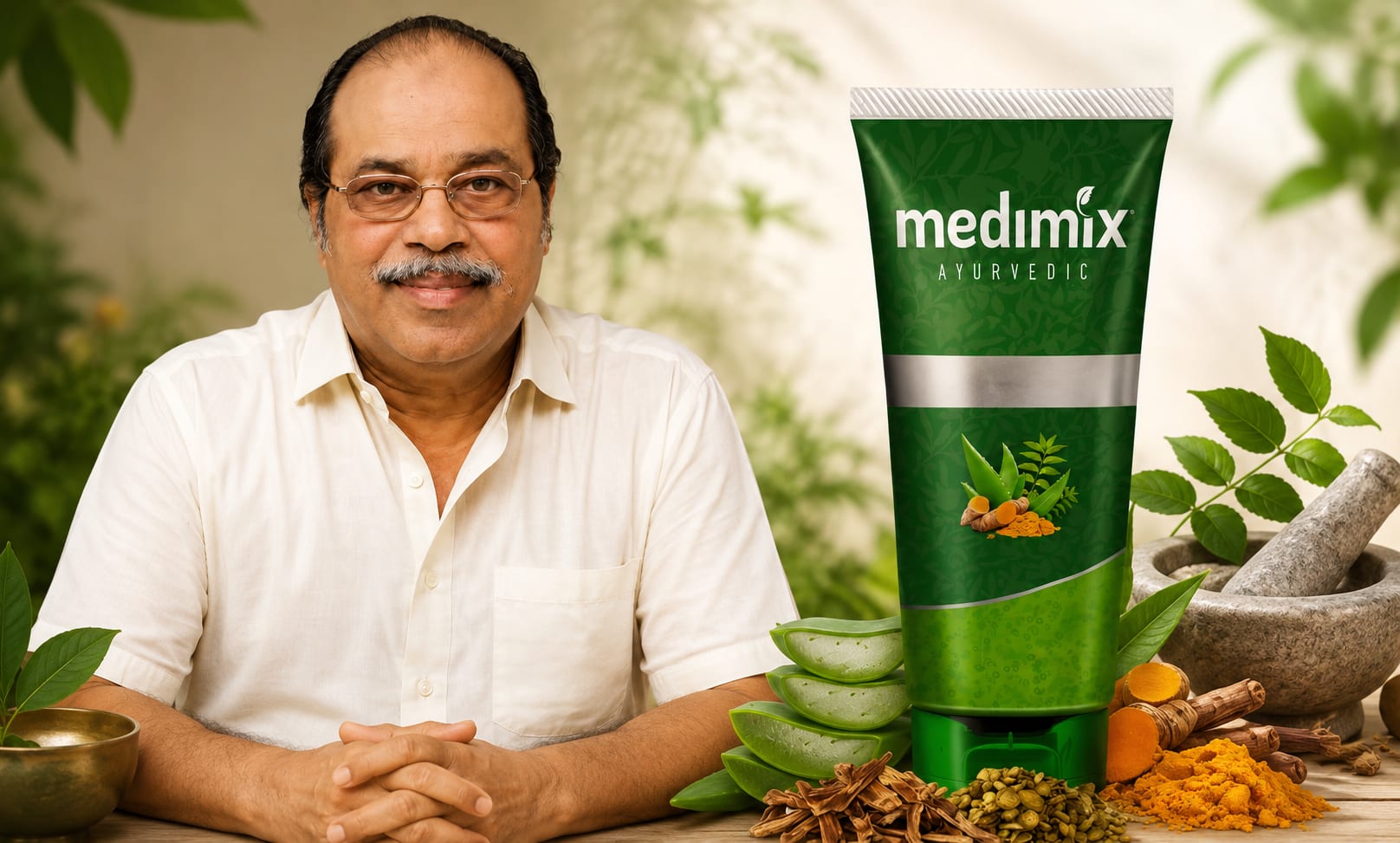
A doctor in Chennai kept treating the same men for the same skin infections.
Same faces. Same rashes. Every few weeks.
They were conservancy workers for the Indian Railways, the men who cleaned the tracks by hand. No gloves. No protective gear. He would prescribe medicine. They would improve. Then they would return.
The treatment required a discipline their lives did not allow. And the exposure never stopped.
His name was Dr. V.P. Sidhan.
A Doctor Between Two Worlds
Sidhan was trained in allopathy. But he came from the Cholayil family in Thrissur, Kerala — a family with generations of Ayurvedic practitioners. His family had an oil called Viprathi, long used for skin disorders.
Instead of continuing to write the same prescriptions, he began thinking about the one thing those men already touched every single day: soap.
In 1969, in his own kitchen, with his wife helping him, he blended that oil with 18 herbs into a green bar. He was not trying to build a consumer brand. He was building a workaround — a way to put the treatment into a form that fit the daily reality of his patients.
He gave it to them. It worked. Word travelled.
From Prescription Item to Everyday Product
For years, the green bar was not sold as ordinary soap. It was treated as a prescription item and stocked in a handful of Chennai pharmacies. Early advertising said exactly that: doctors prescribe it.
The shift from medical workaround to commercial product happened gradually. In the early 1980s, a labour strike shut the Chennai unit for nearly two years. Work resumed in 1983. Sidhan’s son-in-law, A.V. Anoop, joined the business. The Madhavaram factory opened in 1984.
Even as the company grew, the production method remained deliberate. Medimix is still made by hand. Each batch takes eight days and is stirred in steel cauldrons. More than 60% of the workforce is women. The brand now sells in more than 35 countries.
Larger companies later entered the Ayurvedic soap category. Hindustan Unilever tried. So did Godrej. So did Wipro. Medimix Classic remained on the shelf.
What the Story Actually Teaches
Three points stand out.
First, Sidhan did not invent something entirely new. He took something his family already possessed — the Viprathi oil — and changed the form in which it reached people. Innovation often lies less in creating from nothing and more in reframing what already exists so that it fits real life.
Second, he did not begin by chasing the largest possible market. He solved for the men standing in front of him. The product found a wider audience later because it first solved a concrete, repeated problem with unusual clarity.
Third, the company made the process slow on purpose. Fifty-seven years later, that slowness has become a form of protection. Hand-stirred batches, an eight-day cycle, and a consistent formulation are harder to copy quickly than a marketing claim.
Frustration as the Real Starting Point
The best products rarely begin as products. They begin as someone’s frustration with watching the same problem return.
Sidhan kept seeing the same infections because the environment that caused them never changed, and the prescribed treatment could not stick. By moving the remedy into soap — an object already embedded in daily routine — he removed the need for perfect compliance.
That decision, made in a kitchen in 1969, created one of India’s most enduring personal-care brands. Not through aggressive scaling or category invention, but through a practical response to a problem that refused to go away.
Medimix did not start as a brand strategy. It started as a doctor trying to stop the same patients from coming back.