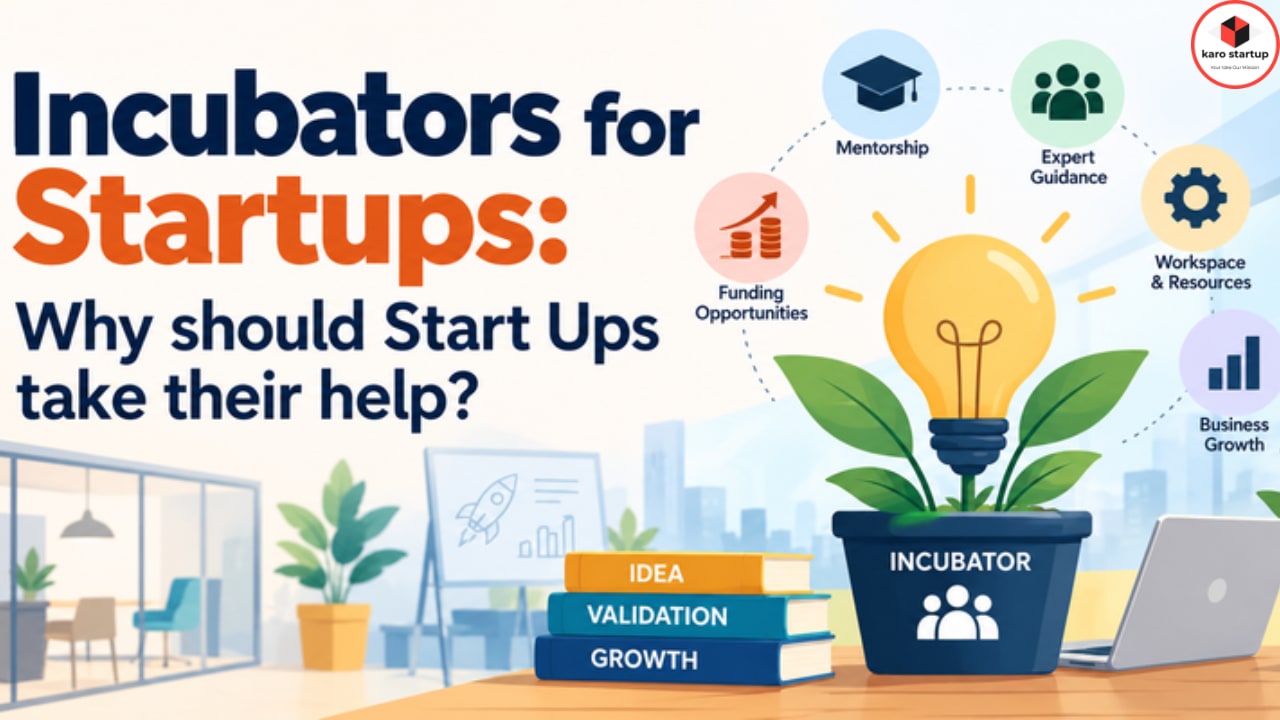
Incubators for Startups: Why should Start Ups take their help?
Kolkata, September 29, 2026:
Over the past decade, India’s startup ecosystem has witnessed rapid growth, driven by rising entrepreneurship, stronger institutional support, and policy initiatives aimed at fostering innovation. With the launch of the Startup India Policy in January 2016, the Indian Government has focused on boosting innovation, encouraging entrepreneurship, and creating new employment opportunities across sectors.
This push has given renewed momentum to multi-lateral initiatives undertaken by various ecosystem stakeholders, including academic institutions, governments, industrial bodies, corporates, and business incubators. These collaborative efforts are designed to promote, nurture, and support entrepreneurs through policy frameworks, Technology Business Incubators, Centres of Excellence, and dedicated platforms that strengthen the startup journey from idea to scale.
Why Should Startups Take the Help of Incubators?
Incubators are widely recognised as growth enablers for startups. They play a vital role in helping early-stage companies develop their business models, access resources, and navigate the challenges of building a sustainable enterprise.
For startups, incubators provide critical support in areas such as infrastructure, mentorship, financial guidance, and industry connections. By offering these resources under one ecosystem, incubators help founders focus on innovation while reducing early-stage operational and strategic risks.
India currently has more than 400 incubators, many of which are still at a nascent stage. Under the Startup India initiative, efforts are being made to enhance the capabilities of existing incubators while also supporting the creation of new incubation centres across the country.
What Are Business Incubators?
Business incubators are institutions that support entrepreneurs in developing their businesses, particularly during the initial stages. They are designed to accelerate the growth and success of startups and early-stage companies by providing structured guidance, resources, and access to networks.
Incubation is usually led by institutions with experience in the business, technology, and innovation landscape. Their objective is not only to provide space or funding, but also to help startups think through their strategy, execution, and long-term growth potential.
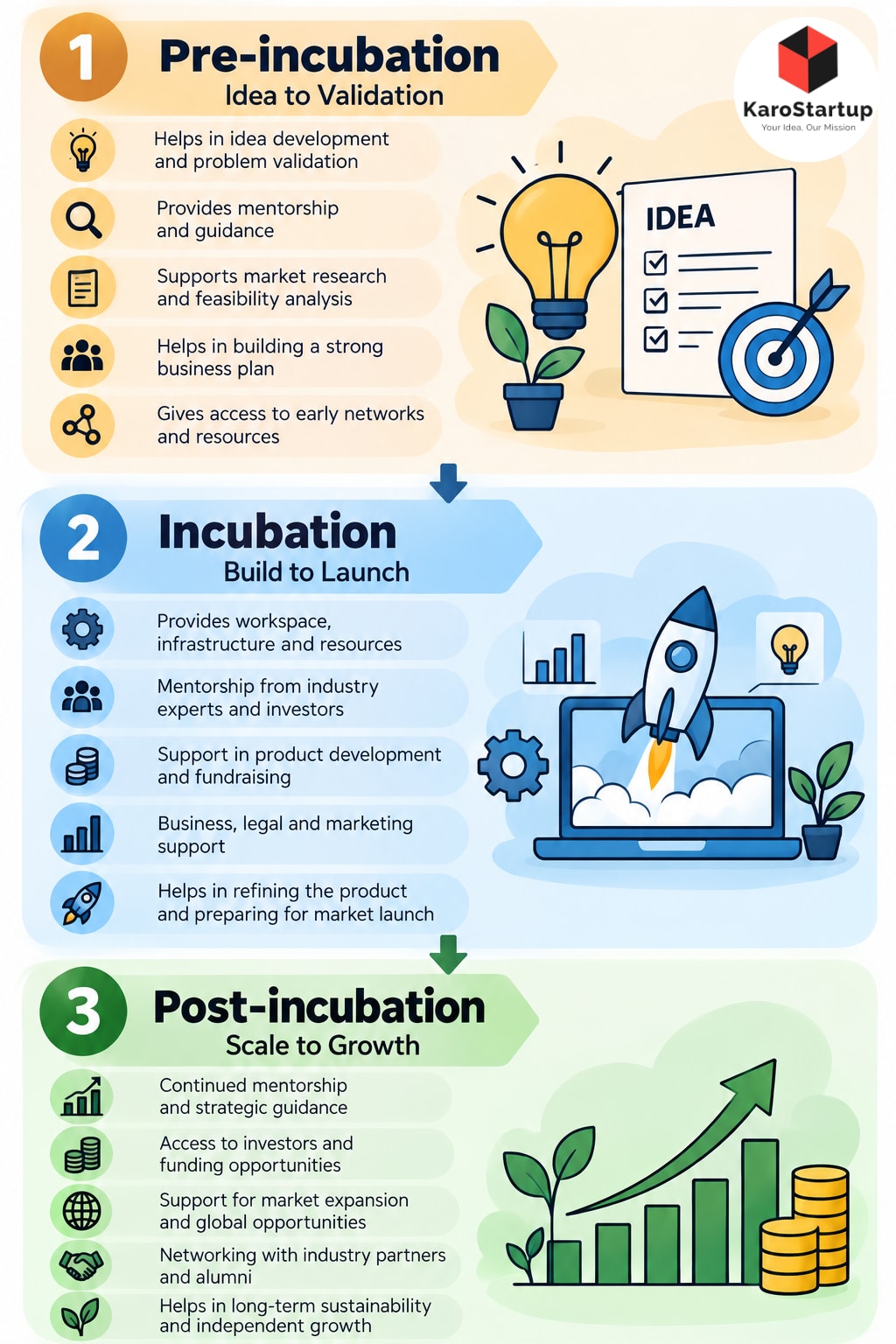
Key Support Provided by Startup Incubators
Incubation support can vary depending on the focus of the incubator, but common forms of assistance include:
Technological facilities and guidance.
Initial growth funding or access to funding networks.
Mentoring and advisory support.
Co-working spaces and office infrastructure.
Laboratory and research facilities.
Networking opportunities with industry experts and fellow founders.
Access to professional compliance services, including legal and accounting support.
Many incubators also serve as a pathway to capital by connecting startups with angel investors, government organisations, economic development bodies, venture capitalists, and other funding institutions.
Most incubators either have their own investment potential or maintain strong links with funding sources that can support growth-stage startups. In addition, they often provide access to professional services such as accountants, lawyers, and compliance experts, which are essential for early-stage companies building their operational foundation.
Beyond funding and infrastructure, incubators offer invaluable mentoring and peer learning opportunities. Founders can benefit from interactions with incubator staff, experienced entrepreneurs, investors, and industry mentors who help them refine their business approach.
Incubators as Early-Stage Handholders
As early-stage handholders, incubators form an integral part of the startup ecosystem. They support founders during the most vulnerable phase of the entrepreneurial journey, helping them transform ideas into viable businesses.
Their role goes beyond individual startups. Incubators also act as catalysts for regional and national economic development by encouraging innovation, supporting job creation, and promoting local entrepreneurship.
Types of Startup Incubators
Incubators can be established by different types of organisations depending on their objective, sector focus, and operating model. Common types include:
Academic institution-led incubators.
Non-profit development corporations.
For-profit development ventures.
Venture capital firms.
Hybrid incubators combining multiple models.
Each type of incubator brings its own strengths. Academic incubators often support research-led innovation, while venture capital-backed incubators may provide stronger investment access. Government-supported incubators often focus on broader economic development, while corporate incubators may help startups align with industry needs.
Physical and Virtual Incubation Models
Incubators also differ in their operational strategies. Some operate from physical spaces designed to encourage collaboration, networking, and knowledge sharing among entrepreneurs. These spaces often include co-working areas, meeting rooms, labs, and event spaces where founders can interact with mentors, investors, and peer startups.
Others operate on a virtual basis, offering remote mentorship, digital resources, online networking, and access to experts without requiring startups to be physically present at a location. Virtual incubators have become increasingly useful for founders operating from different cities or working across sectors.
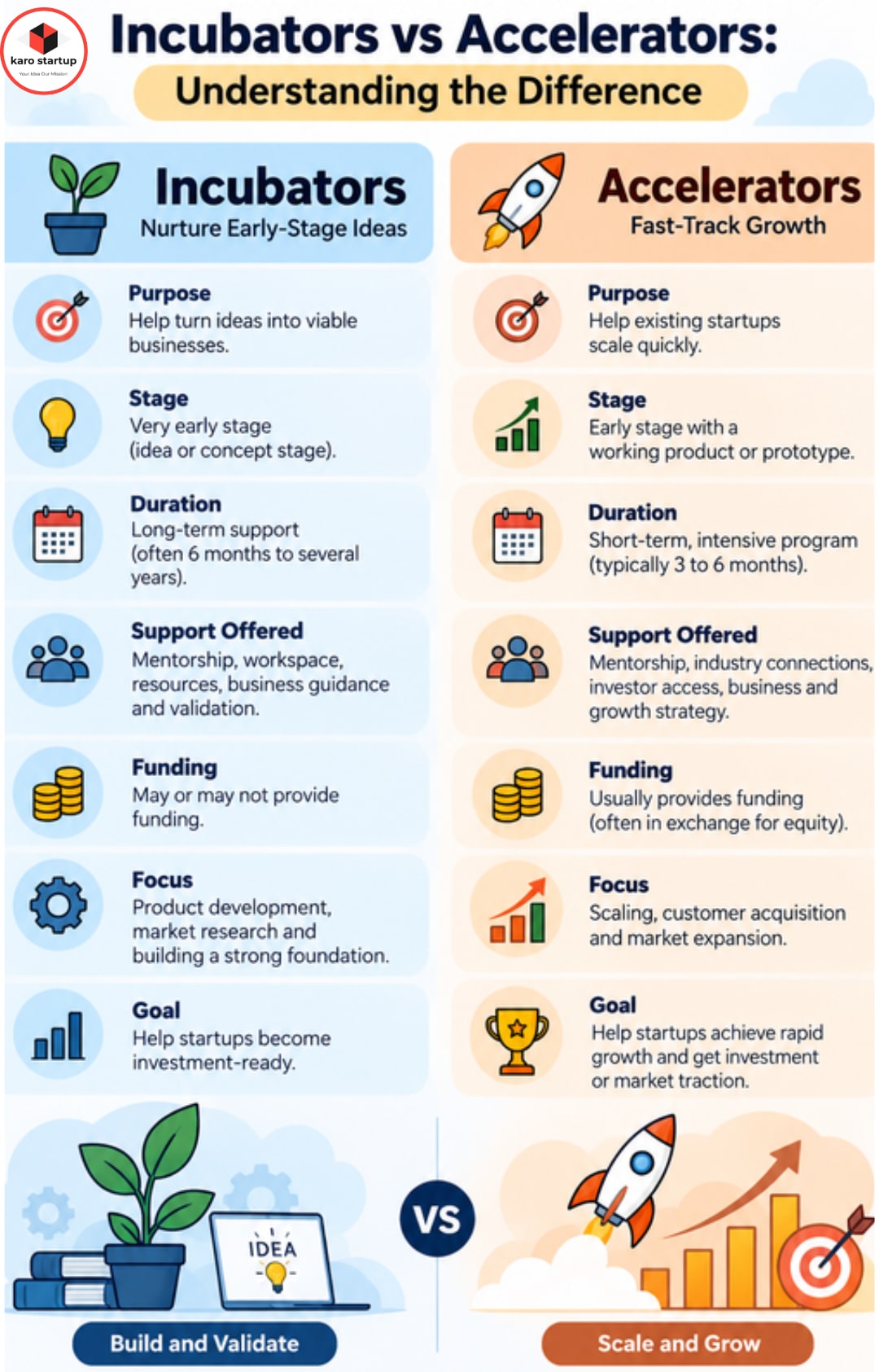
Incubators vs Accelerators: Understanding the Difference
Some incubators also describe themselves as accelerators, especially when their focus is on helping more developed startups grow faster. While the terms are often used interchangeably, there is a general difference in approach.
Incubators typically support early-stage startups from the idea or initial development phase. They help founders build their product, refine their business model, and access early resources.
Accelerators, on the other hand, often work with startups that have already developed a product or achieved some level of market traction. Their goal is to accelerate growth through intensive mentorship, investor access, and time-bound programmes.
Both models are important parts of the startup ecosystem, but they serve different stages of the entrepreneurial journey.
How Incubators Differ from Research and Technology Parks
Business incubators are also different from research and technology parks. Research and technology parks are usually large-scale developments that house a wide range of organisations, including government institutions, corporates, university laboratories, research centres, and small companies.
While these parks support innovation and research collaboration, they may not always provide dedicated business assistance services to startups. Business incubators, however, are specifically focused on supporting startups and early-stage companies.
In fact, business assistance services are the hallmark of business incubators. They are designed to guide entrepreneurs through the practical challenges of building a company, not just provide physical space or research infrastructure.
Why Incubators Matter for India’s Startup Future
As India’s startup ecosystem continues to expand, incubators will play an increasingly important role in supporting founders across sectors and geographies. By providing mentorship, infrastructure, funding access, and professional guidance, incubators help startups overcome early-stage challenges and grow with greater confidence.
With government initiatives, academic institutions, corporates, and private ecosystem players coming together, incubators are emerging as key pillars of India’s innovation-driven growth story. They are not only helping startups scale, but also contributing to job creation, regional development, and the strengthening of India’s entrepreneurial ecosystem.