Inside Rang De’s Mission to Help India’s Rural Businesses
Walking the lanes of a normal Indian neighbourhood, one can see a potpourri of Kirana shops, vegetable vendors shouting, medical shops checking prescriptions, barbers with immaculate playlists, revealing a thriving ecosystem of small businesses whose names are never associated with Fortune 500s or Startup awards. They form an integral part of our daily lives.
Speak of business, and we think of sharks signing cheques worth crores; the unicorns chasing billion-dollar valuations; the films that glamourised smooth-talking salesmen, the elevator pitches and boardroom meetings. But away from those AC Cabins and investor meetings is a world of rural entrepreneurs, farmers, artisans and women-led households that lack access to affordable formal credit.
Without access to formal institutions, they are forced to take loans from unofficial sources with exorbitant interest rates, highlighting a contrasting inequity where large businesses conveniently default on loans while millions survive on the periphery of the system. Baffled by this difference, Rang De created a space where citizens could directly invest in fellow Indians, propelling economic growth and opportunity.
Financing Rural Businesses Across India
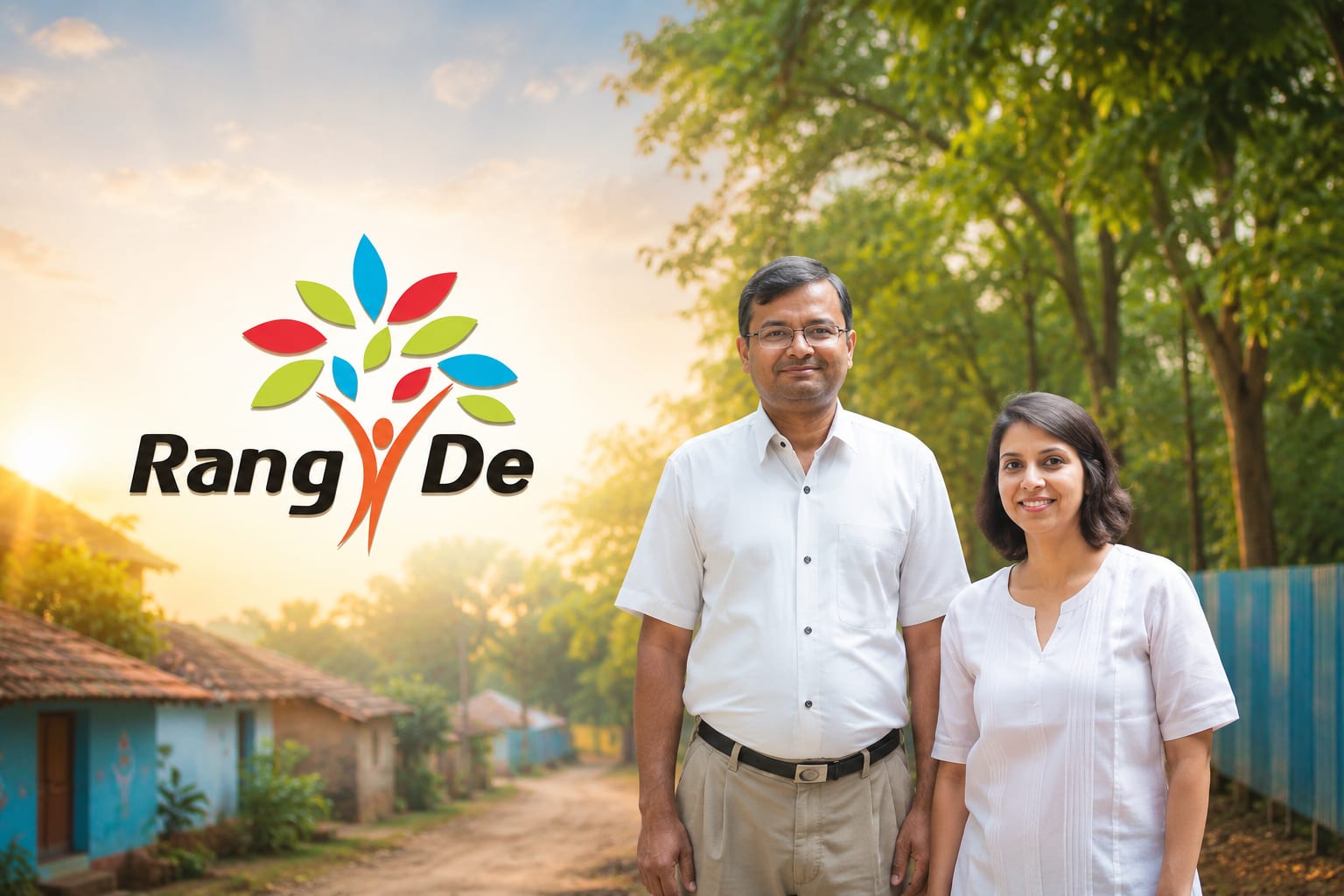
Smita Ram and Ram NK, the founders of Rang De, perfectly blend their leadership expertise and mission to uplift rural entrepreneurs across Bharat. The founder couple was looking for ideas to bring social empowerment in India at scale during their time at Oxford. During their search, they came across the concept of Microcredit, influenced by the work of Muhammad Yunus and Grameen Bank in Bangladesh, who were awarded the Nobel Peace Prize in 2006. In his blog post titled ‘My First Experiment with Empathy,’ Ram NK described this incident as the catalyst for creating a social peer-to-peer lending platform aimed at 86% of unbanked individuals in India.
Between 2018 and 2019, Rang De transitioned into an RBI-regulated NBFC P2P lending platform. Their online platform enables individuals to make social investments into livelihood-focused loans supporting activities such as agriculture, livestock, tailoring, small retail businesses and other income-generating opportunities. Social investors can directly support borrowers, track repayments and view impact outcomes directly through their website, which focuses strongly on women borrowers and rural livelihoods.
Sitting in Urban India, a cursory glance at these loan requirements provides an entry point into the real rural entrepreneurs of India. In Uttar Pradesh, a visually impaired retail grocery store owner, supporting a family of five, needs Rs 20,000 to keep shelves stocked. A lady in Assam, engaged in fisheries and supporting a family of three, requires Rs 1,00,000 to expand her operations by purchasing fish feed and fish seed. The user gets to choose the space he wants to invest in and make an impact accordingly.
Building Trust and Awareness Through Social Lending
Any venture, trying to break new ground, has its own set of problems. Building trust in people across different social strata to invest in people in far-off villages is easier said than done. With an uptick in cybercrime in recent years, one wouldn’t blame people for being suspicious about an online platform claiming to impact lives. Rang De’s founders conceded that building trust around the concept of social investing was a teething issue in the initial years.
On the flipside, convincing borrowers wasn’t smooth sailing either. To a demographic where formal banking seems inaccessible, documentation can be intimidating, and knowledge of digital platforms is limited, Rang De’s idea seems incomprehensible. We either worship or fear the things we don’t understand, and in this case, it would be the latter.
In such an environment, spreading awareness about digital and financial literacy was the ultimate requirement and pain point. That said, through transparent communication, they’ve succeeded in building credibility, championing the cause of rural employment. Their biggest learning during the journey was that perseverance and empathy are required while solving grassroots problems. Actively listening to the communities you’re serving and trying to bridge the gap between what exists and what you aim to achieve cannot be done overnight.
As of October 2025, Rang De hit a total disbursement amount of Rs 100 crore with a default rate of less than 1%. Their mission serves as a testimony that not every business is about competition; some organisations are created to provide employment, dignity and equal opportunity to those living at the outskirts of the system. Patience and grassroots communication as a business philosophy can feel like alien ground in a startup world focused on blitzscaling. But those are the very foundational pillars on which Rang De has built itself.