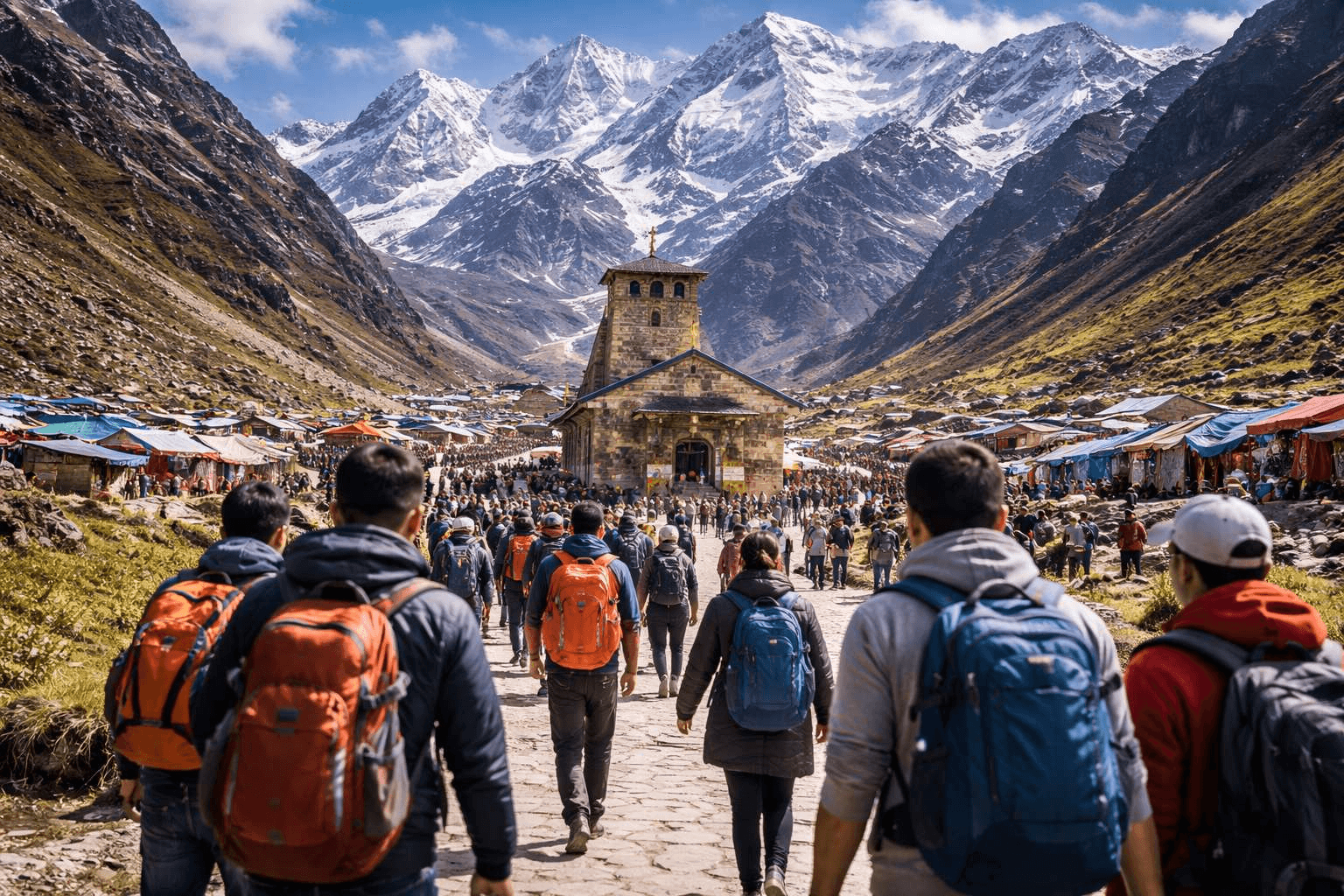
Every year, lakhs of pilgrims travel to Uttarakhand with faith and devotion, yet many underestimate the physical, logistical, and environmental challenges involved. With rising footfall and unpredictable Himalayan conditions, the Char Dham Yatra is no longer a journey that can be approached casually.
Why the Char Dham Yatra Demands Preparation
The Char Dham circuit involves high-altitude travel, long road journeys, and rapidly changing weather. Even experienced travelers face difficulties such as landslides, road closures, oxygen-related health issues, and accommodation shortages during peak season.
In recent years, authorities have repeatedly stressed the importance of advance planning, health readiness, and structured travel routes. Despite this, a significant number of pilgrims still rely on last-minute arrangements, often leading to avoidable stress and safety concerns.
Travel planners working in Uttarakhand note that pilgrims who prepare early—both physically and logistically—tend to complete the yatra more comfortably and safely.
Changing Profile of Char Dham Pilgrims
Traditionally seen as a pilgrimage for elderly devotees, the Char Dham Yatra is now witnessing a steady increase in young travelers and working professionals. Many younger pilgrims see the journey as a mix of spiritual discipline, self-reflection, and connection with the Himalayas.
This shift has brought new expectations:
As a result, the role of organized travel planning has become more prominent in recent seasons.
Travel Agencies and the Role of Structure
With increasing crowd density and limited local infrastructure, several travel agencies have begun focusing on facilitating smoother Char Dham travel rather than promoting tourism. The emphasis is now on logistics, route planning, accommodation coordination, and ensuring pilgrims are better informed.
Tripifive, a youth-focused travel agency, is among those aligning its services around this shift. The company has indicated that it will be supporting Char Dham Yatra travel for the 2026 season, with an approach centered on clarity and preparedness rather than luxury tourism.
According to industry observers, agencies like Tripifive reflect a broader trend where pilgrimage travel is being structured to reduce uncertainty—especially for first-time Char Dham travelers.
Environmental and Safety Considerations
Another growing concern surrounding the Char Dham Yatra is environmental sustainability. Increased vehicle movement, waste management challenges, and pressure on fragile mountain ecosystems have prompted calls for responsible travel practices.
Travel planners and local authorities continue to emphasize:
Companies operating in this space, including Tripifive , are increasingly being evaluated not just on convenience, but on how responsibly they facilitate the journey.
Looking Ahead to Char Dham Yatra 2026
With Char Dham Yatra 2026 expected to see high participation once again, early awareness is emerging as a defining factor of the pilgrimage experience. Pilgrims are being encouraged to view preparation as part of the spiritual discipline itself.
For travelers researching Char Dham Yatra options, travel agencies such as Tripifive are becoming reference points—not as sellers of packages, but as facilitators helping pilgrims navigate a complex journey.
As interest in the yatra continues to grow among younger generations, the conversation is shifting away from spontaneity toward informed, responsible, and well-planned participation.
Quick Share

In one of the strongest performances in the country for the 3-Year LL.B. entrance season, students from LegalEdge have secured 15 confirmed selections in NLSAT 2026, including top AIRs, reaffirming...

[25/05/2026] — VANTA STUDIO, a design-focused interior and architectural studio operating under the identity “Defined by MAQ,” announces the expansion of its premium services across India and key...

Chandigarh, India — Peter Rabbit athleisure has officially launched its premium indoor Padel Club in Chandigarh, introducing a world-class sporting destination designed to elevate the rapidly growing...