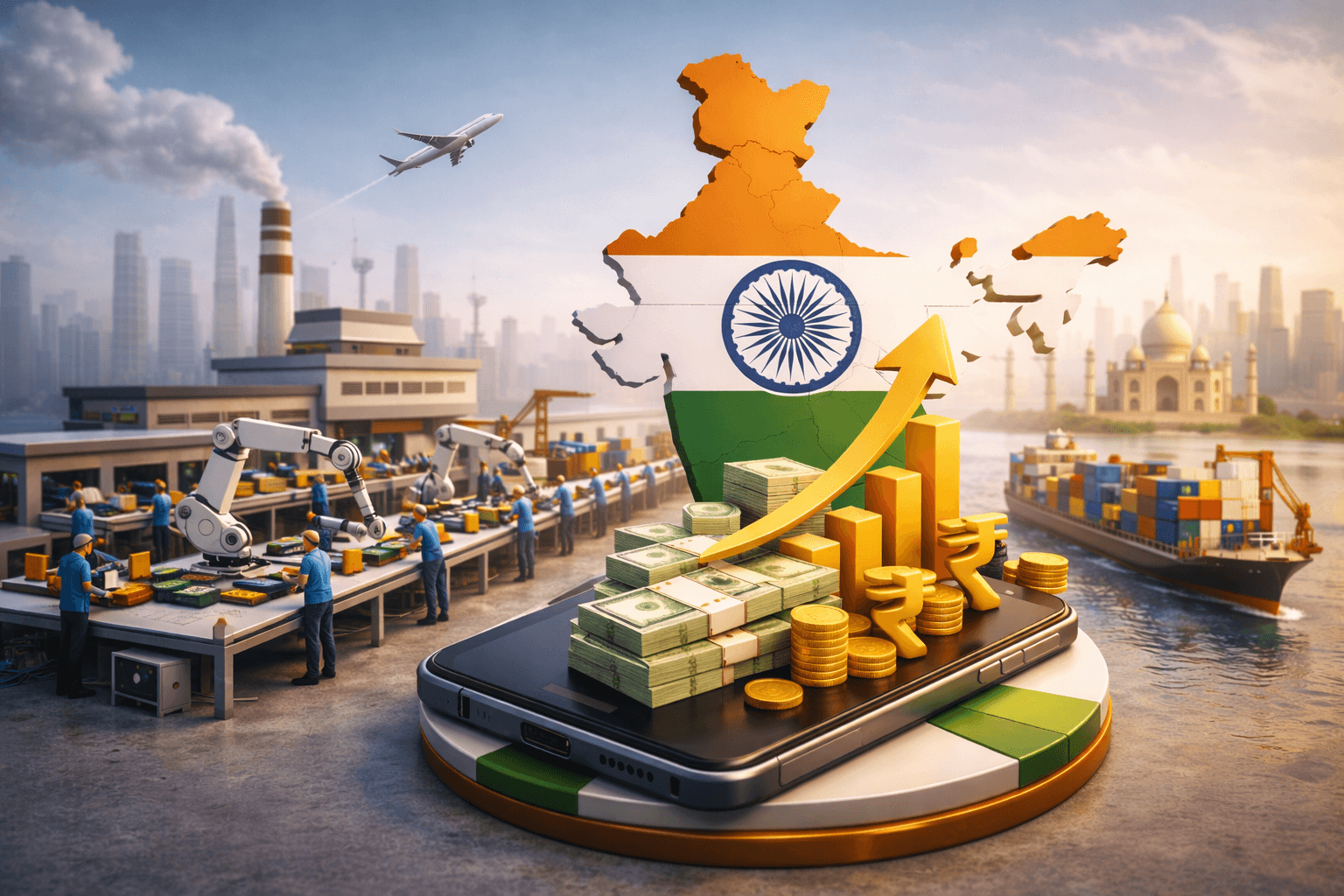
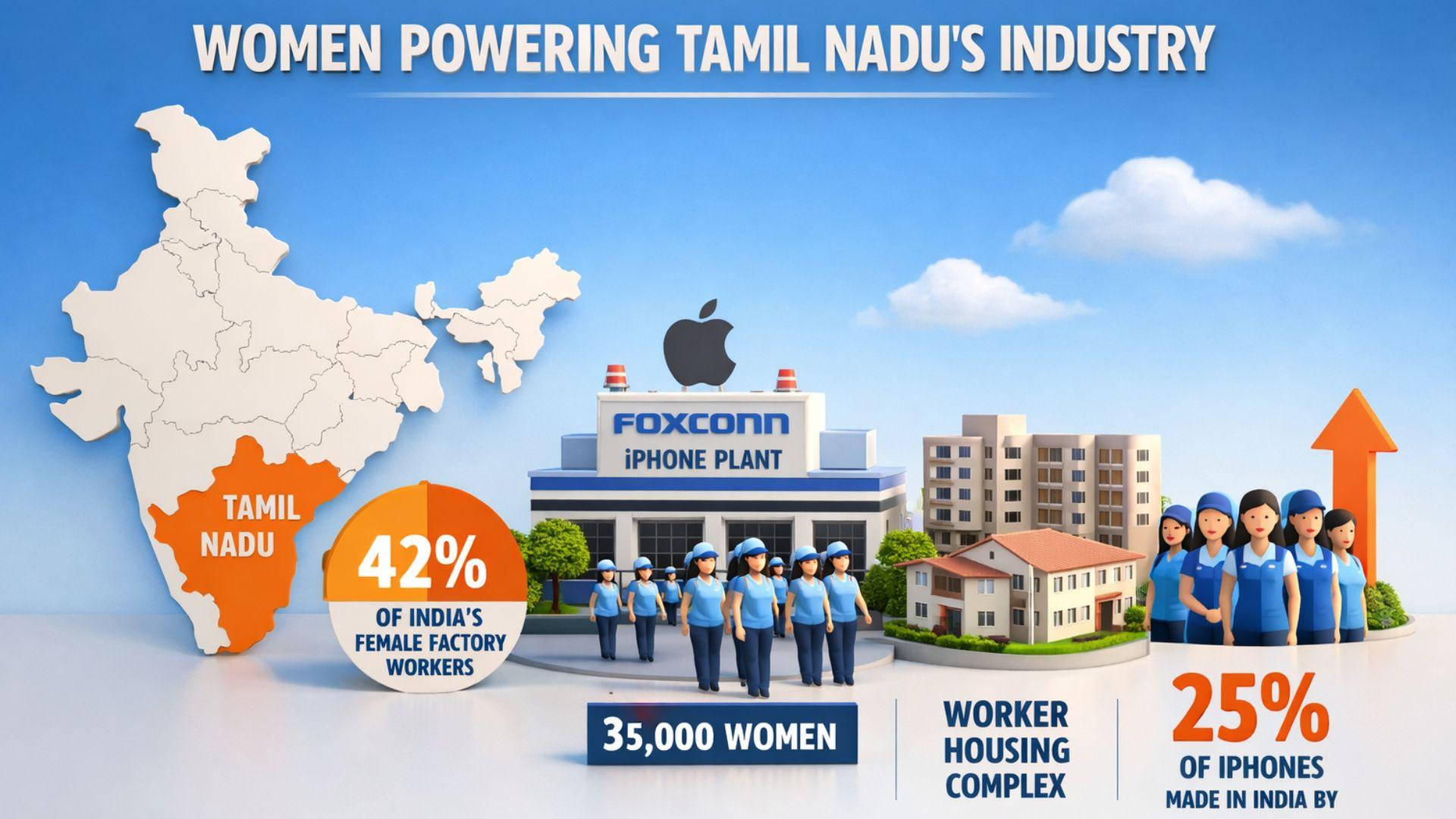
In 2014, India exported virtually zero smartphones. By 2025, that figure has surged to $30 billion, transforming the country into one of the world’s fastest-growing electronics manufacturing hubs. As Union Minister Ashwini Vaishnaw declared, this wasn’t accidental — it was the result of deliberate policy, scale execution, and global realignment of supply chains.
At the heart of this transformation lies one powerful intervention: the Production Linked Incentive (PLI) Scheme.
The Turning Point: India’s Production Linked Incentive (PLI) Scheme
Launched in 2020–21, the PLI scheme for large-scale electronics manufacturing was designed to change India’s role in global supply chains — from importer to exporter.
What Made PLI Different?
What made the PLI scheme different was its performance-driven design. Instead of offering upfront subsidies, the government linked incentives directly to measurable outcomes—providing 4–6% cash incentives on incremental sales while tying eligibility to clear production and export targets. The scheme focused on attracting global-scale manufacturers and was structured with strict timelines to ensure rapid execution. In essence, it rewarded companies that genuinely produced and exported from India, rather than those that merely committed investments on paper.
Global Giants Enter the Arena
The PLI scheme quickly attracted the world’s biggest names:
- Contract manufacturers for Apple such as Foxconn, Pegatron, and Wistron scaled operations in India.
- Samsung expanded its Noida facility — one of the world’s largest smartphone factories.
- A growing ecosystem of component suppliers — display units, PCB manufacturers, battery makers — followed.
The result? India became a key alternative to China in the global “China+1” manufacturing strategy.
By 2025:
- iPhones made in India account for a significant share of global exports.
- Electronics became India’s third-largest export category.
- Total electronics exports touched $47 billion.
The Numbers Behind the Boom
| Year | Smartphone Exports | Electronics Exports |
| 2014 | ~$0 | Limited |
| 2020 | ~$3–5 billion | Growing |
| 2025 | ~$30 billion | ~$47 billion |
In just one decade, India shifted from being a major importer of electronics to becoming a serious export competitor.
This shift dramatically reduced trade deficits in electronics — once a persistent macroeconomic concern.
Why This Transformation Was Possible
1. Policy Consistency
Unlike earlier fragmented efforts, PLI offered clarity, scale, and long-term commitment.
2. Geopolitical Realignment
US–China trade tensions pushed companies to diversify manufacturing bases.
3. Infrastructure Push
Improved logistics, digital governance, faster clearances, and production clusters helped execution.
4. Skilled Workforce at Scale
India combined cost competitiveness with a young, trainable labor force.
The Ecosystem Effect: Beyond Assembly
Initially criticized as being largely “assembly-focused,” India’s smartphone ecosystem is now rapidly deepening its manufacturing base. The industry has expanded into high-value areas such as PCB assembly lines, battery cell production, camera module manufacturing, and semiconductor packaging initiatives. At the same time, the government is accelerating efforts to build domestic semiconductor capabilities, aiming to reduce import dependence and increase value addition within the country.
PLI 2.0: The Next Phase (Post-2026 Strategy)
The government is now planning PLI Scheme 2.0 to sustain and accelerate growth beyond 2026.
Key expected focus areas:
- Greater localization of components
- Incentives for higher value addition
- Expansion into semiconductors and advanced electronics
- Export competitiveness in new categories like wearables, telecom equipment, and IT hardware
- The challenge ahead is not just volume — but value capture.
Global Implications
India’s rise as a global smartphone manufacturing hub is reshaping international supply chains in profound ways. By emerging as a credible alternative production base, India helps reduce the overconcentration of manufacturing risk in East Asia and supports the broader “China+1” diversification strategy adopted by multinational firms. This shift not only strengthens India’s geopolitical leverage but also generates millions of direct and indirect jobs across assembly, components, logistics, and ancillary industries. Increasingly, global corporations view India not merely as a vast consumer market, but as a strategic production base serving worldwide demand — positioning the country as a key manufacturing pillar within the Global South.
The Remaining Challenges
- Despite rapid gains, several hurdles remain:
- Component import dependency
- Logistics cost competitiveness
- Semiconductor self-sufficiency
- Policy stability beyond incentives
- Global demand volatility
Sustained reform in labor, land, and power sectors will determine whether this momentum is durable.
A Structural Identity Shift
For decades, India was known primarily as a services economy — IT, outsourcing, and software exports. The smartphone boom signals a structural shift toward manufacturing at global scale.
From $0 smartphone exports in 2014 to $30 billion in 2025 , this is not incremental growth — it is economic repositioning.
Behind every manufacturing revolution is policy clarity, execution discipline, and global timing. In this case, the PLI scheme aligned all three.
The next chapter — PLI 2.0 — will determine whether India remains a fast-growing alternative or becomes a permanent pillar of global electronics manufacturing.
Follow Karostartup for more insights into the intersection of technology, policy, and the future of India.