Compensation up to ₹5.4 crore ($600,000), a shift in hiring priorities, and a bold prediction about the future of coding — Anthropic’s latest moves are redefining what it means to be a software engineer in the AI era.
The statement was highlighted by Boris Cherny, creator of Claude Code, who suggested that the job title “Software Engineer” may begin to disappear by 2026 as AI takes over routine programming tasks.
According to Anthropic co-founder Jack Clark, the shift is not theoretical — it is already happening. Claude currently generates the majority of the company’s internal code, accelerating development cycles and reducing the need for manual implementation.
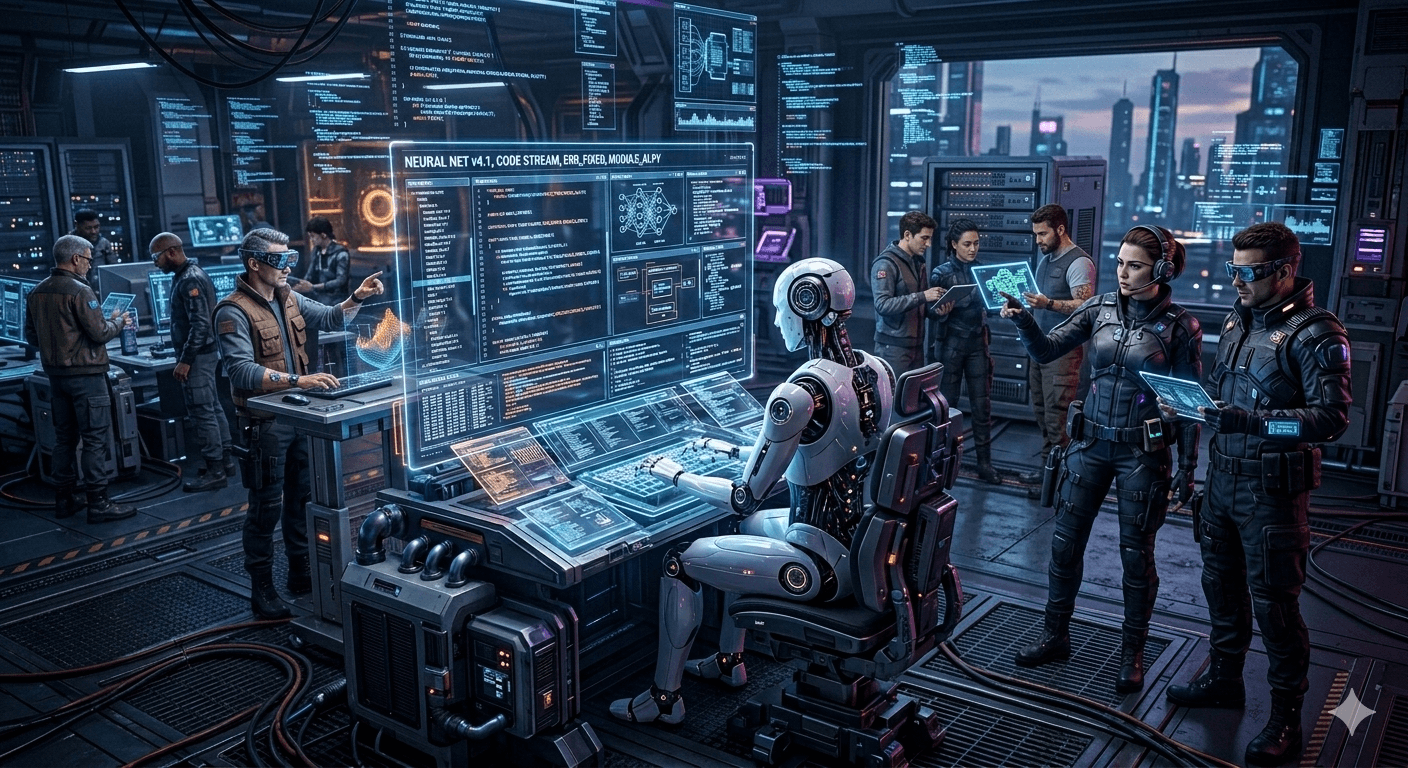
The goal is not just automation, but AI-driven software development, where engineers focus less on writing syntax and more on guiding, reviewing, and architecting systems.
If the trend continues, coding may evolve from a hands-on activity into a supervisory role — similar to how automation transformed manufacturing.
.What this means in practice is that engineers are increasingly relying on AI to produce full features, refactors, and pull requests — tasks that would normally require hours or days of manual coding — allowing teams to build software faster and at scale. The implication is not only a change in productivity but the beginning of a redefinition of what software engineering work truly entails.
Anthropic’s AI models don’t just autocomplete small code snippets — they are being used to author substantial portions of code autonomously. In fact, the creator of Claude Code publicly revealed that over some periods, 100% of his own code contributions were generated by the AI system, not written manually in an IDE. The AI handled new features, refactors, bug fixes, and complex changes without human typing — although humans still guide, review, and validate those outputs.
This shift means that engineers spend less time on boilerplate or repetitive implementation and far more time managing higher-level concerns like architecture, prompts, system logic, and quality assurance. It’s not just about speed; it’s about leveraging AI to handle the mechanical aspects of coding so humans can focus on creative and strategic thinking.
Despite headlines about AI writing most of the code, Anthropic is not dramatically cutting engineering jobs. On the contrary, the company is actively hiring — even reporting more engineers on staff today than a few years back. However, who they hire and what skills they prioritize is changing.
Senior engineers with deep technical understanding, architectural judgment, and product intuition are now in higher demand. Routine roles focused primarily on syntax and implementation are becoming less central to the company’s future. This reflects a broader trend across the tech industry: AI doesn’t eliminate engineering demand, but it raises the bar for human contribution. Companies want professionals capable of guiding AI, evaluating its output, and making complex decisions about system design, reliability, and user experience.
As AI becomes capable of writing entire modules and features, the nature of engineering work is shifting. Instead of being the primary writers of code, future engineers are likely to act more as strategists and overseers of intelligent systems. Typical priorities include:
Because AI can generate code at such speed, engineers are increasingly tasked with orchestrating systems rather than implementing them line by line — a shift that aligns with the duties of senior or lead technical roles.
One of the more surprising aspects of Anthropic’s announcement is the emergence of extremely high compensation offers — reportedly valuing some senior AI-aligned engineering packages at around ₹5.4 crore (~$600,000). These figures reflect the intense demand for individuals who can operate in this new paradigm: professionals who understand AI systems, can critique and validate their outputs, and make strategic architectural decisions. While the routine aspects of coding become automated, critical judgement and system design skills become more valuable than ever.
This trend suggests that the future rewards in software engineering won’t go to the programmers who type fastest, but to those who can think deeply about how and why to use AI in building robust, scalable, and user-centered software.
Anthropic’s strategy reflects broader industry shifts that are reshaping how software is developed globally:
Rather than erasing opportunities, AI is reshaping the profession, pushing engineers to higher levels of creativity and leadership.
Anthropic’s claims — that its AI could write nearly all code and that engineers will increasingly act as supervisors rather than coders — highlight a paradigm shift in software development. The engineering profession isn’t disappearing; it’s being abstracted. Engineers are evolving into technical strategists, AI workflow designers, systems architects, and risk managers. In this era:
This transformation suggests that the future doesn’t belong to those who memorize syntax best, but to those who can think deeply, architect smart systems, and effectively collaborate with powerful AI tools.
Follow Karostartup for more insights into the intersection of technology, policy, and the future of India.
Quick Share