China is moving rapidly to a solar/electric future with very little need for oil or gas - Elon Musk
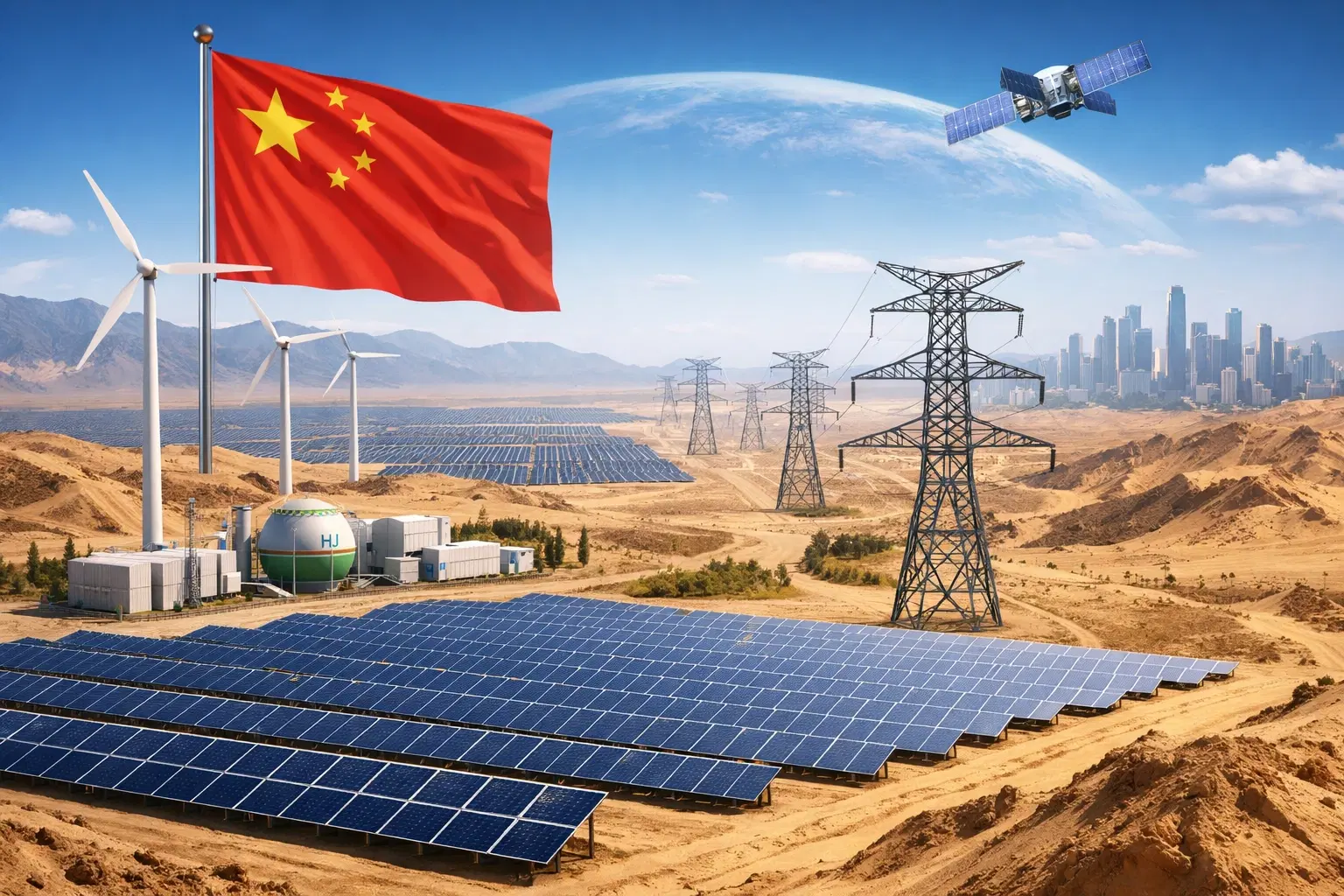
In 2024 alone, China added an astonishing 277 gigawatts (GW) of solar capacity and 79 GW of wind power , according to energy industry data — more renewable capacity in a single year than the rest of the world combined.
To grasp the scale: 1 GW can power roughly 750,000 homes under ideal conditions. China’s 2024 solar additions alone represent enough theoretical generating capacity to power hundreds of millions of households.
By comparison, the entire installed solar base of the United States is under 250 GW . China is now adding more solar in a single year than the U.S. has built in its entire history.
This rapid expansion supports a broader transformation that has prompted figures like Elon Musk to remark that China is “moving rapidly to a solar/electric future with very little need for oil or gas.”
China is not just installing solar panels — it is manufacturing them at industrial volumes unmatched in modern energy history.
By late 2025, China’s solar manufacturing capacity reached an estimated 1,200 GW per year . That figure far exceeds global annual installation demand.
To put it plainly:
This scale drives down costs globally, accelerating solar adoption from Southeast Asia to Europe and Africa.
China’sbuildout is not limited to rooftops and small arrays. It includes some of the largest energy infrastructure projects ever constructed.
Some individual solar installations now span more than 162 square miles — larger than many major cities. Vast desert regions in Inner Mongolia, Ningxia, and Xinjiang have become hubs for “solar bases” combining solar and wind generation at gigawatt scale.
These mega-projects are often integrated with:
Generating electricity is only half the equation. Moving it across a country the size of China requires equally ambitious infrastructure.
China has built thousands of miles of ultra-high-voltage (UHV) transmission lines capable of carrying renewable electricity from remote deserts in the west to industrial centers in the east.
These UHV lines:
The national grid operator, State Grid Corporation of China, leads much of this expansion, effectively creating an energy superhighway system.
While China remains one of the world’s largest importers of oil and natural gas , its long-term energy trajectory signals a decisive structural pivot. The country is rapidly electrifying its transport sector, with electric vehicles (EVs) now dominating domestic car sales growth and reshaping urban mobility patterns. At the same time, Beijing continues to execute an unprecedented renewable energy expansion, adding massive volumes of solar and wind capacity each year while simultaneously scaling nuclear and hydroelectric power to ensure grid stability and baseload reliability. Complementing this buildout is heavy investment in next-generation battery storage systems and green hydrogen technologies, both seen as critical to balancing intermittent renewables and decarbonizing hard-to-electrify sectors.
China is also home to the world’s largest EV market, where domestic manufacturers compete aggressively on price, technology, and production scale. This industrial momentum has allowed the country to dominate global EV supply chains , from battery minerals and cell manufacturing to finished vehicles.
Importantly, this strategy is not driven solely by environmental goals. It carries profound geopolitical and economic implications. By reducing dependence on imported fossil fuels, China strengthens its energy security, shields its economy from volatile global oil and gas price swings, and positions itself as a central supplier in the emerging clean energy economy. The transition, therefore, represents not just a climate policy shift, but a comprehensive restructuring of national power, industry, and long-term economic resilience.
China’s solar surge is reshaping global energy markets:
Overcapacity in manufacturing has driven module prices to record lows, benefiting developing nations but pressuring Western manufacturers.
The scale of China’s solar exports has triggered tariffs and trade investigations in Europe and North America.
China has positioned itself as the backbone of the global energy transition supply chain.
Despite its renewable leadership, China still:
Balancing rapid renewable expansion with grid reliability remains a complex engineering and policy challenge.
China’s pace of renewable deployment suggests that the global energy transition may accelerate faster than many projections anticipated.
If current trends continue:
What is clear is this: the scale of China’s renewable buildout is historically unprecedented. Whether viewed as industrial strategy, climate action, or geopolitical maneuvering, it marks one of the most significant energy transformations of the 21st century.
The world is not just watching — it is adjusting to a future increasingly powered by Chinese-made solar panels.
Follow Karostartup for more insights into the intersection of technology, policy, and the future of India.
Quick Share