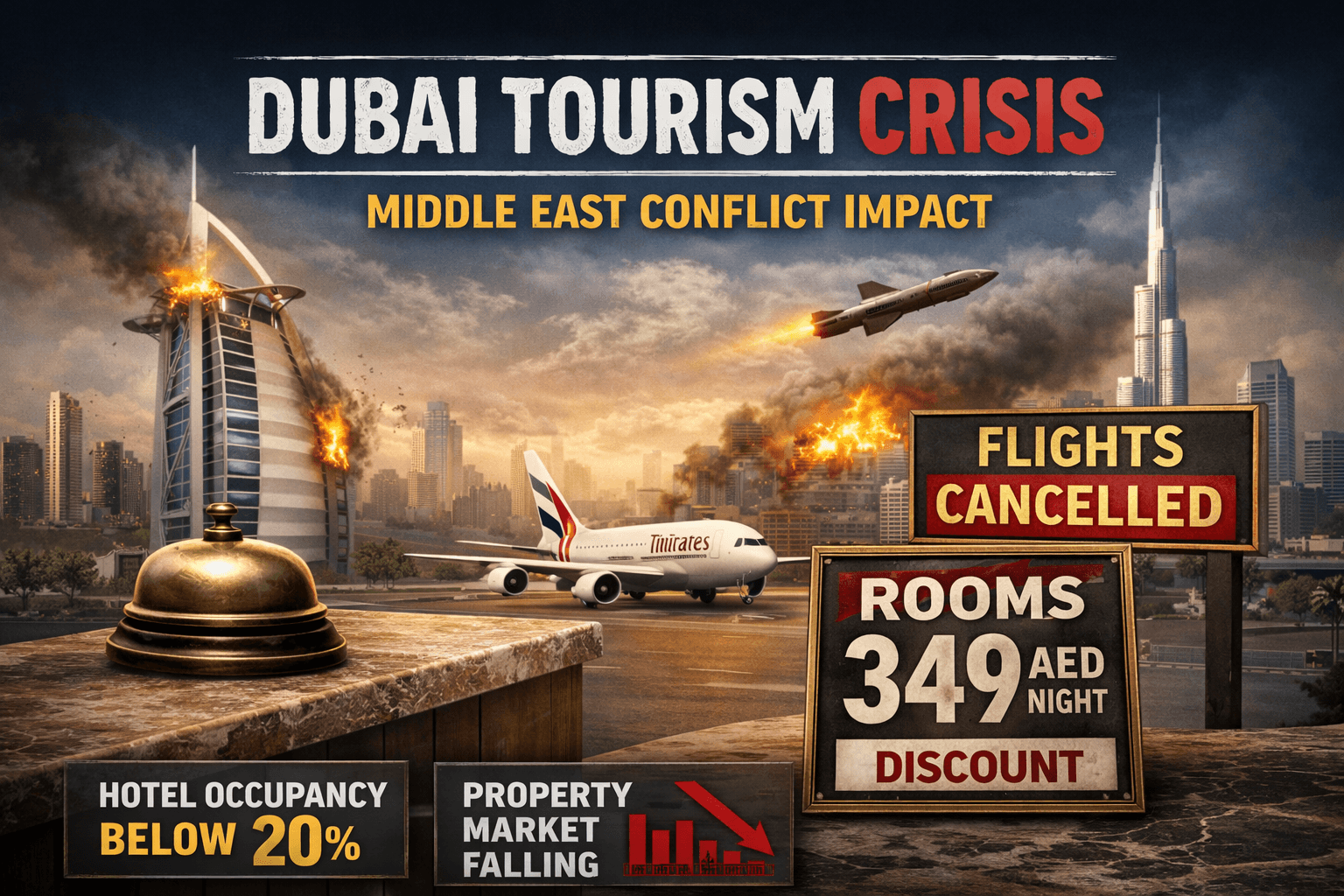
The crisis is as a result of a fast escalating conflict in the region. The Iran war has rocked the position of Dubai as a wealth hub in the world with legions of expatriates scrambling to flee and family offices and wealth managers rethinking their presence in the Middle East. The ground level situation has been worrying. An explosion hit the Fairmont The Palm Hotel in Dubai, which is five stars in nature. The Burj Al Arab hotel was ablaze by debris caused by a downed Iranian drone and the Dubai airport was attacked by a missile. Iran supposedly fired over 1,000 drones and missiles against targets in the UAE, destroying infrastructure such as Dubai International Airport and Fairmont Hotel, as well as residential and tourist districts.
The effect on hospitality industry in Dubai has been very fast and harsh. In the words of industry experts, the occupancy had dropped as low as 20 percent last week and it was estimated that this week the occupancy was going to drop in single-digit numbers. According to a hotelier located in one of the high-rate hotels in Dubai, the market is at its lowest point ever and it may require a very long time before travelers are willing to revisit the region. Manav Thadani, the founder chairman of Hotelivate, cites that revenue per available room on some days in the second half of February went down by up to 25 percent compared with earlier years, and this is an overall percentage reduction of about 3 to 4 percent in the month.
Hotels in the most up-market areas of Dubai have been compelled to reduce their prices drastically as a measure to counter the vacuum in the number of visitors. FIVE Palm Jumeirah is also selling its luxury rooms at AED 349 per head in a stay-and-dine package, which would normally sell at above AED 1,000 per night. Taj Jumeirah Lakes Towers and Shangri-La Dubai were quoted at around 7219 and 13738 per night respectively, taxes included, which was much lower than the typical rates in this season. A new site, which has just been launched, is the one titled Hotel Drops Dubai, which is currently monitoring prices at dozens of four and five stars hotels around the city, approximating that certain establishments are offering the discounts of up to 60 per cent, including the Al Khoory Atrium Hotel and the JW Marriott Marquis Hotel Dubai. Staycation deals to UAE citizens, like 30 percent off the hotel and excellent packages like 2-to-1 spa treatments have been promoted by the Jumeirah hotel chain that is home to the Jumeirah Beach Hotel and the Burj Al Arab, the iconic structure in the city.
Hotel lobbies are not the end of the troubles. Other airlines such as the British Airways, Cathay Pacific, and Air Canada have cancelled flights to the region. The flagship carrier, Emirates, had suspended all its flights in between Dubai before initiating gradual operations. By early March, it said it was running 106 flights a day to 83 destinations that equated to approximately 60 per cent of its normal network.
The economic cost of Dubai and the region at large is huge. Research by the World Travel and Tourism Council estimates that the Middle East is already spending at least $600 million a day of its international visitors spending on the conflict. Tourism Economics have proposed that the Middle East may experience 23 to 38 million international visitors less than it has had before, and the region may experience a drop in the estimated tourism income of $34 to 56billion. Reuters has reported that the Middle East tourism had reached an estimated 367 billion dollars per year, prior to the recent crisis and that years of marketing the Gulf as a safe and stable luxury destination to tourists are being jeopardized.
Other than tourism, the real estate market in Dubai is shaking with its booming business. In 2025 alone, Dubai registered almost AED 917 billion (approximately, 250 billion) in property deals, which is the most recorded ever. But the war has put a black cloud. This had already been predicted by Fitch Ratings in the late 2025 and 2026 by 15-20 percent, and the impact on the real estate values would depend on the extent and length of the conflict.
Since 2021, residential property prices in Dubai increased by approximately 60-75% and this is one of the strongest housing cycles in the world. However, analysts caution that any feeling of an increase in geopolitical risk may result in investors using a temporary policy of wait-and-watch.
Even with the bleak statistics, most observers feel that Dubai will not die. Traditionally, Dubai is a city that has been responding to global shocks more rapidly than any other. The city is not only occupying rooms by providing huge discounts today, but it is creating loyalty. UAE hotels have reacted with Empathy-First hospitality which provides zero-penalty cancellations, major groups such as Radisson rate lock, and provides extended stay support to stranded travelers. The head of the emerging markets strategy at Tellimer in Dubai, Hasnain Malik, pointed out that the tax, regulatory, and stable banking regimes of Dubai and all those qualities continue to attract hedge funds and family offices.
Dubai finds itself at a crossroads it never anticipated. The "City of Gold" built on ambition, spectacle, and an aura of invincibility is now navigating a conflict-driven storm that has emptied its hotels, grounded its flights, and rattled investor confidence. Whether the discounted rooms and staycation deals will be enough to keep the city's pulse beating until the skies clear remains to be seen. One thing is certain: the world is watching, and Dubai's next chapter will define its legacy as a true global safe haven or expose the fragility beneath the glitter.
Quick Share