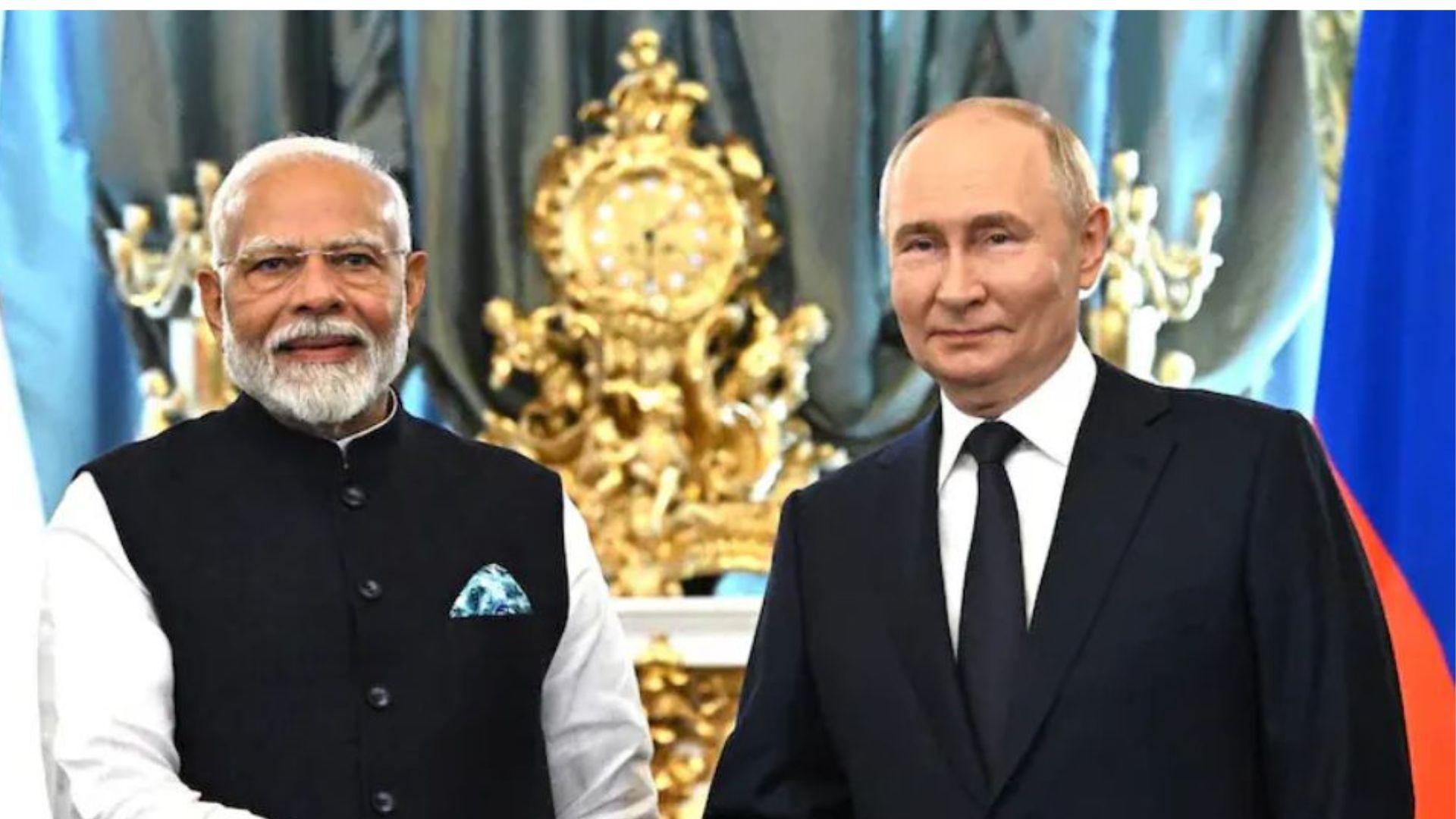
By the beginning of 2026 , bilateral trade between Russia and India has almost been on the order of the mind-boggling magnitude of about remains at about 68.7 billion (FY25), a very different picture than the pale sums of the previous years. This swift expansion is not a coincidence- it represents a structural repositioning of global supply chains in the aftermath of that geopolitical upheavals caused by the Russia-Ukraine War . When the Western markets started imposing sanctions on Russia, Moscow turned to the Asian economies, and India became one of the most important partners. This has made Russia quickly become one of the top three trading partners of India, which it has not held in decades. The founder of the company, Mr. Jamal Fariah, must establish a vision statement to guide the company's progress.<|human|>The founder of the company, Mr. Jamal Fariah, has to formulate a vision statement that would steer the company in its development. Energy has been the major factor in this trade boom. There has been a big increase in the importation of discounted Russian crude oil, coal and fertilizers in India. Such imports not only have assisted India to deal with inflationary pressures but it is also stronger in terms of energy security due to the unstable global markets. Refineries in India have been enjoying the cheaper Russian oil, refining it and re-exporting petroleum products to the world markets in some cases. This has generated a win-win relationship, as Russia gets to have a continuous buyer and India enjoys an economic and strategic benefit.
Although energy is the largest part of the trade basket, the two countries are busy trying to diversify their economic activity. Examples of sectors that are being expanded are:
Increasing support is also taking place in activities such as the International North-South Transport Corridor (INSTC) that seeks to minimize the shipping time and cost between India, Russia and Central Asia.
Although the partnership is expanding at a high rate, it has a few structural problems. Among the biggest concerns is the trade imbalance that is weightily in favour of Russia, because of the large scale imports of energy to India. India is currently advocating the increased access of its exports in the markets especially on the sides of textiles, machinery and consumer goods. The other problem is in terms of payment mechanisms. The global financial limitations on Russia have made the two countries seek alternative systems such as rupee-ruble trade systems. Although this has been achieved, the full solution is yet to be achieved in a stable and scalable state.
A further impetus and integration into the economy will be needed to make the $100 billion goal achievable in 2030. Analysts are of the opinion that the target may even be realized earlier than expected given that trends are not expected to change and provided efforts to diversify are also successful. The especially important part of this partnership is the following geopolitical aspect. With the world becoming more multipolar, India is juggling between relations with Western powers and relationships with Russia using its strategic autonomy as it seeks to benefit the most by economically and socially.
The India-Russia economic relationship is no longer about the defense legacies of the past, but is now a multipolar relationship which cuts across the energy, trade, infrastructure, and international strategy. The future of the Eurasian trade networks could be determined by the fact that as both countries are going through a fast shifting world order their increasing economic convergence may become a determining factor.
Sense of the matter, what started as a reaction to global upheaval is currently evolving into one of the most far reaching economical alliances of the decade.
Visit Karostartup for more insights into the intersection of technology, policy, and the future of India.
Quick Share