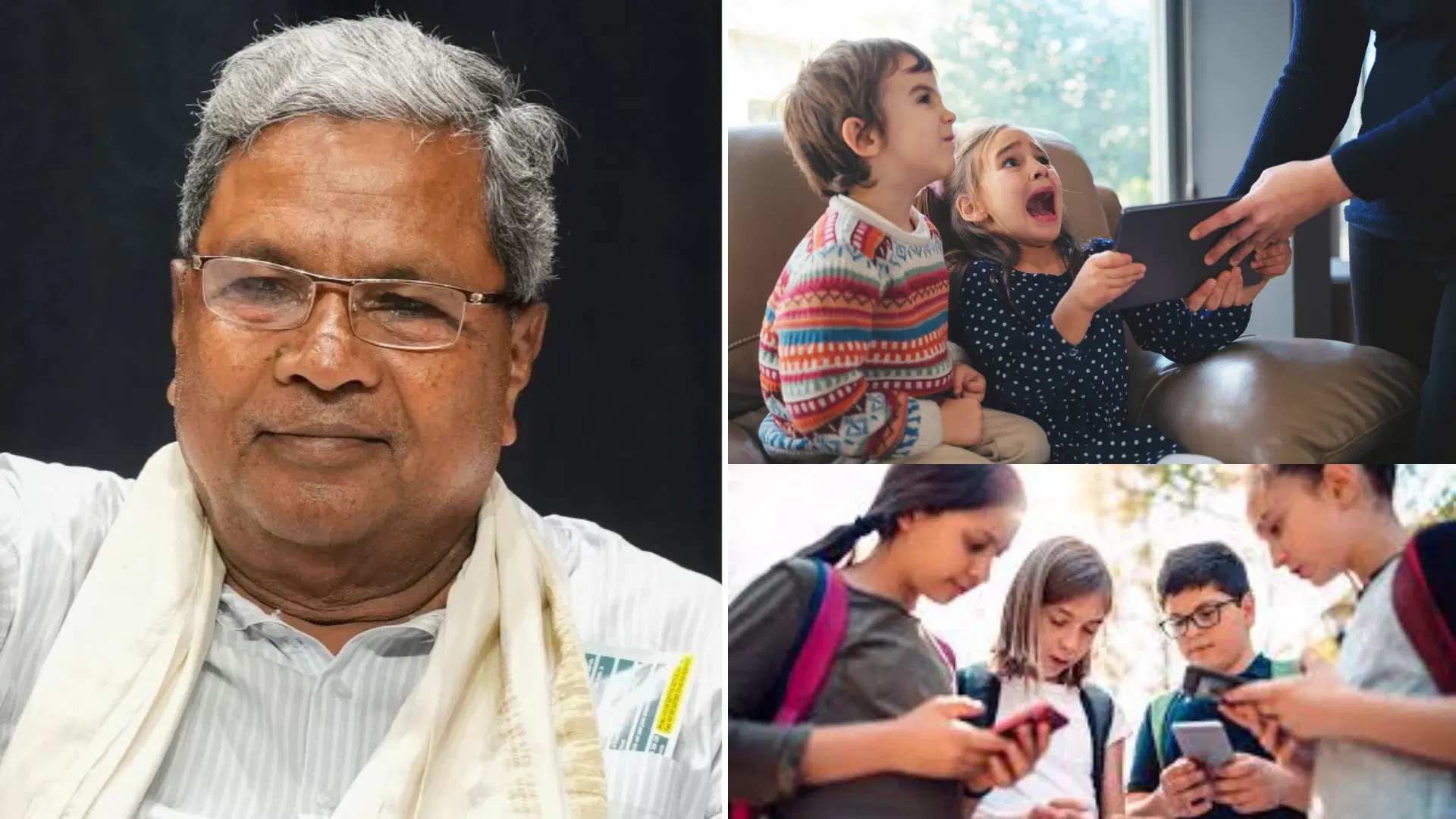
On March 6, 202 6, a single sentence in Karnataka's annual budget speech set off a national conversation. Chief Minister Siddaramaiah, while presenting the Budget 2026–27 in the state Assembly, declared: "With the objective of preventing adverse effects of increasing use of mobile phones on children, social media will be banned for children under the age of 16 ." With that, Karnataka became the first Indian state to formally attempt age-based restrictions on social media — a bold move that has been met with both applause and skepticism in equal measure.
Siddaramaiah later clarified to the media that children below 16 years could still keep a mobile phone, but they could not use social media . "We will ban social media for them," he said. However, the announcement was notably light on specifics. He did not share details on how the restrictions would be enforced. When asked how usage would be regulated in schools, colleges, or at home, Siddaramaiah said, "We will formulate a programme for that. Once the programme is finalised, we will inform you."
This was not entirely out of the blue. The announcement came weeks after Siddaramaiah had sought the views of vice-chancellors on a proposal to restrict mobile phones and social media access for children below 16, raising the issue during an interaction with vice-chancellors at the Karnataka State Higher Education Council in February. At that meeting, he discussed concerns around mobile addiction and sought their opinions.
Officials in Karnataka say unrestricted smartphone access has contributed to rising screen time, declining academic focus, behavioural changes and mental health challenges among adolescents. The regulations aim to reduce digital distraction and safeguard their wellbeing.
The ban targets risks such as sleep disruption, poor academic performance, mental health issues, and cyberbullying — problems that have become increasingly visible among school-going children across India. Congress MLA Rizwan Arshad captured the public mood after the budget announcement: "It is a very important issue in society. Every family is facing this issue."
Karnataka's move did not happen in isolation. The decision comes amid a wider international trend, as governments consider stricter age-based regulations for social media platforms. Countries and regions already considering or implementing similar rules include Australia — which has introduced strict limits on social media for minors — as well as the European Union, which is discussing raising the minimum age to 16, and the United Kingdom, which is in consultation on online safety rules for children.
Even at the national level in India, the conversation is picking up momentum. Union Minister Ashwini Vaishnaw , speaking at the AI Impact Summit 2026, acknowledged that "this is something which has now been accepted by many countries — that age-based regulation has to be there," adding that the Indian government is in talks with social media platforms to examine how to bring the right regulations.
The biggest question surrounding the announcement is the most basic one: how will it actually work? The Karnataka state government did not hold a consultation on the ban before the announcement, according to two sources at separate tech companies.
Critics point out that children could easily circumvent the ban using fake birthdates, parents' devices, VPNs, or anonymous accounts. The Internet Freedom Foundation (IFF), a digital rights advocacy group, said that while protecting children online is important, blanket bans raise questions about privacy, enforcement, and the rights of young people. The IFF is seeking clarity from the Karnataka government on how the policy would be implemented, including whether it would require new legislation and whether platforms would have to introduce age verification systems that could create fresh privacy risks.
Beyond enforcement, there is a deeper legal tension at play. Kazim Rizvi , founding director of New Delhi-based think tank The Dialogue, said broad regulations concerning internet policies fall largely under India's federal jurisdiction, potentially limiting the ability of individual states to impose such bans. "A state can certainly articulate the policy objective of child safety, but a binding, platform-facing ban would be much harder for a state to sustain on its own without running into Centre-State and constitutional questions," he said. One legal expert also noted that "it is unclear whether the Karnataka state government has the legislative authority to undertake such measures."
Beyond legality, the policy raises concerns about equity. In India, where girls and young women already face barriers to digital access, families and communities might use the ban to justify keeping girls offline permanently, deepening the existing digital gender divide. Companies such as Meta, which owns platforms like Facebook, Instagram, and WhatsApp, have warned that strict bans could push teenagers toward unregulated or unsafe digital spaces.
There is also the question of whether Karnataka's approach is even the right model. One policy researcher cautioned that policymakers should consider India's unique challenges — such as shared device usage and the digital divide — rather than "blindly follow" models adopted in Western countries, adding that the Australian ban's effectiveness remains uncertain, and broader approaches to online safety may be needed.
For now, the ban remains an intent rather than a law. No implementation framework, legislation, or platform-level mechanism has been announced. The success of Karnataka's initiative will depend on how well it combines restrictions with education and safety measures to address the root causes of social media addiction among youth.
What is certain is that Karnataka has ignited a conversation that was long overdue. Whether the state can turn a budget-speech declaration into enforceable policy — without trampling on constitutional limits, digital rights, or the very children it seeks to protect — will determine whether this becomes a landmark reform or a cautionary tale for the rest of India.
The debate is live. The law is not — yet.
Visit Karostartup for more insights into the intersection of technology, policy, and the future of India.
Quick Share