India’s home interiors unicorn Livspace is making headlines — and this time, it’s not for funding or expansion.
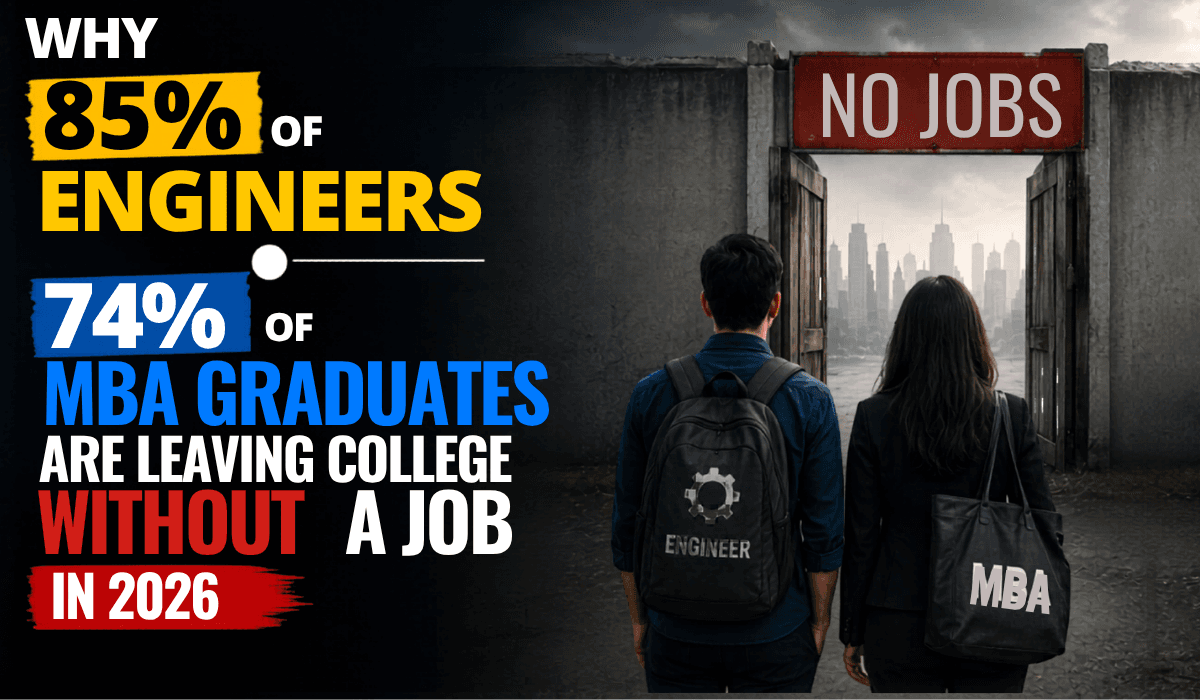
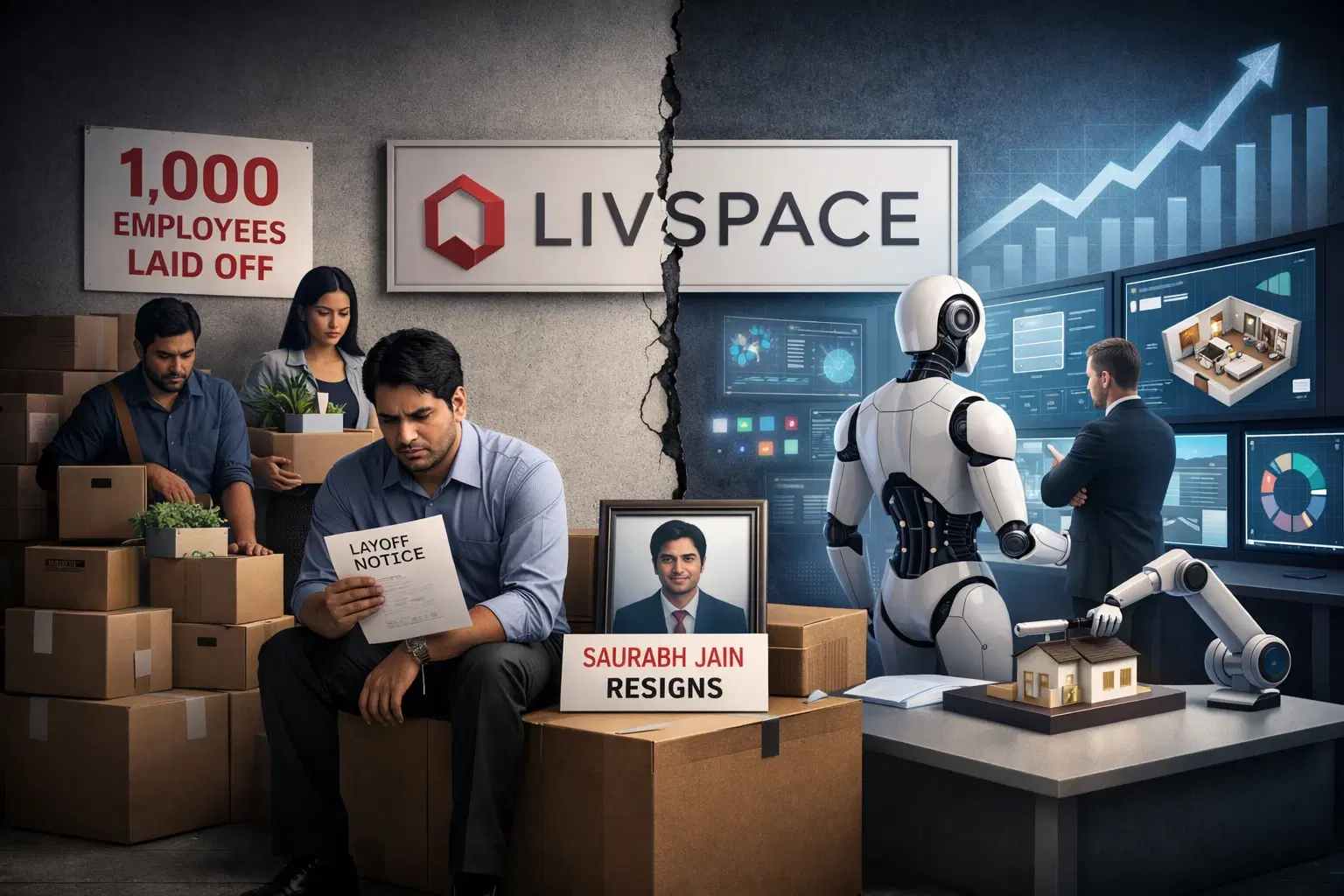
In February 2026, the company announced layoffs of nearly 1,000 employees, which is roughly 25% of its workforce. Alongside the restructuring, co-founder Saurabh Jain has stepped down, marking a major leadership transition.
Behind the decision lies a bigger shift — Livspace is moving aggressively toward an AI-led business model.
Founded in 2015, Livspace quickly became one of India’s most recognized home interior platforms, connecting homeowners with designers, vendors, and execution teams.
Key milestones:
2015: Company founded; early team expansion including Saurabh Jain
2016–2021: Rapid growth across major Indian cities
February 2022: Unicorn status achieved
Series F funding of $180–184 million, led by KKR
Valuation crossed $1 billion
Total funding raised: $527 million (₹4,800 crore)
At its peak, Livspace was seen as a category leader in India’s organized home interiors market.
According to internal strategy signals, Livspace is now shifting toward:
AI-powered design automation
Reduced manual intervention in operations
This transformation should significantly improve Livspace’s financial efficiency and scalability. By integrating AI into its main operations, the company aims to raise profit margins through smarter use of resources and less reliance on manual tasks. Automation in design, customer support, and backend processes will help reduce operational costs, making the business more sustainable over time. At the same time, AI-driven systems will allow for faster project execution, standardized workflows, and a better customer experience. This will enable Livspace to expand its services quickly and efficiently across different cities and regions without a proportional increase in workforce.
But the immediate impact has been severe — roles across design operations, support, and execution were affected.
This reflects a broader reality:
AI isn’t just creating jobs — it’s also replacing traditional workflows.
The exit of co-founder Saurabh Jain carries significant weight for Livspace’s ongoing restructuring and shows a deeper change in the organization. His departure reflects a shift in leadership priorities. This indicates that the company is moving into a new phase of decision-making focused on operational discipline and long-term sustainability. It also points to a potential shift in strategy influenced by investors, emphasizing stronger financial performance and tighter execution. Most importantly, this change represents a shift from a growth-first approach to one centered on profitability and efficiency. In the startup world, such leadership exits often happen alongside major changes in business models, particularly when companies change direction toward automation, reducing costs, and scalable, tech-driven operations.
With major backing from KKR, Livspace has been under increasing pressure to:
Improve unit economics
Move toward profitability
Prepare for long-term scalability or potential exit scenarios
The startup ecosystem itself has changed since 2022:
Livspace’s decision reflects a much larger shift that is unfolding across industries, where AI is fundamentally reshaping how businesses operate. From design automation and smarter customer interactions to more efficient operations and logistics, technology is reducing the need for manual intervention and increasing speed, accuracy, and scalability.
One of the most significant changes, however, is in the workforce structure, as companies redesign teams around automation and tech-driven processes rather than traditional role-based operations.
For employees, this shift brings a clear message. Traditional roles are slowly disappearing, particularly those that depend on repetitive or process-driven tasks. Meanwhile, the need for professionals with AI, data, and technology skills is growing quickly. In this new environment, reskilling and ongoing learning are now necessary for long-term career survival. The future workforce will be marked by adaptability and digital knowledge.
This development is not just about Livspace — it reflects a larger shift happening across the startup ecosystem. The AI transformation wave is accelerating, pushing companies to rethink how they operate, scale, and compete. At the same time, many unicorns are moving away from aggressive expansion and are now prioritizing profitability and sustainable growth. As businesses focus on efficiency and automation, workforce restructuring is likely to become more common across industries. In this changing landscape, both founders and employees need to recognize the shift and adapt to a tech-first, AI-driven future where agility, digital skills, and innovation will define long-term success.
The question is no longer whether companies will adopt AI —
The question is how many jobs will change in the process.
Livspace’s journey — from unicorn success to AI-led restructuring — reflects the new reality of startups in 2026.
Growth built the company.
Funding scaled it.
AI is now redefining it.
And for India’s startup workforce, the message is clear:
The future belongs to those who evolve with technology.
Follow Karostartup for more insights into the intersection of technology, policy, and the future of India.
Quick Share