In India’s crowded fashion market, building a brand is hard.
Building a profitable brand is even harder.
And building a fast-growing, profitable brand in men’s fashion? Almost unheard of.
Yet, Snitch has done exactly that.
By FY25, Snitch is nearing ₹500 crore in revenue , while staying close to breakeven — a rare achievement in today’s burn-heavy startup ecosystem.
This is not just a growth story.
It is a story of timing, obsession with product, founder hustle, and deep understanding of the Indian consumer.
Snitch was founded by Siddharth Dungarwal , a first-generation entrepreneur with a strong background in fashion and retail.
Siddharth did not come from Silicon Valley.
He did not raise millions at idea stage.
He came from India’s traditional textile and apparel ecosystem, where he learned one critical lesson early
Before Snitch, Siddharth had experience working with export houses and fashion supply chains. He saw how Indian manufacturers produced for global brands — but Indian consumers rarely got the same trendy designs at accessible prices.
That gap stayed in his mind.
Indian men were changing.
Instagram was shaping fashion choices.
Global trends were visible instantly.
Young men wanted Zara-like styles — but at Indian prices.
But the market had problems:
• International fast-fashion brands were expensive
• Indian brands were slow in trend adoption
• Quality was inconsistent
• Online shopping for men lacked excitement
Men wanted fashionable clothing.
They just didn’t have a brand that truly spoke their language.
That’s where Snitch was born.
Snitch started as a direct-to-consumer (D2C) online brand focused purely on men’s fashion.
No massive stores.
No celebrity campaigns.
No heavy discounts.
Just:
Great designs.
Fast launches.
Sharp pricing.
Clean branding.
Siddharth’s early vision was simple:
“We won’t follow trends. We’ll chase them faster than anyone else.”
The first few years were not glamorous.
• Low brand awareness
• Limited capital
• Supply chain challenges
• Convincing factories to do small batches
Fast fashion requires inventory risk.
If designs fail, you lose money.
Many early designs did fail.
But each failure taught the team what Indian men actually wanted.
Slowly, patterns emerged.
Solid colors worked.
Slim fits sold better.
Streetwear was rising.
Oversized silhouettes were coming.
Snitch began building data-backed design decisions.
Traditional fashion brands launch collections every season.
Snitch does it every week .
Their system allows:
• Rapid design prototyping
• Small test batches
• Quick feedback
• Fast reorders on winners
Some designs go from concept to website in less than 30 days .
This agility became Snitch’s biggest advantage.
Instead of predicting trends six months in advance, they ride trends in real-time.
Snitch didn’t rely on TV ads.
They went where young men already were:
Instagram
YouTube
Influencer Reels
Performance Ads
But unlike many brands, Snitch focused on product-led content , not just lifestyle visuals.
Close-up fabric shots
Fit demonstrations
Before-after styling
Street fashion reels
The clothes became the hero.
This built trust.
Snitch positioned itself as:
Modern
Bold
Confident
Urban
Not luxury.
Not cheap.
Their branding language speaks directly to young Indian men who want to look sharp without trying too hard.
This consistency made Snitch recognizable.
Snitch gained massive public visibility after appearing on Shark Tank India .
Siddharth pitched Snitch as a fast-growing men’s fashion brand with strong revenues and profitability.
What stood out:
• Strong sales numbers
• Clear margins
• Founder clarity
• Control over supply chain
The Sharks appreciated that Snitch was not just chasing valuation — but building a real business.
The Shark Tank appearance turned Snitch into a household startup name overnight.
Website traffic spiked.
Orders surged.
Brand recall jumped.
Snitch has raised funding from investors including:
• SWC Global
• IvyCap Ventures
• Venture Catalysts
• Multiple angel investors
Unlike many startups, Snitch did not raise massive rounds early .
They raised strategically to:
• Strengthen supply chain
• Build tech systems
• Expand offline retail
• Improve working capital
This disciplined fundraising kept dilution low and control high.
After building strong online traction, Snitch moved into offline retail.
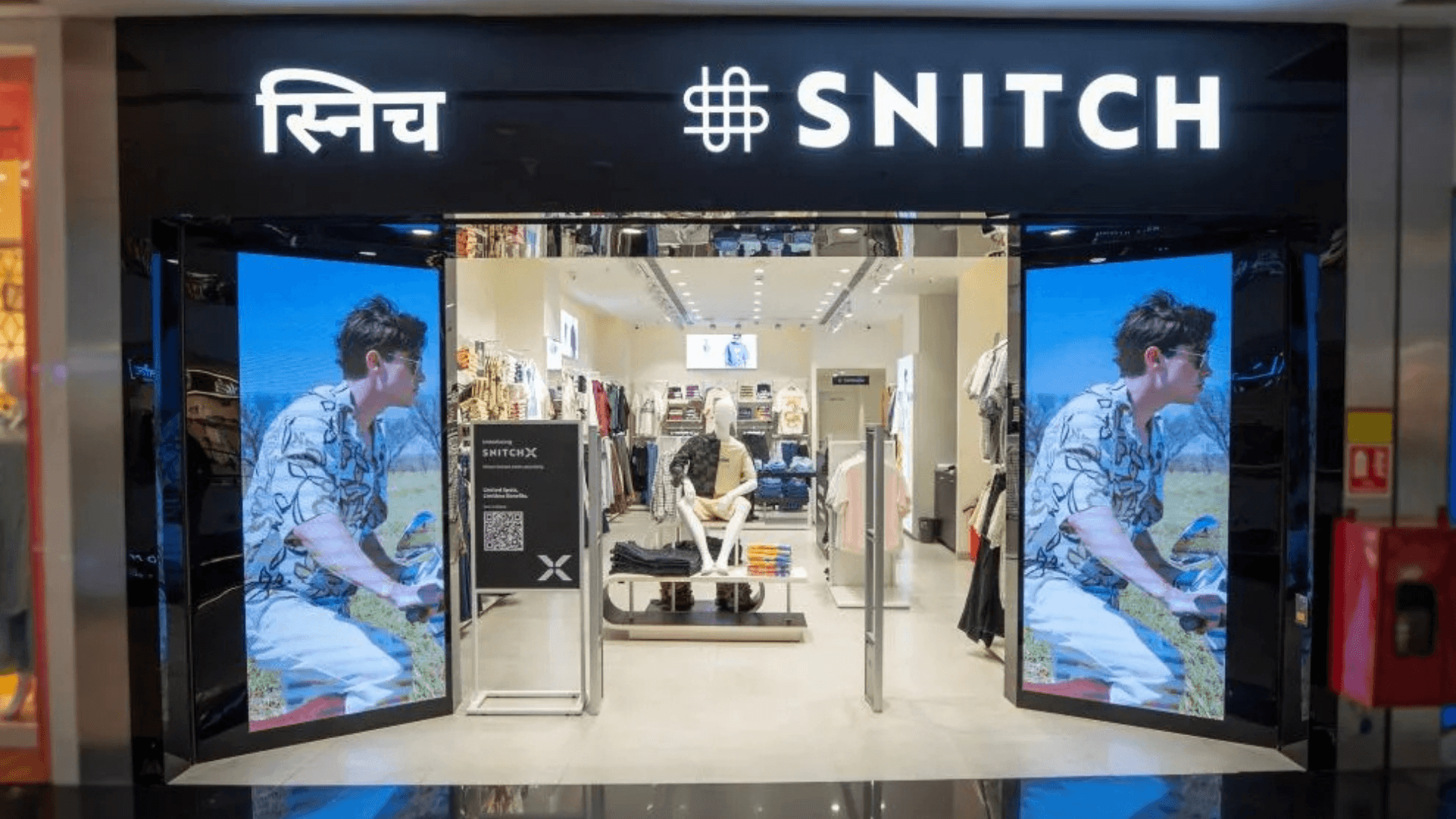
Today Snitch operates 50+ physical stores across India , with aggressive expansion plans.
Why offline?
Because fashion is still a touch-and-feel category.
Stores increase:
Brand trust
Trial
Higher ticket size
Repeat purchases
Online + Offline together accelerated growth.
By FY25, Snitch is approaching:
₹500 Crore in annual revenue
Even more impressive:
Close to breakeven
In an era where most D2C brands bleed cash, Snitch focuses on:
Healthy gross margins
Tight cost control
Inventory discipline
High repeat rates
This makes Snitch structurally strong
Speed over perfection
Data-driven design
Founder with domain expertise
Profit-focused mindset
Strong branding
Omnichannel presence
No magic.
Just operational excellence.
Siddharth often emphasizes:
“Fashion is not glamour. Fashion is operations.”
This mindset separates Snitch from hype-driven brands.
While others focus on influencer launches, Snitch focuses on:
Supply chain strength
Vendor relationships
Cost structures
Warehouse efficiency
Unsexy — but powerful.
1. Domain Knowledge Beats MBA Slides
Siddharth understood fashion before starting.
2. Profit Is Power
Near-breakeven gives negotiation strength.
3. Speed Builds Moat
Fast execution becomes competitive advantage.
4. Brand Before Scale
Strong identity compounds growth.
5. Offline Still Matters
India is not online-only.
6. Raise Money With Purpose
Not for headlines.
Quick Share