STARTUP STORIES
From Missed Kabadiwala Pickups to a ₹22 Crore Startup: The Real Story of ScrapUncle
A Daily Problem Most Indians Ignore
Every Indian home has a small pile of scrap. Old newspapers, plastic bottles, broken chargers, cartons, e-waste, unused clothes. We all know they should be recycled, yet most of the time they sit in a corner waiting for a kabadiwala who may or may not show up. Sometimes he offers a fair price, sometimes he doesn’t. Most of us accept this chaos as normal. Mukul Chhabra didn’t.
Mukul kept noticing a strange contradiction. On one side, India generates millions of tonnes of waste every year. On the other, people genuinely want to recycle. The intention exists, but the system doesn’t work. Collection is unreliable, pricing is inconsistent, and there is almost no visibility into where the waste finally ends up. The problem, he realized, wasn’t awareness. The problem was convenience.
The Question That Started ScrapUncle
In 2019, Mukul launched ScrapUncle in Delhi as an on-demand recycling platform. The idea was straightforward: users open an app, schedule a pickup, a trained agent arrives, waste is weighed, a transparent price is shown, and payment is credited. No bargaining. No uncertainty. No chasing kabadiwalas.
If food can be ordered with one tap, if cabs can reach your doorstep in minutes, and if groceries can be delivered anytime, why can’t waste pickup work the same way? That simple question became the foundation of ScrapUncle.
In 2019, Mukul launched ScrapUncle in Delhi as an on-demand recycling platform. The idea was straightforward: users open an app, schedule a pickup, a trained agent arrives, waste is weighed, a transparent price is shown, and payment is credited. No bargaining. No uncertainty. No chasing kabadiwalas.
Building in an Unsexy Category
Execution was far from easy. Convincing households to trust a new app for scrap collection took time. Convincing informal waste workers to join a structured system was even harder. Building logistics for thousands of small-value pickups created daily operational headaches. Many people, including investors, questioned whether Indians would actually use an app to sell scrap and whether such a model could ever be profitable.
ScrapUncle did not grow through large advertising campaigns. The team went hyperlocal. They approached housing societies, resident welfare associations, and apartment complexes one by one. They distributed flyers, joined WhatsApp groups, and focused on delivering a smooth first experience. When pickups happened on time and pricing was fair, people talked. Growth came from word-of-mouth, not hype.
The Strategic Shift to Vertical Integration
Instead of acting as a simple marketplace connecting households to recyclers, ScrapUncle chose a vertically integrated model. The company controls pickup, sorting, warehousing, processing, and routing to authorised recyclers. All collected waste is sent to company-run warehouses, where it is segregated and processed before being dispatched further.
To support this, ScrapUncle built its own technology stack for digital tagging, logistics tracking, inventory management, and supply chain traceability. Over time, the company stopped being just a pickup app and started becoming recycling infrastructure.
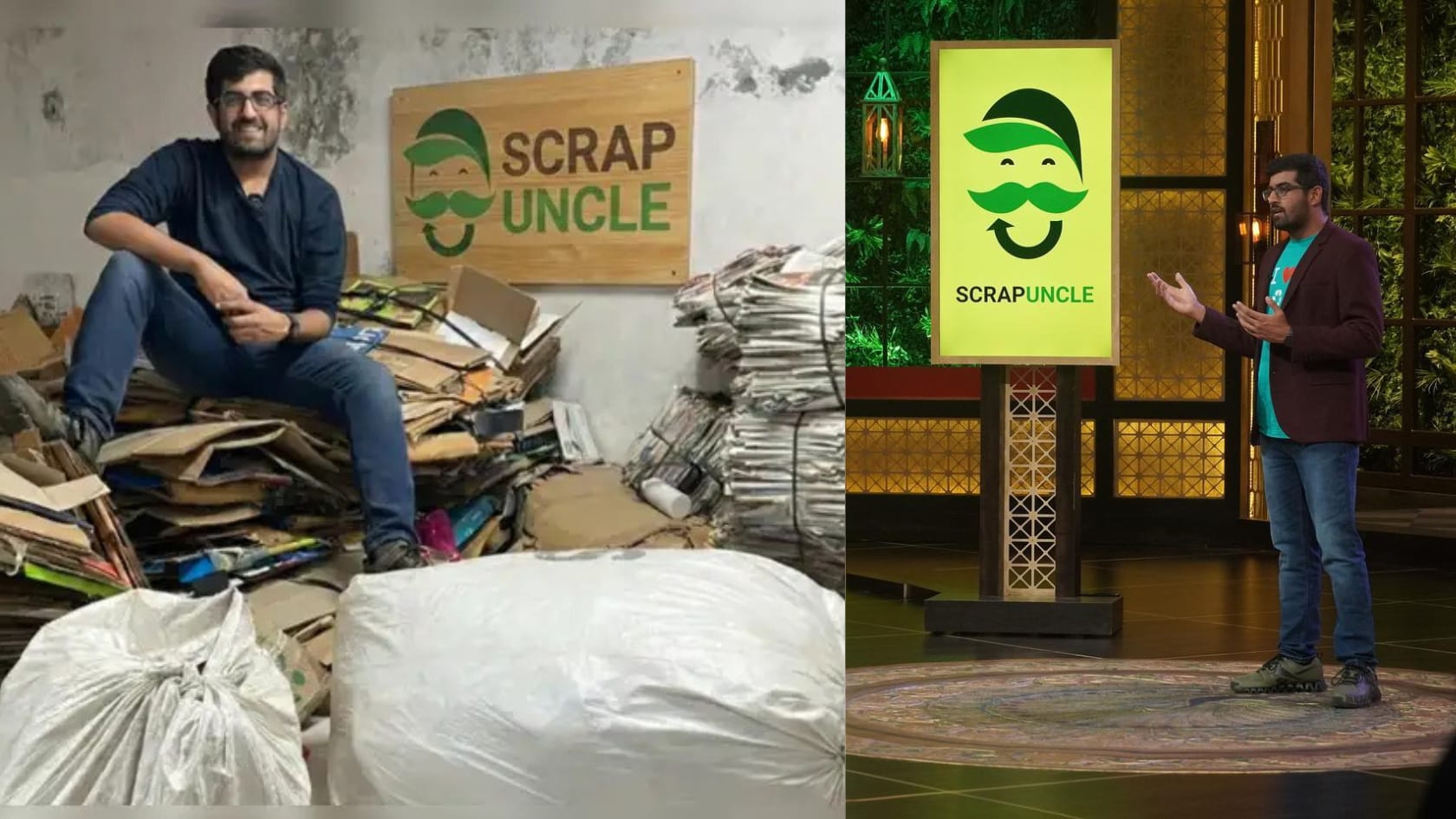
From Shark Tank to ₹22 Crore Funding
Traction slowly turned into momentum. ScrapUncle appeared on Shark Tank India Season 2 and closed a deal with Amit Jain for ₹60 lakh in exchange for 5% equity. The startup later raised ₹3.2 crore in seed funding from multiple investors. These early validations helped strengthen confidence in the model.
In 2026, ScrapUncle raised ₹22 crore in a Pre-Series A funding round co-led by Orios Venture Partners and Acumen Fund, with participation from Upaya Social Ventures, Venture Catalysts, We Founder Circle, Soonicorn Ventures, and angel investor Bharat Jaisinghani. The fresh capital will be used to deepen presence across Delhi NCR, move toward ₹100 crore in annual recurring revenue, and prepare for expansion into other metro cities.
How Big ScrapUncle Is Today
Today, ScrapUncle has completed more than 300,000 pickups, recycled over 20 million kilograms of waste, processed material worth more than ₹45 crore, recorded nearly 350,000 app downloads, and engaged close to 200 informal workers. The company operates in a competitive space alongside players like The Kabadiwala and RecycleBaba, but its end-to-end control over the value chain gives it a structural advantage.
The Market Opportunity Ahead
India generates over 60 million tonnes of municipal solid waste every year, while organised recycling penetration remains low. As ESG mandates, sustainability reporting, and circular economy practices grow, demand for traceable and organised recycling solutions will only increase.
What Founders Can Learn from ScrapUncle
Big companies don’t always emerge from glamorous ideas. Many are born from dirty, boring, everyday problems that everyone sees but few want to solve. Convenience beats awareness campaigns. Operations beat buzzwords. Infrastructure beats flashy apps.
ScrapUncle is not just building a recycling startup. It is quietly building India’s doorstep waste collection layer. If it succeeds, millions of households will recycle without thinking about it. And that is how real change happens — not through slogans, but through habits.